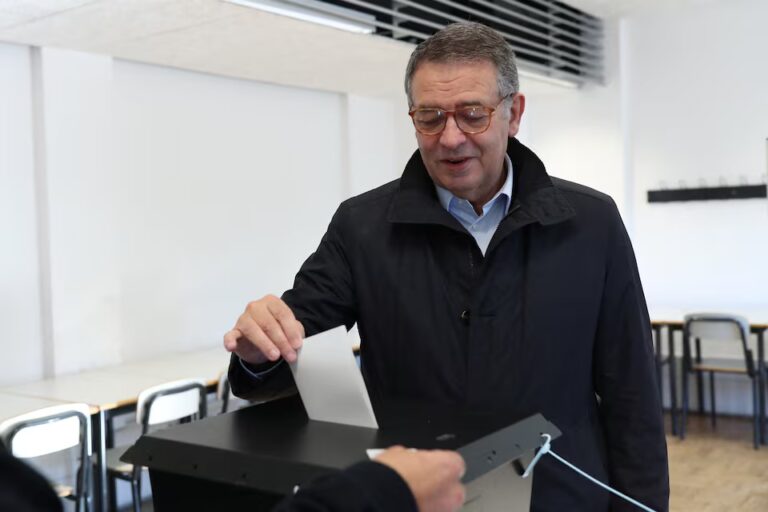
Portuguese voters went to the polls on Sunday to choose their next president, with opinion surveys pointing to a fragmented race that is likely to force a rare second round amid the growing strength of the far right.
Polling stations across the country opened early, with about 11 million voters eligible to cast ballots. Voting is set to end at 7 p.m. local time, with exit polls expected an hour later and official results released overnight.
Pre-election surveys show three leading candidates locked in a tight contest for the top two spots that would advance to a runoff, a scenario seen only once before since Portugal returned to democracy in 1974.
The most recent poll published on Friday by Pitagorica showed Socialist candidate Antonio Jose Seguro narrowly leading with 25.1 percent. He was followed closely by Andre Ventura, leader of the far right Chega party, on 23 percent. Joao Cotrim Figueiredo, a former leader of the Liberal Initiative party and a current member of the European Parliament, was close behind.
The narrow margins highlight how Portugal’s political landscape has splintered in recent years, driven by voter frustration with traditional parties and the rapid rise of Chega, an anti establishment and anti immigration force founded in 2019.
Although the presidency is largely ceremonial, the office carries important constitutional powers. The president can veto legislation, dissolve parliament under specific circumstances, and call snap parliamentary elections, making the vote closely watched by political leaders and investors.
Chega emerged as the main opposition force in last May’s parliamentary election, securing 22.8 percent of the vote and reshaping Portugal’s political balance. Ventura’s strong showing since then has made him a central figure in the presidential race.
However, several polls suggest his path to victory remains narrow. While some surveys published over the past week showed Ventura slightly ahead, all placed the leading candidates within the margin of error.
Read Also: Ronaldo Sent Off As Portugal Fall Behind In Dublin Qualifier
Runoff projections consistently show Ventura losing a second round vote due to a high rejection rate among voters, with more than 60 percent saying they would not support him under any circumstances.
The Economist Intelligence Unit said in a recent assessment that a runoff between Seguro and Ventura would likely favor the Socialist candidate. “A Seguro Ventura runoff would be more straightforward given Ventura’s limited appeal beyond his core base,” the group said.
By contrast, it noted that a second round involving Cotrim Figueiredo would be harder to predict and more finely balanced.
While the presidency is mainly symbolic, the Economist Intelligence Unit added that Ventura is the only leading contender signaling a more interventionist approach to the role, though it said this was unlikely to translate into electoral success.
Eight other candidates are also competing, though none are expected to break into the top tier. Among them are Luis Marques Mendes, backed by the ruling center right Social Democratic Party, and retired Admiral Henrique Gouveia e Melo, who gained national recognition for leading Portugal’s COVID 19 vaccination campaign. Both have polled above 11 percent in recent surveys.
If no candidate secures an outright majority, a runoff between the top two finishers will be held in the coming weeks, extending a campaign that has already showed the depth of political change in one of Europe’s traditionally stable democracies.