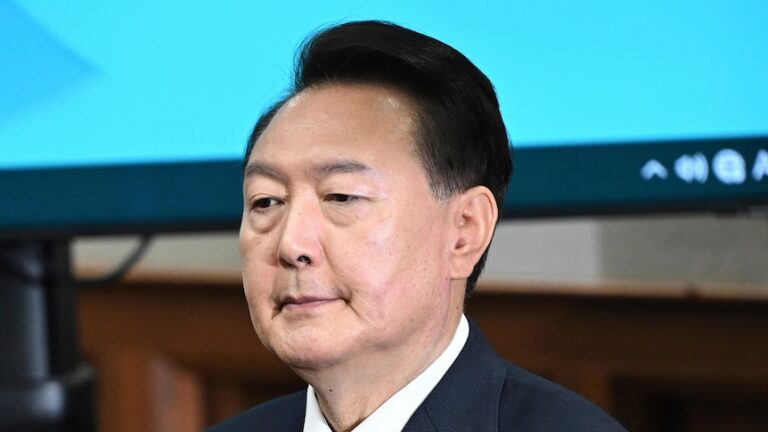
South Korea’s impeached former president Yoon Suk Yeol has been sentenced to five years in prison over crimes linked to his failed attempt to impose martial law in 2024, marking the first court verdict in a series of high profile trials stemming from the episode.
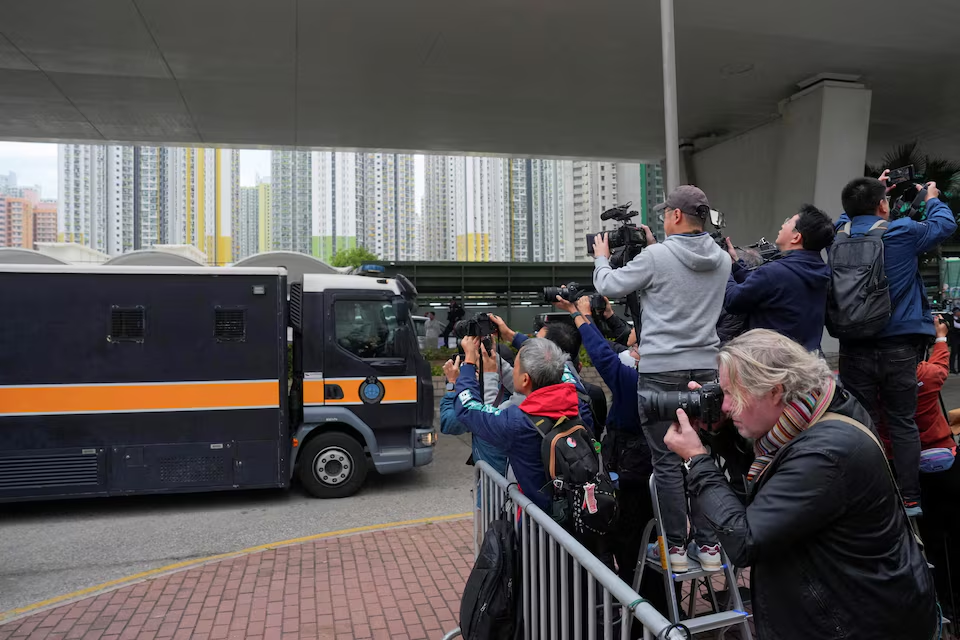
The Seoul Central District Court ruled on Friday that Yoon was guilty of abuse of power, obstructing justice, and falsifying official documents. Judges said his actions triggered a national political crisis and showed a lack of remorse, according to court statements cited by Reuters and local media.
In its ruling, the court found that Yoon unlawfully used presidential bodyguards to block his arrest, failed to properly consult cabinet members before declaring martial law, and drafted a false document claiming the move had been approved by senior officials.
“The accused had a duty to safeguard the constitution and the law, but instead turned his back on them,” the presiding judge said while delivering the verdict.
Prosecutors had sought a 10 year prison sentence, arguing that Yoon’s conduct represented a serious threat to democratic order. The court handed down a lesser sentence but noted that Yoon had “consistently shown no remorse” for his actions.
Both prosecutors and defense lawyers have seven days to file an appeal.
Yoon’s martial law declaration in December 2024 was short lived but sent shockwaves across South Korea. Lawmakers rushed to the National Assembly to overturn the order, while large protests erupted nationwide amid fears of democratic backsliding.
The crisis plunged the country into months of political instability and ultimately led to Yoon’s impeachment by parliament. He was formally removed from office later that year.
Friday’s verdict is the first of four criminal trials linked to the martial law bid. Legal experts say it offers a strong indication of how courts may assess Yoon’s conduct in the remaining cases.
The most severe charge Yoon faces is insurrection, a crime that carries a possible death sentence under South Korean law. Prosecutors argue that the martial law attempt amounted to an effort to undermine constitutional order. A verdict in that case is expected in February, according to court schedules cited by AFP.
Yoon has denied all charges across his trials. His legal team argues that the arrest warrant issued against him was invalid and that South Korean law does not require a president to consult every cabinet member before exercising emergency powers.
Investigators and prosecutors have rejected those claims, saying there were clear procedural violations and no legal basis for Yoon’s actions.
About 100 supporters gathered outside the courthouse on Friday, watching the proceedings on a large screen. Some waved red banners reading “Yoon, again! Make Korea great again,” while others shouted at the judge as the verdict was delivered.
Despite the protests, surveys suggest the country remains deeply divided. A poll conducted last December found that nearly 30 percent of South Koreans did not believe Yoon’s martial law declaration constituted an insurrection.
Yoon’s conviction brings renewed attention to fractures within South Korean society, even after voters elected opposition leader Lee Jae Myung in a decisive victory six months after the martial law crisis.
Read Also: Yoon Suk Yeol Insurrection Trial Sentencing Delayed
South Korea has previously jailed former leaders. Park Geun hye was sentenced to 20 years in prison in 2021 for abuse of power and bribery, though she was later pardoned and released.
As Yoon’s remaining trials move forward, courts are expected to weigh whether his actions represented political misjudgment or a criminal attempt to subvert democratic rule. The outcome could shape South Korea’s legal and political landscape for years to come.