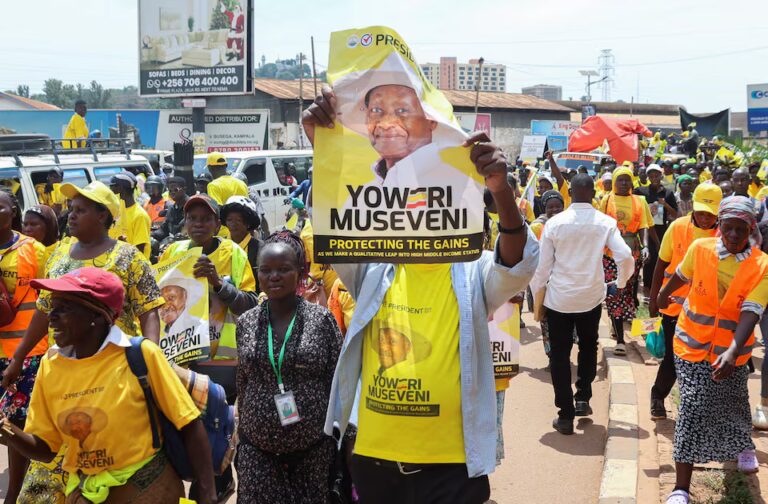
Ugandan authorities shut down nationwide internet access and restricted mobile services on Tuesday, just two days before a national election that will see President Yoweri Museveni seek a seventh term after nearly four decades in power.
The move, ordered by the Uganda Communications Commission, took effect at 6 p.m. local time and affected public internet connections across the country, according to a letter sent to mobile operators and internet service providers and seen by Reuters.
In the directive, the regulator said the shutdown was intended to prevent “misinformation, disinformation, electoral fraud and related risks” during what it described as a sensitive period for national stability.
The vote on Thursday comes amid a heavy security presence and widespread arrests of opposition supporters. Human rights groups say hundreds of people have been detained in recent weeks as security forces cracked down on rallies backing Museveni’s main challenger, pop star turned politician Bobi Wine.
Reuters witnesses have reported police firing live ammunition and tear gas at opposition campaign events, escalating fears of violence as election day approaches.
“The UCC acknowledges the operational challenges this directive may impose and appreciates your full cooperation in upholding national stability,” the commission said in its letter to licensed operators, underscoring the government’s focus on security over access.
Museveni, now 81, first took office in 1986 after leading a five year insurgency. He has since amended the constitution twice to remove presidential age limits and term limits, allowing him to remain in office.
Political analysts say his tight control over state institutions makes a surprise outcome unlikely in the East African country of roughly 46 million people, despite growing frustration among younger voters.
The internet shutdown came on the same day authorities ordered two local human rights organizations to suspend their activities ahead of the vote.
Read Also: Tanzania Election Held Without Main Opposition Parties
The state run National Bureau for NGOs accused one of the groups, Chapter Four Uganda, of engaging in actions deemed “prejudicial” to national security and told it to cease operations immediately, according to an official letter.
Both organizations had recently criticized what they described as arbitrary arrests and the mistreatment of opposition supporters and journalists.
The United Nations Human Rights Office has warned that the election is unfolding in an atmosphere of repression and intimidation, raising concerns about the credibility of the process.