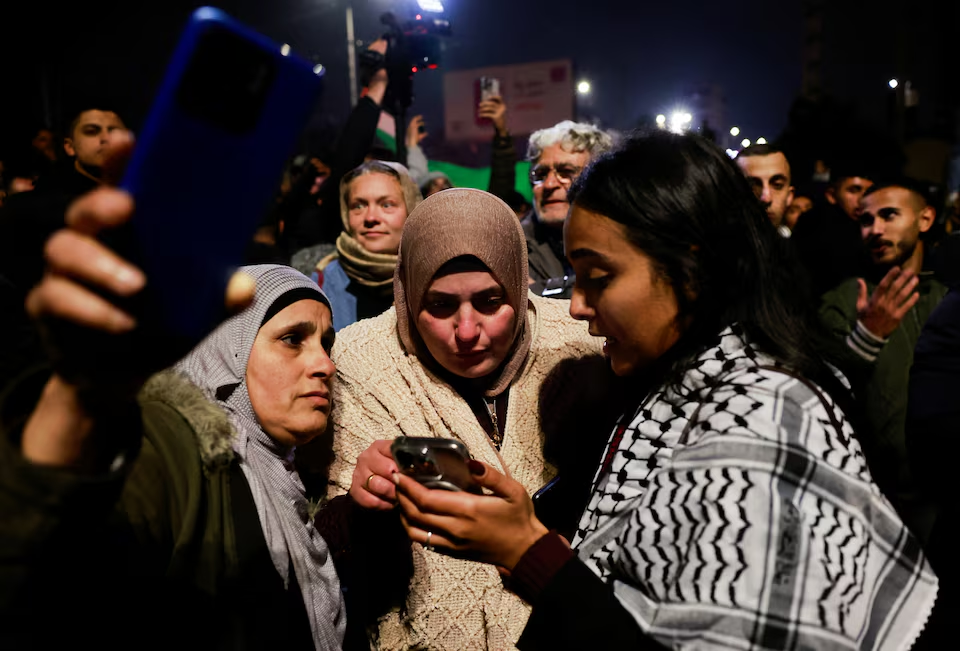
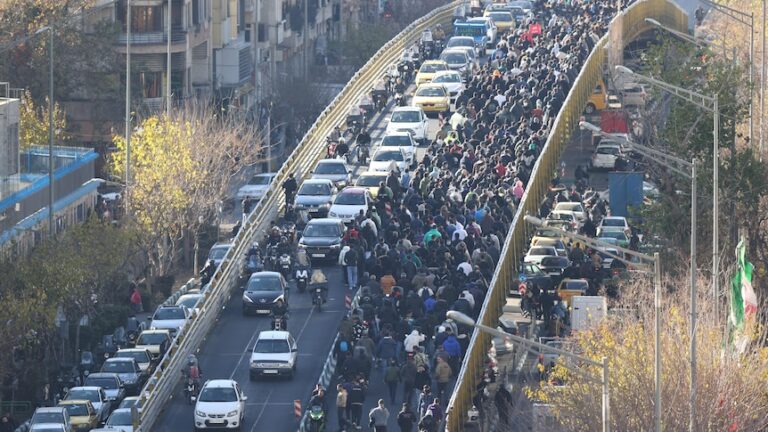
At least 25 people have been killed in Iran during nine days of protests sparked by the rapid collapse of the national currency and surging inflation, according to Iranian and international rights groups monitoring the unrest.
Demonstrations began in Tehran’s central bazaar and have since spread to several cities in western and southern Iran, showing growing public frustration with worsening economic conditions as authorities move to contain the protests through arrests and security operations.
The protests initially focused on economic grievances, including the sharp fall of the rial and rising prices of basic goods. On Tuesday, shopkeepers continued demonstrations in Tehran’s bazaar, with about 150 participants voicing economic demands, Iran’s Fars news agency reported.
While the scale of the unrest remains smaller than the nationwide protests of 2022–2023, which followed the death of Mahsa Amini in morality police custody, observers say the current demonstrations have rapidly evolved beyond economic complaints.
In several locations, protesters were heard chanting slogans critical of Iran’s clerical leadership, signaling broader political discontent alongside financial pressure.
Rights organizations have reported varying casualty figures. Hengaw, a Kurdish Iranian human rights group, said at least 25 people had been killed, including four minors, and estimated that more than 1,000 individuals had been arrested.
HRANA, a network of Iranian rights activists, reported a higher death toll of at least 29 people, including two members of the security forces, and said 1,203 arrests had been recorded as of January 5.
Iranian authorities have not released an official death toll for protesters but confirmed that at least two members of the security services were killed and more than a dozen injured during clashes.
Read Also: Iran Protests Over Inflation Leave At Least 16 Dead
Police chief Ahmadreza Radan said security forces were distinguishing between peaceful demonstrators and those he described as violent agitators. Speaking through state media, Radan said police would arrest individuals deemed responsible for unrest either on site or after identification by intelligence units.
Earlier this week, he warned that authorities would “deal with the last of these rioters,” signaling a tougher response as protests persist.
At the same time, government officials have publicly acknowledged Iran’s economic challenges, framing protests over living conditions as legitimate while blaming unrest on what they describe as foreign-backed networks.
Authorities have employed a dual strategy, combining calls for dialogue with crowd control measures, including the use of tear gas during confrontations in several cities.