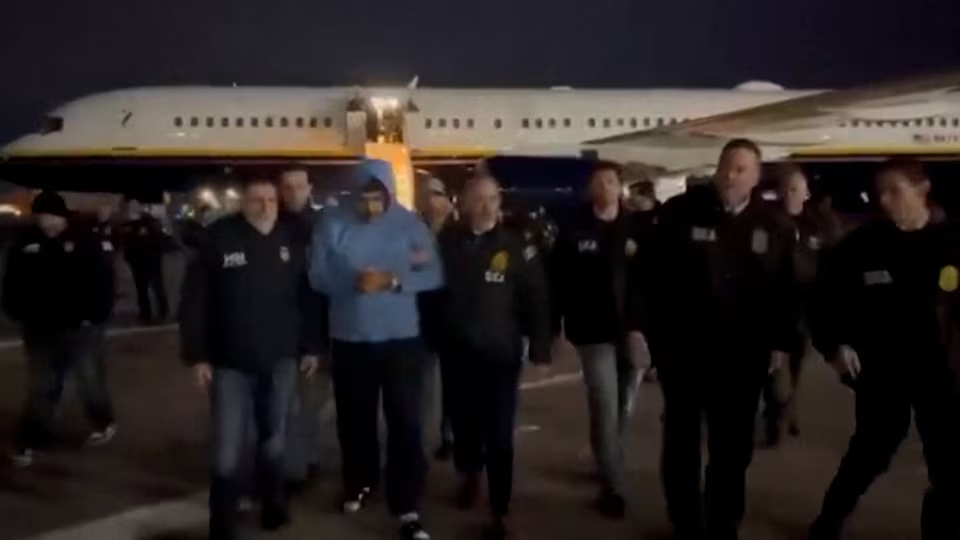
China has pushed back sharply against U.S. actions in Venezuela, saying no country has the right to act as a global enforcer, after American forces detained Venezuelan President Nicolás Maduro and transferred him to the United States.
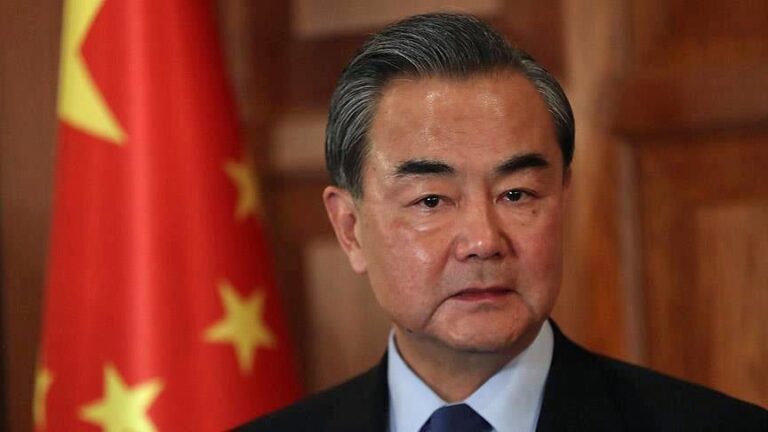
Chinese Foreign Minister Wang Yi made the remarks on Sunday during talks in Beijing with Pakistan’s Foreign Minister Ishaq Dar, referring to what he described as “sudden developments in Venezuela” without naming Washington directly.
Wang added that the sovereignty and security of all states must be respected under international law, marking Beijing’s first public response since images of a blindfolded and handcuffed Maduro circulated globally over the weekend.
Maduro is being held at a detention facility in New York and is expected to appear in federal court on Monday to face U.S. drug-related charges, according to U.S. authorities.
China has not commented directly on the legal case but has repeatedly opposed unilateral military actions and extraterritorial enforcement by the United States.
The episode presents a significant challenge for Beijing, which has sought to position itself as a leading diplomatic power and an alternative to U.S. influence. China underscored that ambition in 2023 when it helped broker a surprise rapprochement between Saudi Arabia and Iran, pledging to play a “constructive role” in resolving global conflicts.
Analysts say China’s growing confidence—bolstered by its ability to confront Washington in prolonged trade negotiations—has encouraged Beijing to speak more forcefully on international crises.
Still, U.S. President Donald Trump’s declaration that Washington would oversee Venezuela’s governance for now puts pressure on the “all-weather comprehensive strategic partnership” China and Venezuela formalized in 2023, nearly five decades after establishing diplomatic relations.
Read Also: Maduro To Appear In U.S. Court As Trump Warns Of More Action
A Chinese government official familiar with high-level discussions said Maduro’s detention was a setback for Beijing’s efforts to portray itself as a reliable partner to Caracas.
“It was a big blow to China. We wanted to be seen as a dependable friend to Venezuela,” the official said, referencing a meeting between Maduro and China’s special envoy for Latin American and Caribbean affairs, Qiu Xiaoqi, held just hours before the Venezuelan leader was captured.
The official also noted uncertainty surrounding Maduro’s son, who has studied in China and previously attended Peking University, amid years of educational and diplomatic engagement between the two countries.
China has served as a crucial economic backer for Venezuela since U.S. and European sanctions intensified in 2017. In 2024, China purchased approximately $1.6 billion worth of Venezuelan goods, according to the latest customs data, with crude oil accounting for nearly half of that total.
Chinese state-owned energy companies had invested about $4.6 billion in Venezuela by 2018, according to figures compiled by the American Enterprise Institute, which tracks overseas Chinese investment.