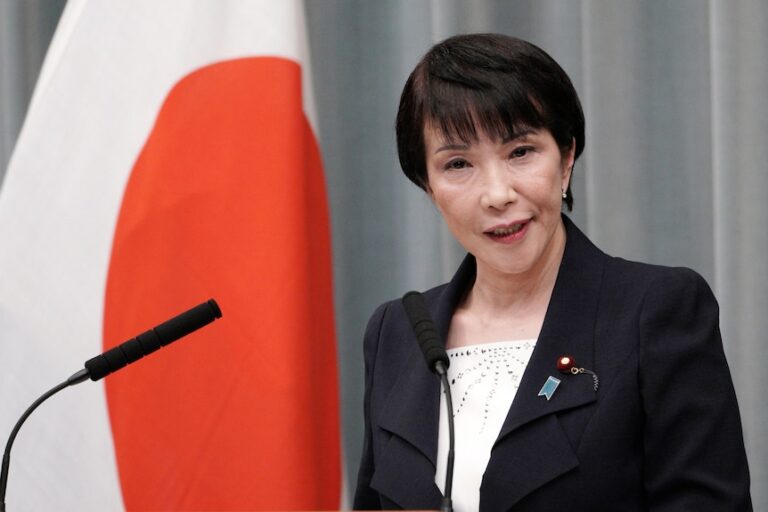
Japanese Prime Minister Takaichi backs the petition highlighting long queues and outdated facilities amid growing female representation in the Diet.
Japan’s Prime Minister Sanae Takaichi is spearheading a campaign to increase the number of women’s toilets in the nation’s parliament, joining over 50 female lawmakers in calling for more adequate facilities in the House of Representatives.
Currently, just two cubicles serve 73 female members, resulting in long lines before plenary sessions. The petition, signed by 58 lawmakers from seven political parties, argues that the shortage hampers productivity and underscores broader issues of gender inequality within Japanese politics.
The parliament building, constructed in 1936, predates women’s suffrage in Japan, and critics say its outdated infrastructure reflects the slow pace of gender equity in the country’s political institutions. Women currently hold just under 16% of the seats in the lower house, one of the lowest rates among developed nations.
Takaichi has emphasized that the issue is more than logistical. “This is about creating an environment where female lawmakers can work efficiently and be treated equally,” she said, noting that modern facilities are essential to support a growing number of women in politics.
Read Also: Knife, Bleach Attack At Japan Factory Injures Fifteen People
The campaign has drawn attention to the symbolic significance of parliamentary infrastructure, which many see as a measure of societal progress on gender issues. Advocates argue that improving basic amenities like restrooms is a small but visible step toward making Japanese politics more inclusive.
Opponents have questioned the cost of renovations, but supporters maintain that investing in such changes is crucial for demonstrating the government’s commitment to equality and encouraging more women to enter public office.
Experts say the shortage highlights broader challenges faced by women in Japan, where workplace inequality, cultural norms, and underrepresentation in leadership remain persistent issues despite decades of reforms.
The petition is part of a larger push by female lawmakers to improve parliamentary conditions and address systemic barriers in government. Observers note that tangible steps, even as seemingly simple as expanding restroom facilities, can have a meaningful impact on gender parity in legislative institutions.
Lawmakers are now seeking approval from parliamentary authorities to fund and implement the expansion, with advocates hoping that the initiative will be completed ahead of the next legislative session.
The debate over women’s toilets may appear minor, but it resonates widely as a symbol of Japan’s ongoing struggle to modernize its political culture and provide equitable conditions for female representatives.