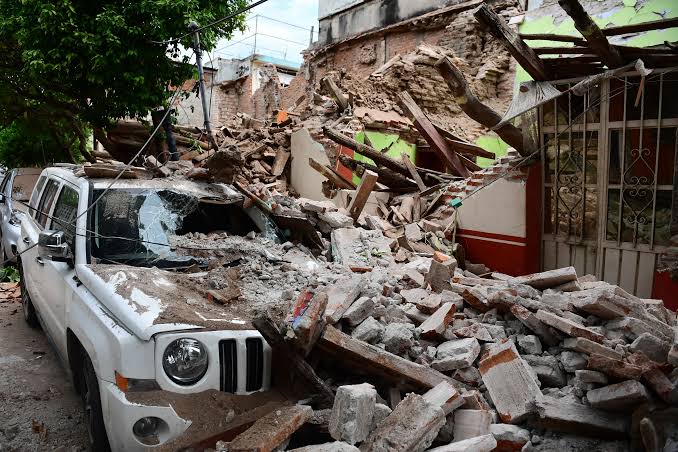
Guerrero experienced an epicenter that triggered a strong earthquake in the capital as officials inspect infrastructure and warn aftershocks may soon follow nationwide.
A strong earthquake struck southern Mexico on Thursday afternoon, sending tremors through the capital and surrounding regions, killing at least two people and prompting swift safety checks by authorities, though no immediate reports of serious damage or casualties emerged.
The magnitude 6.2 quake hit at approximately 1:58 p.m. local time on January 2, 2026, according to Mexico’s national seismological service. Its epicenter was located about 258 kilometers (160 miles) south of Mexico City, near the town of Ayutla de los Libres in Guerrero state, a coastal region that frequently experiences seismic activity.
The earthquake occurred at a relatively shallow depth of about 10 kilometers, increasing the intensity of shaking near the epicenter. Residents in parts of Guerrero reported moderate ground movement, while Mexico City experienced light but noticeable shaking that caused buildings to sway briefly and led some offices and public buildings to be evacuated as a precaution.
Mexico City’s early warning system was activated in several districts, giving residents a short alert before the shaking reached the capital. Emergency protocols were immediately put into effect, with civil protection teams, police, and firefighters deployed to inspect critical infrastructure, including hospitals, bridges, and major transportation corridors.
Read Also: Zhi Zhang: Mexico Extradites Chinese Fentanyl Kingpin To U.S.
City officials said preliminary assessments did not indicate significant structural damage. Public transportation services reported brief slowdowns as safety inspections were carried out, but most routes resumed normal operations shortly afterward.
Social media users shared videos showing residents calmly leaving buildings and gathering in designated safety areas. Many recalled past earthquakes that caused severe destruction, underscoring the continued anxiety that seismic events trigger in the capital.
Guerrero lies along the boundary of the Cocos and North American tectonic plates, making it one of Mexico’s most earthquake-prone states. Seismic waves from the region often travel long distances and are amplified in Mexico City, which is built on soft lakebed sediments that can intensify shaking even from distant quakes.
Mexico has made significant investments in earthquake preparedness following deadly disasters, including the 1985 earthquake that devastated large parts of the capital and the 2017 quake that killed more than 350 people nationwide. Stricter building codes, public drills, and early warning systems have since reduced vulnerability, experts say, though risks remain.
Seismologists warned that aftershocks are possible in the hours or days following the quake, though they are typically weaker than the main event. Authorities urged residents to stay alert, avoid spreading unverified information, and follow guidance from official channels.
As inspections continued into the evening, officials emphasized that preparedness and rapid response remain essential in a country where earthquakes are a constant threat, even when initial damage appears limited.