
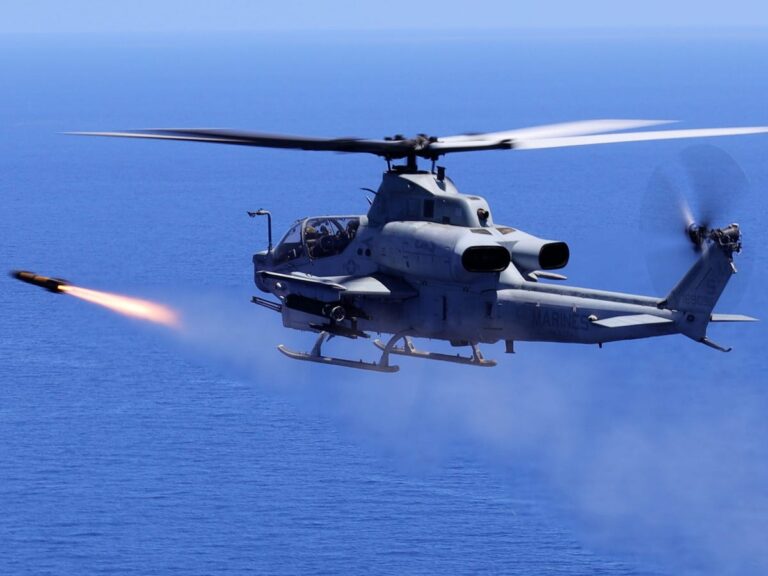
U.S. Marine Corps fires Red Wolf munition from AH-1Z, showing strike range ten times Hellfire, networking abilities and a push for Pacific-ready airpower.
United States Marine Corps has completed a key live-fire test of a new helicopter-launched munition designed to dramatically extend the reach of its attack aircraft, signaling a shift in how U.S. forces plan to fight in high-threat environments.
The test, conducted over the Atlantic Test Range, involved the launch of L3Harris Technologies’ Red Wolf system from an AH-1Z Viper attack helicopter. According to the Marine Corps and the company, the munition successfully struck a sea-based target, marking a major milestone in the service’s Long Range Attack Missile, or LRAM, demonstration program.
Unlike traditional helicopter weapons, Red Wolf is designed to reach targets far beyond the range of existing systems. Current helicopter-fired missiles such as the AGM-114 Hellfire typically reach about 21 miles, while other air-to-ground weapons operate at even shorter distances. Red Wolf is intended to push that reach to more than 200 nautical miles, allowing aircrews to strike from well outside enemy air-defense zones.
During the test, Red Wolf also demonstrated capabilities beyond a standard strike role. Officials said the system functioned as a sensor and networking node, collecting and sharing targeting data while in flight. This allows other aircraft, ships, or ground forces to use the information for follow-on attacks, reflecting a growing emphasis on connected, multi-domain operations.
Read Also: Nigerian Government To Receive 4 U.S. Attack Helicopters Soon
The event marked another first for the Marine Corps. It was the initial use of a tablet-based control interface to operate a weapon system from a rotary-wing aircraft, an effort aimed at reducing pilot workload and simplifying combat operations.
L3Harris described Red Wolf as part of a broader Pentagon concept known as “launched effects,” which focuses on relatively low-cost, flexible systems that can perform multiple missions. In addition to precision strike, the munition can be configured for electronic warfare, communications relay, signal detection, or decoy missions.
The turbojet-powered system measures about six feet in length and carries payloads weighing up to 25 pounds. It flies at subsonic speeds, has an endurance of more than an hour, and uses fold-out fins for stability and control.
Defense analysts say such capabilities are especially relevant to a potential conflict in the Pacific, where adversaries have invested heavily in long-range missiles and dense air-defense networks. Red Wolf could be used to disrupt enemy sensors or communications, opening paths for more powerful weapons to strike high-value targets.
The system has completed more than 40 flight tests since 2020 from helicopters, fixed-wing aircraft, unscrewed platforms, and ground launchers. With an estimated unit cost of about $300,000, the Pentagon sees it as a more affordable option than traditional long-range cruise missiles.
L3Harris expects Red Wolf to be ready for initial operational fielding in 2026, as the Marine Corps expands its focus on long-range, survivable strike capabilities for future conflicts.