
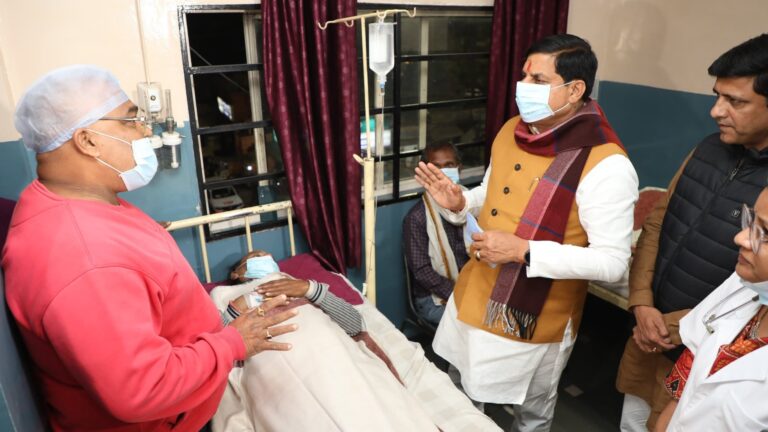
At least nine people have died and more than 200 others have been hospitalized in Indore after a diarrhoea outbreak that local officials say was caused by contaminated drinking water in one neighborhood of the central Indian city.
Health authorities said the outbreak was traced to a leak in a water pipeline in the Bhagirathpur area, where tests later confirmed bacterial contamination. Emergency measures are now underway as officials try to contain the spread and prevent further illnesses.
The situation has drawn attention because Indore, located in Madhya Pradesh state, has been ranked India’s cleanest city for eight consecutive years under the national Swachh Survekshan programme.
Kailash Vijayvargiya, a senior lawmaker, confirmed that nine deaths had been recorded following the outbreak. Indore’s chief medical officer, Madhav Prasad Hasani, said contaminated drinking water was the likely source of the infections.
Speaking by phone, Hasani said a leak in the local pipeline allowed bacteria to enter the water supply. “I cannot say anything on the death toll, but yes, over 200 people from the same locality are undergoing treatment at different hospitals of the city,” he said, adding that the final laboratory report on water samples was still pending.
Hospitals across Indore have admitted patients suffering from severe diarrhoea, dehydration, and related complications, according to local health officials.
District administrative officer Shravan Verma said authorities moved quickly after the outbreak was detected. Medical teams were sent door to door to screen residents and identify new cases.
“We have found one leakage point that could have contaminated the water, and that point has been fixed,” Verma said. He added that officials had screened 8,571 people and identified 338 residents with mild symptoms.
Read Also: New Zealand, India Seal Free Trade Deal To Boost Growth Pact
Chlorine tablets are being distributed to households to help disinfect drinking water, while residents have been advised to boil water before use until further notice.
Public health experts note that waterborne diseases remain a recurring risk in densely populated urban areas, particularly during periods of infrastructure stress. Outbreaks linked to pipeline leaks are not uncommon in Indian cities, especially where aging water systems run close to sewage lines.
Local authorities said monitoring would continue over the coming days, with additional medical staff on standby if the number of cases rises. Officials also said they would review the city’s water distribution network to prevent similar incidents.
The state government is expected to release further updates once laboratory results are finalized and the full scope of the outbreak is confirmed.