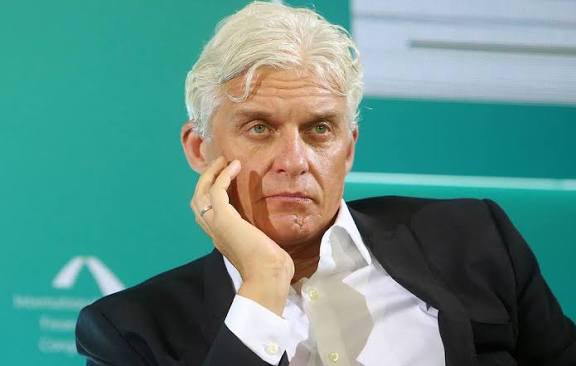
Oleg Tinkov says he was forced to sell his bank stake after criticizing Russia’s war, losing billions as Kremlin pressure followed in the 2022 Ukraine war.
Former Russian banking billionaire says a single social media post criticizing the war in Ukraine triggered a chain of events that wiped out nearly $9 billion of his personal wealth and forced him into exile.
Oleg Tinkov, the founder of Tinkoff Bank, said he was compelled to sell his stake in the lender at a tiny fraction of its value after publicly condemning Russia’s invasion of Ukraine in an Instagram post in April 2022. He described the episode as a “hostage situation” that illustrates how dissent among Russia’s business elite is swiftly punished.
Tinkov told the BBC that within 24 hours of his post, senior executives at his bank received a message relayed through Kremlin-linked officials. The choice, he said, was blunt: sell his stake and remove his name from the bank, or face the nationalization of one of Russia’s largest private lenders.
“There was no negotiation,” Tinkov said in separate comments to U.S. media. “I had to accept whatever price they gave me.”
Read Also:Ukraine Peace Talks: Russia Confirms New U.S. Contacts
At the time, Tinkov owned roughly 35 percent of TCS Group, the holding company behind Tinkoff Bank. Within days, a firm connected to metals magnate Vladimir Potanin moved to acquire the stake. Tinkov said the deal valued his holding at about 3 percent of its real market worth, effectively erasing close to $9 billion built over decades.
Tinkov had used Instagram to call the war “insane,” criticize Russia’s military leadership, and urge a rapid end to the fighting. The comments stood out in a business environment where public loyalty to the Kremlin has become essential for preserving assets.
After the sale, Tinkov left Russia and later renounced his Russian citizenship. He said pressure extended beyond the transaction itself, including efforts to erase his name from the bank he founded and downplay his role in building the business.
Analysts say his experience fits a broader pattern in wartime Russia, where sanctions, capital controls, and the threat of asset seizures have made private fortunes increasingly dependent on political alignment. The exit of Western companies has also created opportunities for favored insiders to acquire assets at discounted prices.
Now living abroad, Tinkov has re-emerged cautiously in international business circles. In 2025, he became a backer of Plata, a Mexican fintech startup led by former Tinkoff executives.
Still, he says the lesson is clear. In today’s Russia, public dissent from wealthy insiders carries a steep price, one that can be imposed with remarkable speed.