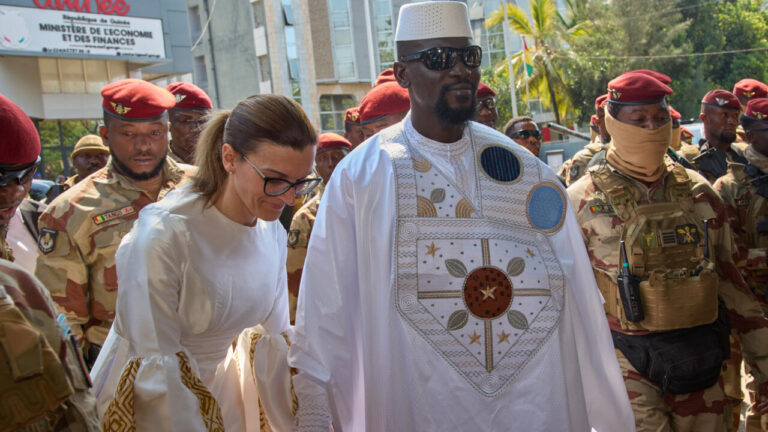
Guinea’s military leader Mamady Doumbouya has been elected president, according to provisional results announced Tuesday, marking the country’s formal return to civilian rule more than three years after a coup reshaped its political landscape.
Election officials said Doumbouya won an outright majority in the December 28 vote, securing a seven year mandate without the need for a runoff. The result now awaits confirmation by Guinea’s Supreme Court, which has up to eight days to review any legal challenges.
Provisional figures released by the national electoral authority showed Doumbouya capturing 86.72 percent of the vote in a race widely expected to favor the former special forces commander.
Djenabou Toure, head of the electoral commission, announced the results late Tuesday, reporting voter turnout of 80.95 percent nationwide. Opposition figures disputed the participation rate, particularly in the capital Conakry, where voting appeared subdued.
Doumbouya seized power in September 2021 after overthrowing President Alpha Conde, ending more than a decade of civilian rule. The takeover placed Guinea among a wave of military coups across West and Central Africa since 2020, according to data compiled by Reuters.
Initially, Guinea’s transitional charter barred junta members from running for office. That restriction was lifted after voters approved a new constitution in a September referendum, allowing Doumbouya to contest the presidency.
The election took place with major political figures absent. Former president Conde and longtime opposition leader Cellou Dalein Diallo both remain in exile, leaving Doumbouya to face a divided field of eight challengers.
Read Also: Guinea Polls: General Mamadi Doumbouya Runs For Presidency
Guinea holds the world’s largest known reserves of bauxite and is home to the vast Simandou iron ore deposit, considered the richest untapped resource of its kind. The Simandou project was officially launched last month after years of delays.
Doumbouya has credited his administration with moving the project forward and ensuring the state retains a stronger stake in future revenues.
Earlier this year, his government revoked the mining licence of Guinea Alumina Corporation, a subsidiary of Emirates Global Aluminium, following a dispute over refinery obligations. The assets were later transferred to a state owned company.
The Supreme Court’s review will determine whether the provisional outcome stands. If validated, Doumbouya will formally begin a seven year term that reshapes Guinea’s post coup transition into a new phase of elected leadership.