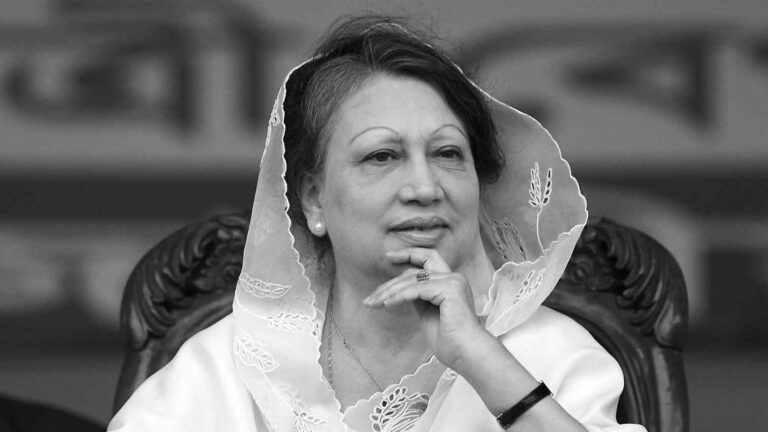
Khaleda Zia, Bangladesh’s first woman prime minister and one of the most influential figures in the country’s modern political history, has died after a long illness. She was 80.
Her party, the Bangladesh Nationalist Party, confirmed on Tuesday that Zia died following years of serious health complications, including advanced liver disease, diabetes, arthritis, and heart related conditions, according to her doctors.
Zia’s death closes a defining chapter in Bangladesh politics shaped by her decades long rivalry with Sheikh Hasina, the former prime minister and leader of the Awami League. Together, the two women dominated the country’s political life for more than thirty years, often alternating in power and shaping sharply divided public loyalties.
Though Zia had not held office since 2006 and spent years in prison or under house arrest, she remained a powerful symbol for the opposition. Her party continues to command strong nationwide support and is widely seen as the leading contender ahead of parliamentary elections scheduled for February.
Known widely by her first name, Khaleda was initially a reserved public figure who focused on raising her two sons. Her entry into politics followed the assassination of her husband, President Ziaur Rahman, during a failed military coup in 1981.
Three years later, she took leadership of the BNP, a party founded by her husband, pledging to pursue his vision of lifting Bangladesh out of poverty and economic stagnation. In 1990, she joined forces with Sheikh Hasina to lead a mass movement that ended the rule of military leader Hossain Mohammad Ershad and restored democracy.
Bangladesh’s first widely regarded free election took place in 1991, delivering Zia a surprise victory over Hasina. Her win was aided by support from the Islamist party Jamaat e Islami, according to election officials and international observers.
The alliance between the two women soon collapsed. Their rivalry became so intense that they were dubbed the “battling Begums,” a phrase that came to define an era of fierce political competition marked by protests, boycotts, and repeated confrontations.
Read Also: Osman Hadi Death Sparks Mourning And Protests In Bangladesh
Supporters described Zia as composed and traditional in public, but firm and unyielding when defending her party. Hasina, by contrast, was seen as outspoken and forceful, a contrast that deepened political divisions across the country.
Zia traveled to London in early 2025 for medical treatment, remaining there for four months before returning to Bangladesh. Her death comes during a period of profound political change.
Since August 2024, Bangladesh has been governed by an interim administration led by Nobel Peace Prize laureate Muhammad Yunus, following a student led uprising that removed Hasina from power. In November, Hasina was sentenced to death in absentia over her handling of the protests, according to court officials.
Zia’s son, Tarique Rahman, the acting chairman of the BNP, returned to Bangladesh last week after nearly seventeen years in exile and is widely viewed as a strong candidate for the premiership.