
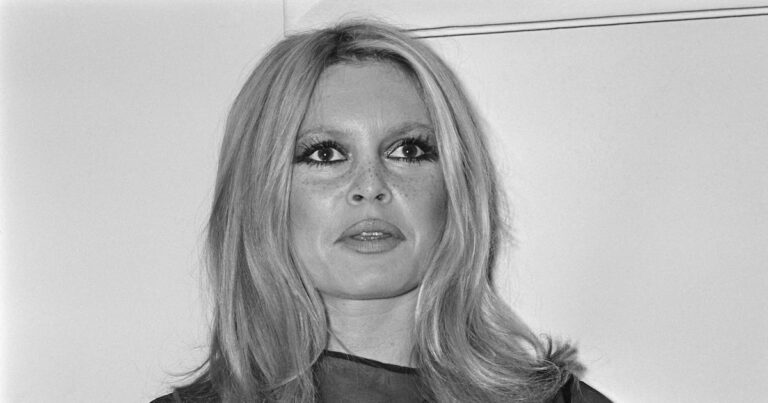
Brigitte Bardot, the French actress whose barefoot dance in And God Created Woman made her a global symbol of screen sensuality and cultural rebellion, has died at the age of 91, her foundation said on Sunday. No cause of death was immediately given.
Bardot’s rise in the mid twentieth century reshaped how female desire and independence were portrayed in mainstream cinema, turning her into one of France’s most recognisable cultural figures and an enduring reference point in global pop culture.
Born in Paris on September twenty eight nineteen thirty four, Bardot grew up in an upper middle class family and later described herself as an awkward, introverted child. By the age of fifteen, she appeared on the cover of Elle magazine, launching a modeling career that quickly opened the door to film roles.
Her breakthrough came in nineteen fifty six with And God Created Woman, directed by Roger Vadim. Bardot’s portrayal of Juliette, a young woman guided by instinct rather than convention, challenged conservative norms and drew both outrage and fascination. The controversy only amplified her appeal, according to contemporary accounts from Reuters and French film historians.
By the late nineteen fifties and early nineteen sixties, Bardot had become shorthand for a new kind of femininity, one defined by freedom, physical confidence, and emotional candor. Her influence extended well beyond cinema. Bob Dylan reportedly wrote an early song inspired by her, while artist Andy Warhol later painted her portrait, cementing her place in international pop art.
French philosopher Simone de Beauvoir famously wrote about Bardot in a nineteen fifty nine Esquire essay, portraying her as an emblem of authenticity rather than provocation. Beauvoir wrote that Bardot did not seek to shock but simply followed her instincts, adding that her defining quality was “genuineness,” which she described as Bardot’s very essence.
That image helped position Bardot as more than a sex symbol. Scholars and critics later credited her with reflecting broader social shifts around gender roles and personal autonomy in postwar Europe.
Read Also: Hollywood’s Tom Holland Suffers Mild Concussion During Filming
Alongside acting, Bardot pursued music, collaborating with Serge Gainsbourg on several songs. Their recording Je t’aime… moi non plus became one of the most controversial releases of its era, banned by some broadcasters while achieving international success.
Despite her popularity, Bardot often spoke about the personal cost of fame. In later interviews, she described celebrity life as suffocating and said she felt trapped by constant public attention. “Nobody can imagine how horrific it was,” she said in a retrospective interview, reflecting on her decision to step away from acting in the early nineteen seventies.
Her private life drew intense media scrutiny, marked by four marriages, high profile relationships, and long struggles with depression. In nineteen sixty four, on her twenty sixth birthday, she was found unconscious at her home on the French Riviera after attempting to take her own life, an episode later confirmed by French authorities.
After retiring from film, Bardot devoted herself almost entirely to animal rights activism. She founded the Brigitte Bardot Foundation in nineteen eighty six, which became one of Europe’s most prominent animal welfare organizations. Her later years were also marked by outspoken political views, including repeated expressions of sympathy for far right causes in France, which drew legal challenges and public criticism.
In nineteen sixty eight, Bardot was chosen as the model for Marianne, the symbolic face of the French Republic, a testament to her cultural stature at the height of her fame.