Myanmar heads to the polls on Sunday despite a protracted civil war, widespread displacement, and one of the gravest humanitarian emergencies in Asia, showing the country’s deep political and social fractures four years after a military coup.
The vote comes as fighting between the ruling junta and armed resistance groups continues to devastate large parts of the country, leaving millions dependent on aid and raising questions about governance, legitimacy, and stability.
Myanmar’s crisis began in February 2021, when the military seized power from an elected civilian government led by Nobel Peace Prize laureate Aung San Suu Kyi. The takeover sparked nationwide protests that evolved into a complex civil conflict involving ethnic armed groups and newly formed resistance forces.
Since then, violence has intensified across multiple regions, including the northwest, southeast, and border areas, disrupting daily life and crippling already fragile state institutions.
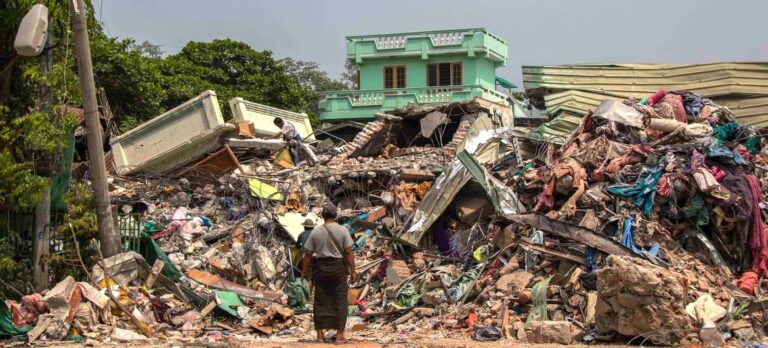
The United Nations has repeatedly warned that Myanmar is facing one of Asia’s most severe humanitarian crises, driven by sustained conflict and compounded by natural disasters, including a powerful earthquake that struck parts of the country in March.
According to UN estimates, around 20 million people—nearly 40% of the population—now require humanitarian assistance. Soaring inflation and a sharply depreciating currency have pushed roughly half of Myanmar’s 51 million people below the poverty line.
More than 3.6 million people have been displaced by the fighting, while over 6,800 civilians have been killed since the conflict erupted, UN agencies say.
Read Also: SpaceX Cuts Off 2,500 Starlink Services To Myanmar Scammers
Food insecurity has emerged as one of the most urgent challenges. The World Food Programme (WFP) estimates that more than 16 million people are acutely food insecure, meaning their lack of access to food threatens both lives and livelihoods.
Looking ahead, the situation is expected to deteriorate further. The WFP projects that more than 12 million people will face acute hunger next year, including at least 1 million who will require lifesaving food assistance.
Children are among the hardest hit. More than 540,000 children are expected to suffer from acute malnutrition this year—a 26% increase from last year—according to the agency. One in three children under the age of five is already experiencing stunted growth, a condition that can have lifelong consequences.
The WFP has classified Myanmar as a “hunger hotspot of very high concern,” placing it among the world’s largest aid-dependent populations.