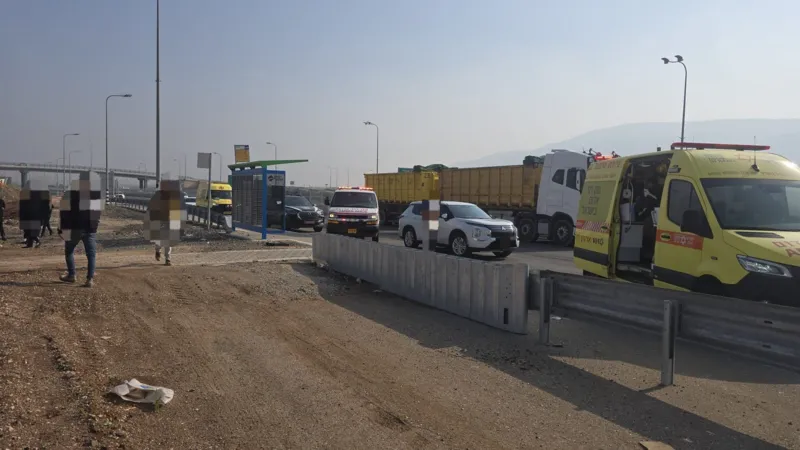
At least eight people were killed and 18 others wounded after an explosion tore through a mosque in the central Syrian city of Homs during Friday prayers, Syrian health officials said.
The blast struck the Imam Ali ibn Abi Talib Mosque in the Wadi al-Dhahab neighborhood, an area largely inhabited by members of the Alawite community. Emergency responders rushed the injured to nearby hospitals as security forces sealed off the area and began an investigation.
The attack is the latest in a series of sectarian incidents that have unsettled Syria following the collapse of the Assad government last year.
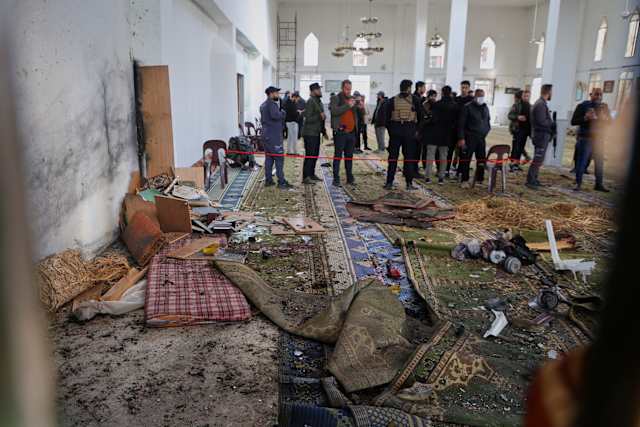
Syria’s state-run news agency SANA reported that investigators believe an explosive device was detonated inside the mosque. Images released by the agency showed scorched walls, shattered windows, and bloodstained carpets inside the prayer hall.
Authorities have not yet identified suspects, but security officials said efforts were underway to determine how the explosive was planted and who was responsible.
In a statement posted on X, Syria’s Foreign Ministry condemned the attack, calling it a “terrorist crime” and describing it as a “cowardly act” aimed at destabilizing the country and inflaming sectarian tensions.
The Sunni extremist group Saraya Ansar al-Sunnah claimed responsibility for the bombing, saying it carried out the attack in coordination with another unidentified group. The organization said explosives had been planted inside the mosque prior to the blast.
Saraya Ansar al-Sunnah emerged publicly earlier this year after claiming a deadly church bombing in Damascus. Its origins and leadership remain unclear, and its opaque structure has raised questions among analysts about its true affiliations.
Some observers have suggested the group may operate as a front for the Islamic State (IS), citing similarities in rhetoric, targeting patterns, and operational tactics. The group has not confirmed any formal ties to IS.
The bombing comes one year after Syrian rebel forces ousted former President Bashar al-Assad, an Alawite whose family ruled Syria for decades. Assad fled to Russia, where he and his family were granted asylum.
Read Also: American Journalist Detained In Syria After Criticizing US Role
Since his removal, Syria has experienced repeated waves of sectarian violence. Alawite communities, in particular, have expressed fears of reprisals amid crackdowns and targeted attacks.
In March, security forces were accused of killing dozens of Alawites in the coastal province of Latakia, according to the war monitor Syrian Observatory for Human Rights (SOHR).
Saraya Ansar al-Sunnah’s claim follows a months-long lull in publicly acknowledged attacks. The group has previously said it targets religious minorities and individuals it describes as remnants of the former government.
Friday’s mosque bombing underscores the fragile security environment in post-Assad Syria, where competing armed groups, unresolved sectarian grievances, and weak central authority continue to fuel violence.