Falcon 50 jet carrying top Libyan generals crashed after takeoff in Ankara, killing eight and prompting national mourning and an international probe.
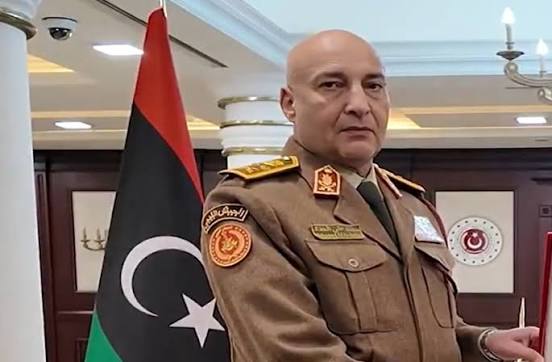
Libya’s top military commander, Lieutenant General Mohammed al-Haddad, was killed on Tuesday December 24, 2025, when a business jet crashed shortly after takeoff from Turkey’s capital, Ankara, killing everyone on board, Libyan and Turkish officials said.
The aircraft, a Falcon 50 jet, went down moments after departing Esenboga Airport on a flight bound for Tripoli. Turkish authorities said the crash is believed to have been caused by an electrical failure, though a full investigation is underway to determine the exact cause.
Al-Haddad, Libya’s army chief, was traveling with several senior military officials, underscoring the scale of the loss for a country already grappling with fragile security institutions and prolonged political instability. Three crew members were also killed, bringing the death toll to eight.
Among the victims were Major General Al-Fitouri Ghreibel, Chief of Staff of Libya’s Ground Forces; Brigadier General Mahmoud Al-Qatioui, head of the Military Manufacturing Authority; Mohamed Al-Asawi Diab, a senior adviser to the army chief; and Mohamed Omar Ahmed Mahjoub, a photographer with the military’s media office.
Read Also: Turkey F 35 Rejoin Talks Gain Momentum With US
The Libyan government confirmed the deaths in a statement, calling the crash a devastating blow to the nation’s armed forces. Prime Minister Abdulhamid al-Dbeibah announced three days of national mourning, ordering flags flown at half-staff across government institutions.
“This is a great tragedy for Libya and for the military institution,” al-Dbeibah said, extending condolences to the families of the victims and pledging full cooperation with Turkish authorities investigating the crash.
Turkey’s transport and aviation officials said emergency teams were dispatched immediately after losing contact with the aircraft. Ankara has opened a formal technical investigation, with aviation safety experts examining flight data, maintenance records, and communications between the cockpit and air traffic control.
Libya has been divided for more than a decade following the 2011 uprising that toppled longtime ruler Muammar Gaddafi. While relative calm has returned to parts of the country, its military and political structures remain fragmented, with rival administrations and armed groups competing for influence.
Analysts said the sudden loss of senior commanders could complicate ongoing efforts to unify Libya’s armed forces under a single national command, a goal backed by the United Nations and regional partners.
The Libyan Defense Ministry said arrangements were being made to repatriate the bodies and hold official funerals in Tripoli, as the nation mourns one of the deadliest incidents involving its military leadership in recent years.