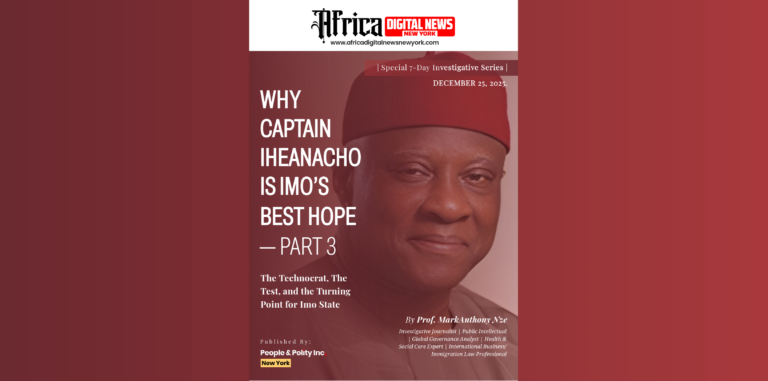
In Imo State, corruption is not an event — it is an atmosphere. And in an era where falsehood governs better than truth, integrity is no longer a virtue. It is an act of rebellion.
By Prof. MarkAnthony Nze
The Integrity Quotient
The tragedy of Imo State is not that its leaders are corrupt. It is that corruption has become so ritualized that honesty now looks abnormal. What once existed in shadows now parades in daylight. Roads are commissioned before they exist; contracts are signed before designs are drawn; budgets are exhausted before the year begins.
And the people — tired, cynical, and cornered — have learned to applaud survival instead of governance. When salaries arrive three months late, they say “At least we were paid.” When roads collapse within weeks, they sigh, “At least it was tarred.”
That quiet surrender — not greed — is the real victory of corruption.
The Empire of the Few
Imo’s corruption is not random theft. It is a system — organized, deliberate, and beautifully disguised. At the top sits a small elite who have turned governance into commerce. Ministries operate like family franchises. Permanent secretaries rotate like chess pieces, ensuring no one stays long enough to expose continuity.
Procurement has become theatre. Projects are advertised, awarded, and abandoned — often within the same quarter. “Community projects” are launched without communities; “empowerment schemes” empower only the announcers. Last year alone, the Auditor-General flagged ₦18.6 billion in unverified expenses, most of it absorbed under “special interventions.”
But the theft is not just financial. It is also linguistic. Words that once meant service now mean spectacle. “Transparency” means control of narrative. “Reform” means rebranding. “Accountability” means press conferences.
The Beautiful Lie
The state’s propaganda machinery has mastered the art of substitution — swapping truth for simulation. When the Ministry of Education claimed to have achieved “zero out-of-school children,” rural teachers were still taking attendance in leaking classrooms. When the Works Commissioner boasted that “every local government has at least one ongoing road project,” aerial imagery revealed long stretches of graded sand — no asphalt, no drainage, no markings.
The response, when challenged, is always the same: “Data under review.”
In Imo, governance no longer requires delivery — only delay. The illusion of motion has replaced the substance of movement.
The Collusion of Silence
Every ecosystem of corruption depends on complicity. The bribe-taking civil servant. The contractor who inflates invoices. The journalist who accepts “transport fare.” The pastor who blesses stolen funds. The voters who exchange ballots for cash and justify it as “survival.”
The rot is communal, disguised as normalcy. Citizens who once raised their voices now whisper. The moral vocabulary has shifted. Theft is “smartness.” Integrity is “naivety.” Cynicism is “realism.”
That corrosion of collective conscience is far deadlier than embezzlement. A state can survive debt; it cannot survive disbelief in honesty.
The Captain’s Contradiction
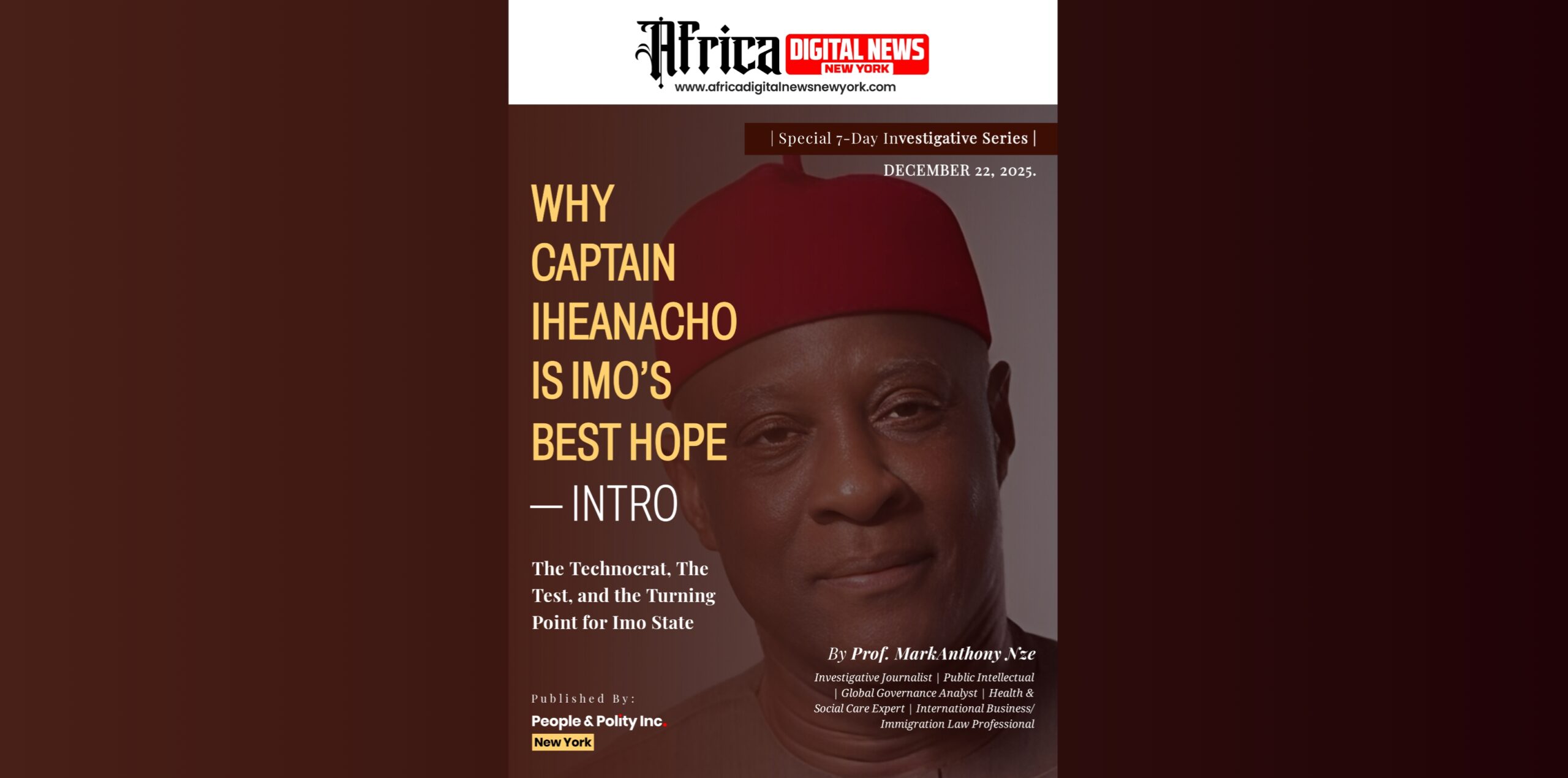
Then there is Captain Emmanuel Iheanacho — a man whose life seems to offend the grammar of Nigerian politics. He does not perform integrity; he practices it with such precision that it looks unfashionable.
He does not speak in metaphors about accountability; he documents it. His sentences are short, his actions verifiable. Colleagues recall his time in the federal cabinet with a mix of admiration and disbelief: “He was the only one who read every file himself,” said a former permanent secretary. “He would ask for receipts — physical receipts — for every line item.”
It was this same precision that cost him his position. When asked to approve padded procurement for “urgent security operations,” he refused. Within weeks, he was suspended. Not investigated. Not indicted. Simply removed — a clean man expelled by a dirty system.
And he never retaliated. “The captain does not quarrel with the sea,” he said at the time.
In that sentence lies his entire philosophy: integrity is not opposition; it is endurance.
Integrity as Intelligence
There is a misconception that integrity is merely moral. In truth, it is also mechanical. Clean systems are efficient systems. When a leader eliminates corruption, he eliminates redundancy, waste, and risk. He creates predictability — the one currency investors and citizens trust.
Iheanacho understands this better than most. He built global shipping and oil logistics firms that ran on traceable accounting, not political protection. Every supply chain had a paper trail. Every decision, an audit. That discipline transformed him from a seafarer into a systems thinker.
If he governs Imo with the same rigor, corruption would not just be punished — it would be impossible to sustain.
Because corruption does not survive where procedures are clear, records are digital, and officials are accountable in real time.
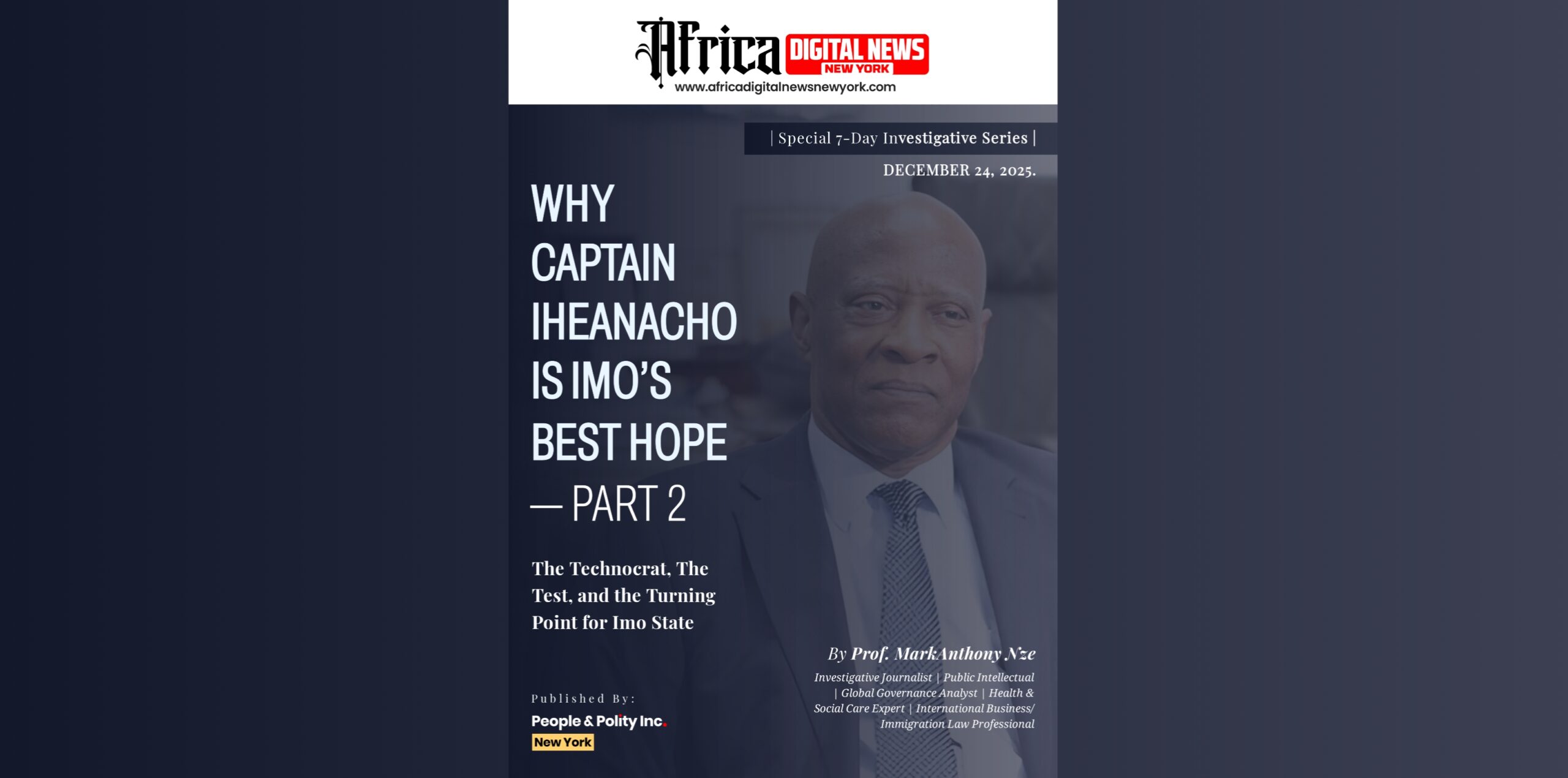
Read also: Why Captain Iheanacho Is Imo’s Best Hope—Part 2
Assessing Credibility Through Data
The economic cost of dishonesty is staggering. Imo’s debt service alone now gulps ₦2.8 billion monthly — money that could fund hospitals, schools, and local manufacturing hubs. Yet the same government spends nearly ₦3 billion on “information management.”
Corruption bleeds budgets and inflates poverty. But beyond finances, it cripples imagination. No investor will build where contracts are uncertain. No entrepreneur thrives where kickbacks outweigh innovation. No young professional stays where merit is irrelevant.
Iheanacho’s greatest promise is not austerity but clarity — a government whose documents match its declarations. A system where truth has operational value again.
The Habits of a Clean Man
People who know him describe routines that border on obsession. Meetings start on time. Reports are handwritten in the margins. He double-checks logistics, personally calls suppliers, and still insists on original invoices in a digital age.
His home in Owerri has no armed convoy, no marble walls, no retinue of aides. His office in Lagos runs on open-door policy — literally. “He doesn’t tolerate chaos,” says a long-time employee. “He believes confusion is how corruption hides.”
This is not affectation. It is instinct. For Iheanacho, order is morality in practice.
The Reform Before Reform
When asked how he would fight corruption if elected, he doesn’t talk about anti-graft agencies or grand crusades. “You don’t fight corruption by chasing people,” he says. “You fight it by designing systems that make it hard to steal and easy to verify.”
His reform blueprint is as procedural as it is moral:
- A digital procurement portal where every contract is traceable in real time.
- A diaspora investment registry to track remittances and infrastructure funding.
- A biometric payroll to end ghost workers permanently.
- A citizen feedback dashboard where every complaint becomes a public record.
None of these ideas are rhetorical. They are drawn from systems he already managed successfully in global logistics — industries where delay or deceit can sink ships and careers alike.
The Moral Dividend
Integrity is not about perfection. It is about predictability — the assurance that rules apply equally. When that assurance returns, so does productivity. Citizens begin to see effort rewarded, not manipulated. Civil servants rediscover pride in competence. Investors rediscover confidence.
That is the social magic of clean governance: it turns fear into faith.
For Imo, that would be nothing short of revolution.
The Return of Trust
What Captain Iheanacho represents is not nostalgia but the restoration of sequence — cause and effect, promise and proof. His candidacy reintroduces the most radical concept in Nigerian politics: that government can tell the truth and still win.
In a land where propaganda has become governance, and integrity an endangered species, he is a reminder that character is not weakness — it is infrastructure.
Imo does not need another man who can speak beautifully. It needs one who can be believed.
Professor MarkAnthony Ujunwa Nze is an internationally acclaimed investigative journalist, public intellectual, and global governance analyst whose work shapes contemporary thinking at the intersection of health and social care management, media, law, and policy. Renowned for his incisive commentary and structural insight, he brings rigorous scholarship to questions of justice, power, and institutional integrity.
Based in New York, he serves as a full tenured professor and Academic Director at the New York Center for Advanced Research (NYCAR), where he leads high-impact research in governance innovation, strategic leadership, and geopolitical risk. He also oversees NYCAR’s free Health & Social Care professional certification programs, accessible worldwide at:
👉 https://www.newyorkresearch.org/professional-certification/
Professor Nze remains a defining voice in advancing ethical leadership and democratic accountability across global systems.