Framework seeks US-backed European security guarantees, EU path for Kyiv, and a standing Ukrainian force as Washington presses for an end to the war.
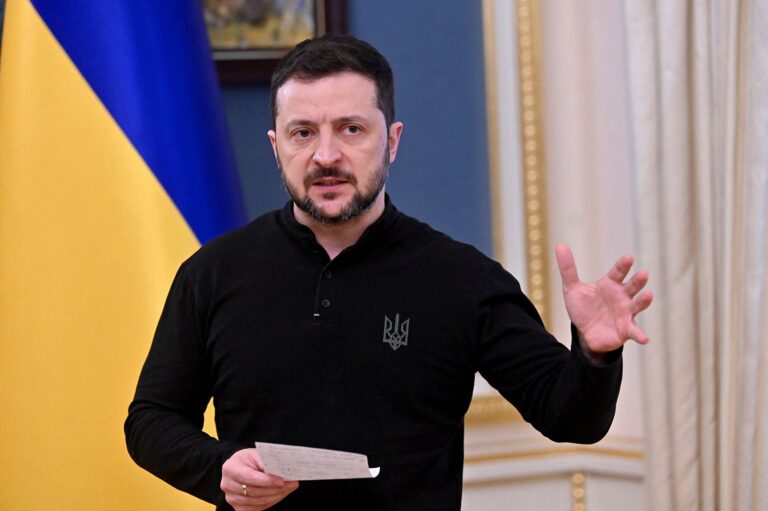
Ukrainian President Volodymyr Zelenskyy has presented a 20-point peace framework during high-level discussions in the United States, outlining Kyiv’s vision for ending the war with Russia while securing long-term international guarantees for Ukraine’s sovereignty and security.
The proposal, according to officials familiar with the talks, centers on binding security commitments from European allies supported by the United States, alongside Ukraine’s continued integration into Western political and defense structures. The plan was discussed with senior U.S. officials and European partners as diplomatic efforts intensify to explore pathways toward a negotiated settlement.
At the core of the framework is a security architecture led by European nations, with France and the United Kingdom playing prominent roles, and the United States providing what Ukrainian officials described as a strategic “backstop.” The arrangement would aim to deter future aggression without placing Ukraine outside existing international alliances.
Zelenskyy’s plan also calls for Ukraine’s armed forces to remain at a peacetime strength of about 800,000 troops, a figure Kyiv says is necessary to defend its territory after more than three years of full-scale war. Ukrainian officials argue that maintaining a robust military is essential given the scale of destruction and the lingering threat posed by Russia.
Also Also: Trump Criticizes European Leaders, Questions Ukraine Support
Another key pillar of the proposal is Ukraine’s accession to the European Union. Zelenskyy has repeatedly framed EU membership as both a political anchor and an economic guarantee, signaling Ukraine’s irreversible alignment with Europe after decades of fluctuating relations with Moscow.
U.S. officials involved in the talks have encouraged compromise, emphasizing that any viable peace agreement would require concessions from all sides. Zelenskyy said roughly 90 percent of Ukraine’s priorities have been reflected in draft discussions, though he acknowledged that negotiations remain complex and unresolved.
Washington has stepped up diplomatic engagement in recent weeks, signaling growing interest in shaping a framework that could halt the fighting while preserving Ukraine’s independence. U.S. officials maintain that any agreement must respect Ukraine’s sovereignty and be acceptable to Kyiv.
Russia has not publicly responded to the specific details of the 20-point framework. Moscow has previously rejected security arrangements involving Western forces near its borders and has opposed Ukraine’s aspirations to join Western institutions.
For international observers, the proposal underscores the shifting focus from battlefield dynamics to diplomatic positioning. While significant gaps remain between the parties, Zelenskyy’s plan highlights Kyiv’s effort to define the terms of peace rather than react to them.
As discussions continue, diplomats caution that translating principles into binding commitments will be difficult. Still, the unveiling of a detailed framework marks one of the clearest signals yet that Ukraine and its partners are actively testing the contours of a possible end to the war.