The long-awaited release of government documents linked to the late financier and convicted sex offender Jeffrey Epstein has sparked frustration among survivors, lawmakers, and legal experts, who say the disclosure falls short of the transparency promised by Congress.
The U.S. Department of Justice (DOJ) released thousands of pages of Epstein-related records on Friday under a congressional mandate, but many of the documents were heavily redacted, and several files were later removed from public view. Critics argue the partial release risks undermining public trust while reigniting speculation around one of the most scrutinized criminal cases in recent history.
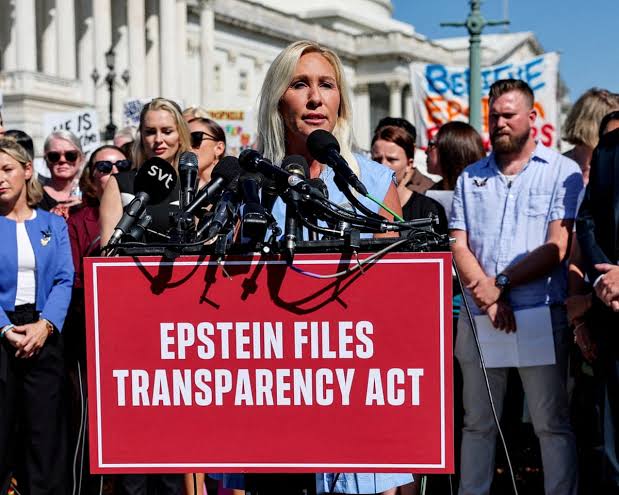
The release followed passage of the Epstein Files Transparency Act, which directed the DOJ to make materials related to Epstein’s crimes public. Lawmakers who championed the legislation said the rollout failed to meet both the letter and intent of the law.
Democratic Rep. Ro Khanna, who led the effort alongside Republican Rep. Thomas Massie, called the disclosure “incomplete” and said the department has not provided legally required explanations for its redactions.
“Our law requires them to explain redactions,” Khanna said. “There is not a single explanation.”
Massie echoed those concerns, writing on social media that the DOJ’s handling of the files “grossly fails to comply with both the spirit and the letter of the law,” and warned that current officials could face legal consequences in the future.
Deputy U.S. Attorney Todd Blanche said the department identified more than 1,200 Epstein victims or relatives and withheld information that could expose their identities.
“The only redactions being applied to the documents are those required by law — full stop,” Blanche said in a statement attributed to him by the DOJ. He added that the department is not redacting the names of politicians or public figures unless they are victims.
According to the DOJ, redactions were applied to protect victim privacy, remove images depicting sexual abuse, safeguard ongoing investigations, and prevent the disclosure of classified national security information.
In a post on X late Saturday, the DOJ said files remain under review and that “photos and other materials will continue being reviewed and redacted consistent with the law in an abundance of caution.”
Confusion intensified after at least 15 files were removed from the DOJ website within 24 hours of publication, according to CBS News. Among them were images showing framed photographs of former President Bill Clinton, a photo of Donald Trump with Epstein and Ghislaine Maxwell, and photos of rooms containing what appeared to be massage tables and nude artwork.
The DOJ did not immediately explain why the files were taken down. The BBC has requested comment.
Read Also: Congress Sends Bill Requiring Release Of Epstein Files To Trump
The released materials also included photos of Epstein’s properties, travel records, and images of well-known figures, including Prince Andrew, Mick Jagger, Michael Jackson, Diana Ross, and Peter Mandelson. Authorities emphasized that being named or pictured does not imply wrongdoing.
Trump has repeatedly denied any involvement in Epstein’s crimes and has not been accused by Epstein’s victims. Clinton has likewise denied knowledge of Epstein’s abuse and has not been accused by survivors.
“We are a little disappointed that they’re still lingering and distracting us,” said Marina Lacerda, who was abused by Epstein at age 14. She told the BBC survivors fear a prolonged release of heavily redacted material will obscure accountability.