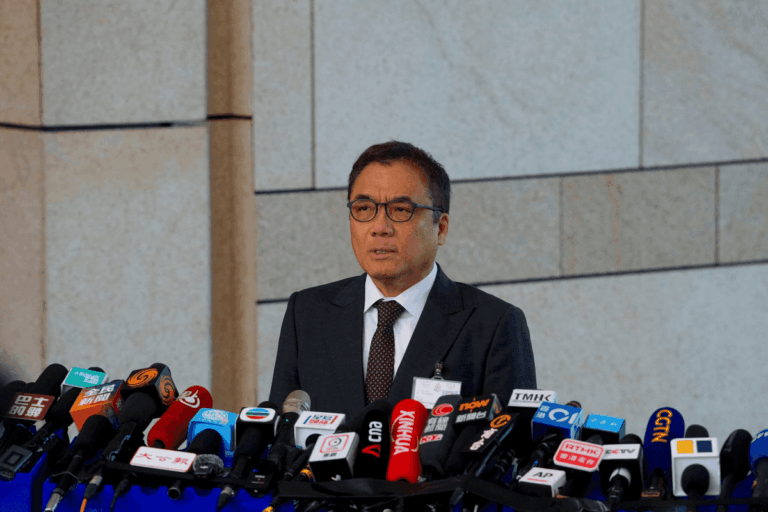
A Hong Kong court on Monday convicted pro-democracy publisher and tycoon Jimmy Lai of colluding with foreign forces, delivering one of the most consequential verdicts under the city’s national security law and deepening concerns over the erosion of civil liberties in the former British colony.
Lai, 78, a British citizen and founder of the now-defunct Apple Daily, has been detained since December 2020. He pleaded not guilty to all charges but now faces the possibility of life imprisonment, with sentencing expected early next year.
In a sweeping judgment, the court ruled that Lai had used his newspaper and international contacts to lobby foreign governments—particularly the United States—to impose sanctions on Hong Kong and China. Judge Esther Toh said there was “no doubt” Lai harboured hostility toward the Chinese state, citing what she described as repeated appeals to foreign officials under the guise of supporting Hong Kong’s freedoms.
The ruling was welcomed by Hong Kong’s chief executive, John Lee, who said Lai’s actions had harmed national interests and public welfare. Rights groups, however, condemned the conviction as politically motivated. Human Rights Watch described the trial as a “judicial farce,” arguing that the national security law has become a tool for silencing dissent rather than preserving order.
Lai’s defence rested largely on intent. During testimony last year, he denied seeking foreign intervention, saying he merely recounted events in Hong Kong when asked. He acknowledged meetings with senior U.S. officials, including former Vice President Mike Pence and Secretary of State Mike Pompeo, but insisted he had requested only moral support, not sanctions or policy action.
Once a symbol of defiant press freedom, Apple Daily became a rallying point during the mass protests of 2019, when millions took to the streets against Beijing’s tightening grip. In response, China imposed the national security law in 2020 without local legislative approval, granting authorities broad powers to prosecute acts deemed threatening to state security.
The court also found Lai guilty under a separate colonial-era sedition law for content published in the paper.
Lai remained composed as the verdict was read, waving to family members before being led away. His lawyer, Robert Pang, said the defence would need time to review the lengthy judgment before deciding on an appeal.
Read Also: Maria Corina Machado Injured Fleeing Venezuela
International reaction was swift. The UK condemned what it called “politically motivated persecution,” while Lai’s son urged London to make his father’s release a condition of closer ties with Beijing. Chinese officials rejected foreign criticism, accusing Western governments of smearing Hong Kong’s judiciary.
For many in the city, the case has come to symbolize a decisive shift—one in which dissent, once tolerated, is now treated as a threat to be extinguished.