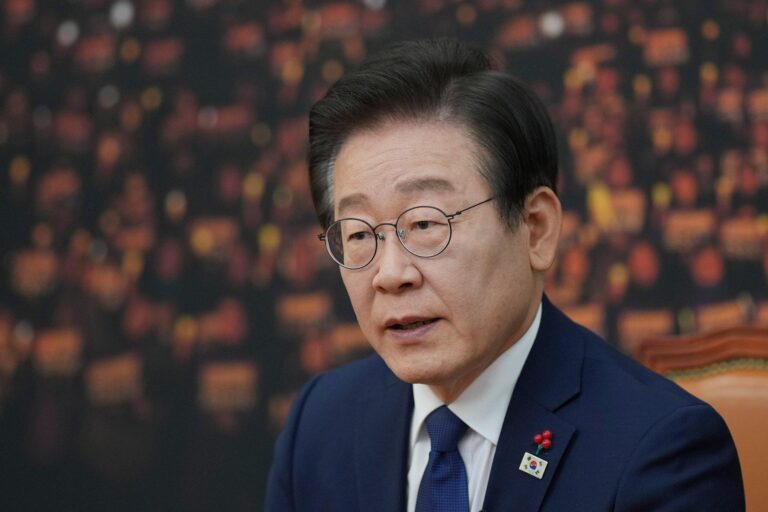
South Korean President Lee Jae Myung has ordered a sweeping investigation into suspected illegal ties between religious groups and politicians, directing authorities to examine all potential links regardless of political party or rank.
The move signals an effort by Lee to confront concerns about money and influence in politics at a time of heightened scrutiny following a series of high profile corruption investigations. His office said the inquiry would cover both ruling and opposition figures.
In a statement issued Wednesday, the presidential office said Lee instructed investigators to act without exemptions. The review, it said, should apply “no matter whether a politician is from the ruling or opposition party, or holds a high or low position.”
During a cabinet meeting streamed live on Tuesday, Lee went further, asking ministers to explore legal avenues to “disband religious groups that meddle in politics and do strange things with illegal funds,” according to the official readout. He also requested a comparison of South Korea’s laws with Japan’s process for dissolving religious organisations.
Lee’s spokesperson later stressed that no specific group had been named in the directive.
Read Also: South Korea Triples AI Spending; Qatar Launches MAI Platform
Even so, Lee’s remarks have drawn renewed attention to the Unification Church. Its leader, Han Hak ja, is currently on trial over allegations that she bribed former first lady Kim Keon Hee in exchange for political favors. Han has denied the accusations.
The case forms part of broader investigations launched after former president Yoon Suk Yeol was removed from office following his short lived martial law order in December 2024.
South Korean media have reported that a former Unification Church official told special prosecutors that lawmakers from Lee’s own party also received funds linked to the church. Police have since been asked to look into any contacts between ruling party members and the group, Yonhap News Agency reported.
A spokesperson for the Unification Church said Wednesday that there was no immediate comment.
Japan has faced similar questions about the church’s political role. In March, a Tokyo district court ordered the dissolution of the Unification Church, a decision that is now under appeal, according to the BBC.
In Seoul, investigators are expected to begin gathering records and testimony in the coming weeks. The outcome could shape future rules on political financing and religious activity, as Lee presses ahead with a pledge to tighten oversight and restore public trust.