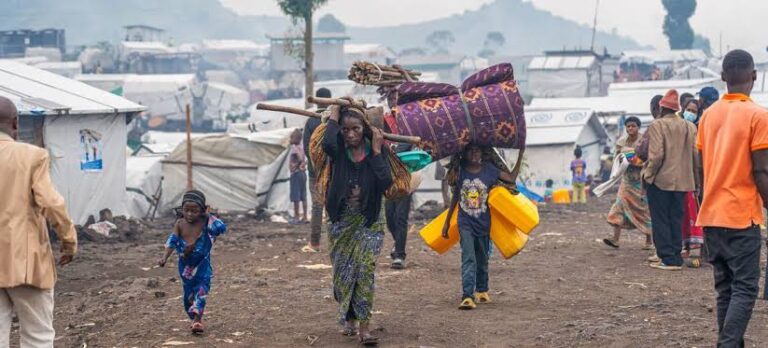
The United Nations dramatically reduced its 2025 humanitarian funding appeal on Monday, requesting $23 billion, half of what it initially sought for this year, after a steep decline in global donor contributions forced the world body to scale back assistance despite record levels of need.
The cut signals one of the sharpest contractions in modern humanitarian financing, leaving tens of millions of vulnerable people without support at a time when conflicts, climate disasters, and economic crises are pushing global emergencies to new highs.
U.N. aid chief Tom Fletcher said the shortfall had pushed humanitarian agencies into an impossible position, requiring them to prioritize only the most life-threatening cases among an estimated 250 million people in urgent need worldwide.
“It’s the cuts that are forcing us into these tough, tough, brutal choices,” Fletcher told reporters. “We are overstretched, underfunded, and under attack. We drive the ambulance toward the fire … but we are also now being asked to put the fire out—and there is not enough water in the tank.”
The U.N.’s pared-down plan identifies 87 million people as priority cases whose lives are immediately at risk. It says it could assist up to 135 million if additional funding—about $33 billion—became available.
The funding crunch follows a sharp decline in contributions from major Western donors, most notably the United States and Germany.
U.N. data shows global humanitarian funding reached only $12 billion as of November—covering just over a quarter of assessed needs and marking the lowest level in a decade.
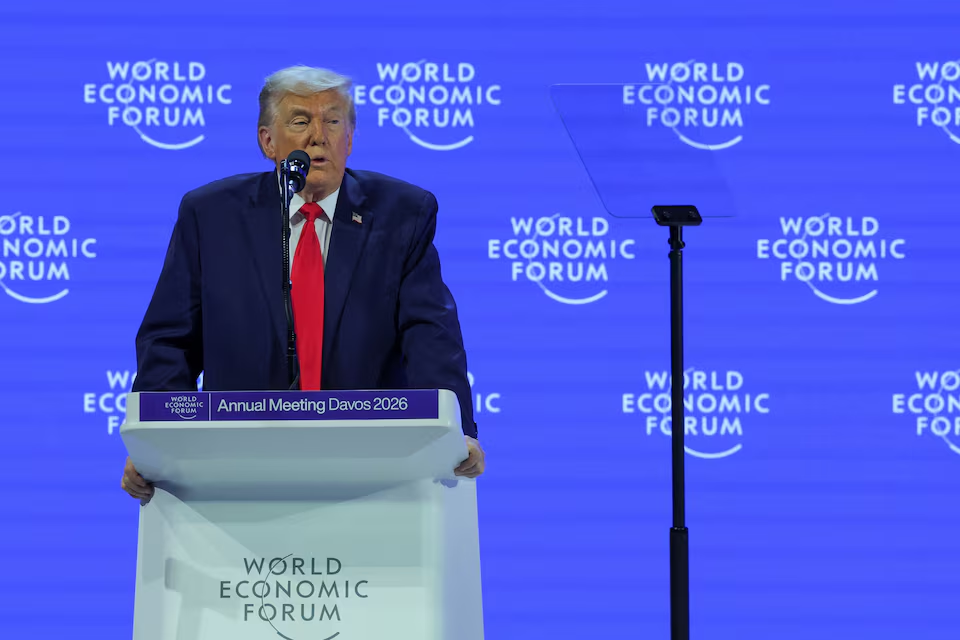
A year earlier, the U.N.’s appeal stood at $47 billion, though officials later reduced the figure as it became clear that aid reductions—particularly under U.S. President Donald Trump’s administration—would severely limit available resources.
Even after the cuts, the United States remains the largest single donor, but its share of total contributions has fallen from more than one-third historically to 15.6% this year.
The largest portion of the 2025 appeal—$4 billion—is directed toward the occupied Palestinian territories, with the bulk of funding meant for Gaza, where the two-year Israel-Hamas conflict has left nearly all 2.3 million residents homeless and reliant on aid.
Read Also: Dangote Urges Nigeria’s Wealthy To Fund Industry, Not Luxury
Sudan, gripped by one of the world’s fastest-growing displacement crises, is the second-largest operation, followed by Syria, where millions remain dependent on humanitarian assistance more than a decade into the civil war.
Fletcher warned that without immediate financial support, aid agencies would be unable to contain rising hunger, spreading disease outbreaks, and surging violence across multiple regions.
“The appeal is laser-focused on saving lives where shocks hit hardest—wars, climate disasters, earthquakes, epidemics, crop failures,” he said.
The U.N.’s humanitarian system relies overwhelmingly on voluntary contributions, with Western nations providing the majority of funding. As those sources shrink, agencies face mounting pressure to ration food, health supplies, shelter materials, and protection services.
Humanitarian officials expect further strain in 2025 unless donor governments reverse course or expand emergency budgets.