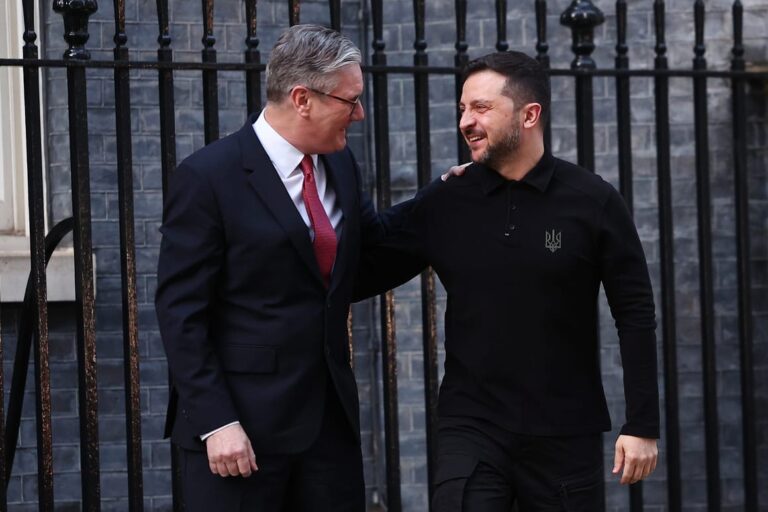
President Volodymyr Zelensky will meet the leaders of the UK, France, and Germany in London on Monday, as European allies debate how to respond to renewed U.S. pressure for Ukraine to make concessions in ongoing peace negotiations with Russia.
The high-level meeting at 10 Downing Street — hosted by UK Prime Minister Keir Starmer and joined by France’s Emmanuel Macron and Germany’s Friedrich Merz — comes after three days of intensive talks in Florida, where Ukrainian and U.S. negotiators revised parts of Washington’s draft peace plan. The proposal is widely viewed as reflecting several core Kremlin demands, prompting concern among Kyiv’s European supporters.
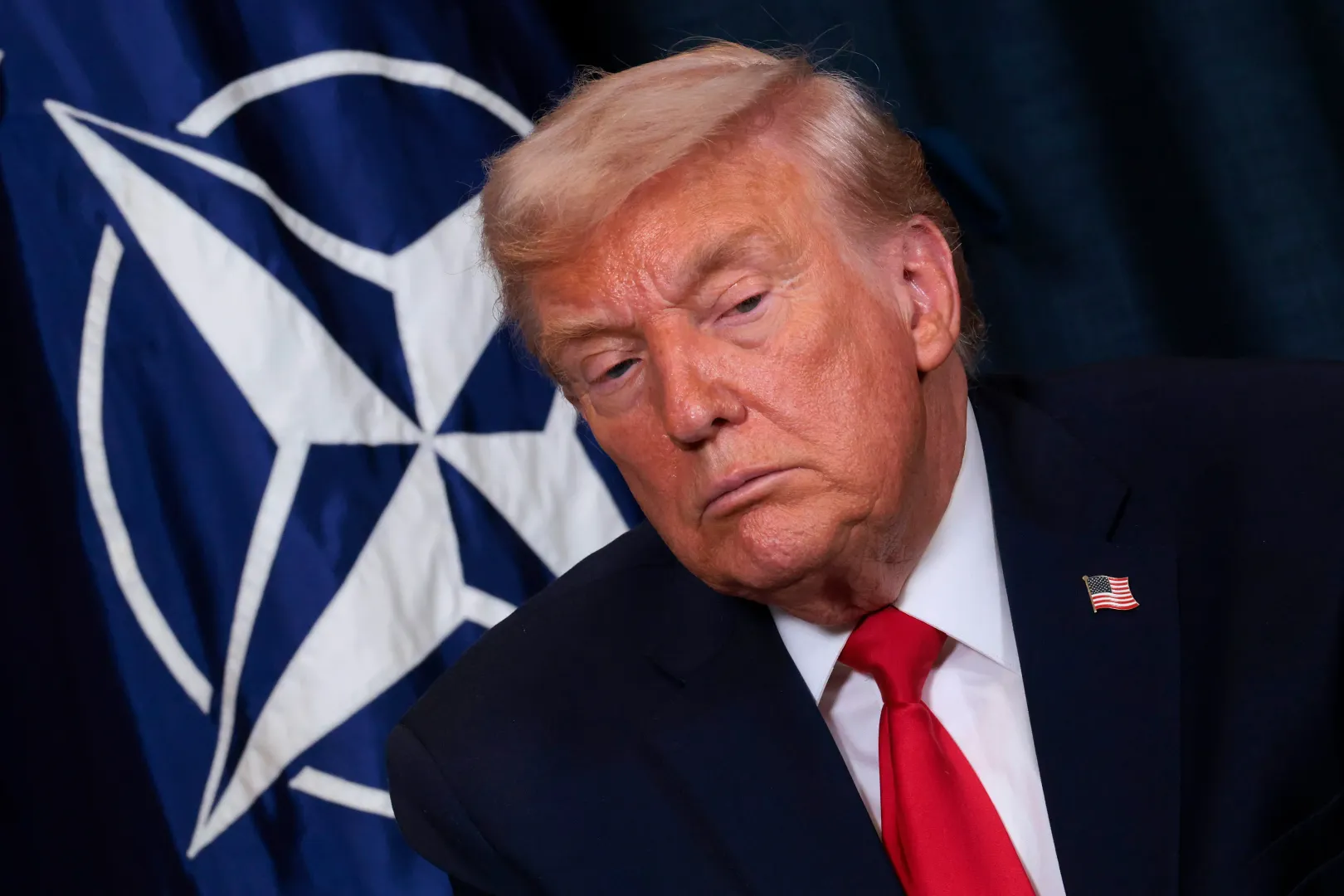
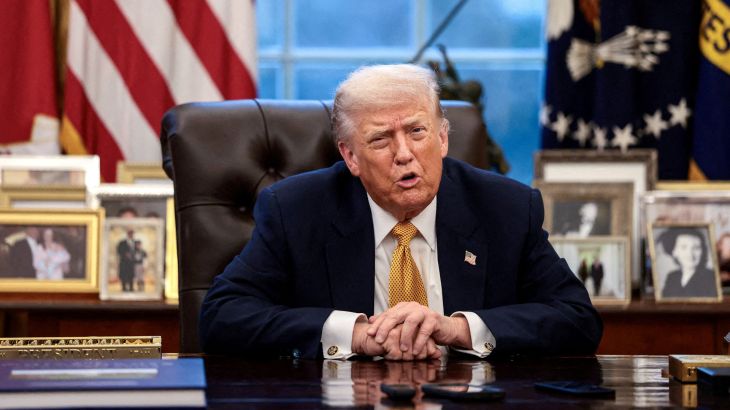
The United States has been urging both Kyiv and Moscow to move quickly toward a multi-point deal aimed at ending the war. But on Sunday, President Donald Trump said he was “a little disappointed that President Zelensky hasn’t yet read the proposal,” adding that Russia “would rather have the whole country… but Russia is, I believe, fine with it.”
Trump’s comments referred to the latest draft negotiated in Miami by Ukraine’s new chief negotiator Rustem Umerov and Trump’s advisers Steve Witkoff and Jared Kushner. Zelensky, speaking separately, said he expected to be briefed in person by Umerov in either London or Brussels, noting that “some issues can only be discussed in person.”
He described the talks with U.S. envoys as “constructive, though not easy.”
Two issues continue to block an agreement: the future of the contested eastern regions and control of the Zaporizhzhia nuclear power plant.
Trump’s outgoing envoy for Ukraine, Keith Kellogg, said a deal is “really close,” but warned that discussions around Donetsk and Luhansk — regions Russia has tried to capture in full since its 2022 invasion — remain highly contentious. Moscow currently controls around 85% of both regions.
Control of the Zaporizhzhia plant, Europe’s largest, is another major obstacle. Fighting around the facility has created global safety concerns, and an early draft of the peace plan proposed dividing the plant’s future energy output between Russia and Ukraine. “If we get those two issues settled, I think the rest of the things will work out fairly well,” Kellogg said.
Monday’s London meeting reflects European unease with a U.S.-led process they fear could prioritize speed over Ukraine’s long-term security. Downing Street said the discussions would focus on “ongoing negotiations and next steps,” while UK minister Pat McFadden emphasized the need for guarantees that are not “toothless.”
The UK and France are leading efforts to form a new “coalition of the willing” — also known as Multinational Force Ukraine — designed to provide future military support and potentially a reassurance force on the ground. While the force is not expected to police a ceasefire line, it would aim to deter renewed Russian aggression.
Read Also: Macron Ukraine Meeting Set For London Talks On Monday
Germany, Italy, and Poland have signaled support for long-term guarantees but remain cautious about placing troops inside Ukraine, a move Moscow has warned it would view as an escalation.
Despite Western diplomatic efforts, Russia shows little willingness to soften its core demands. President Vladimir Putin recently repeated that Russian forces would continue fighting until they hold all of Donetsk and Luhansk. Moscow has also rejected any future path for Ukraine to join NATO.
At the same time, the Kremlin welcomed parts of the White House’s updated National Security Strategy — particularly sections urging improved U.S.-Europe-Russia relations and criticism of Europe’s internal policies. Russia called the document “largely consistent” with its own vision.
Zelensky is expected to hold additional discussions after Monday’s meeting before responding formally to the U.S. proposal. European leaders intend to use the London summit to push for stronger deterrence measures, clearer security guarantees, and a peace arrangement that avoids rewarding Russian territorial gains.