Thousands of residents along the Thai–Cambodian border fled their homes on Monday after the deadliest round of fighting in months left at least five people dead and reignited a century-old territorial dispute.
The two governments traded accusations throughout the day, each insisting the other fired the first shot. It was the most serious confrontation since a fragile ceasefire was reached in July—a truce that now appears to be unraveling under the weight of escalating violence that has killed more than 40 people since May.
Thai Prime Minister Anutin Charnvirakul insisted Thailand “never wanted violence” but would take “necessary measures” to defend its sovereignty. Cambodia’s former leader Hun Sen accused Thai “invaders” of provoking the clashes and justified Phnom Penh’s response as self-defense.
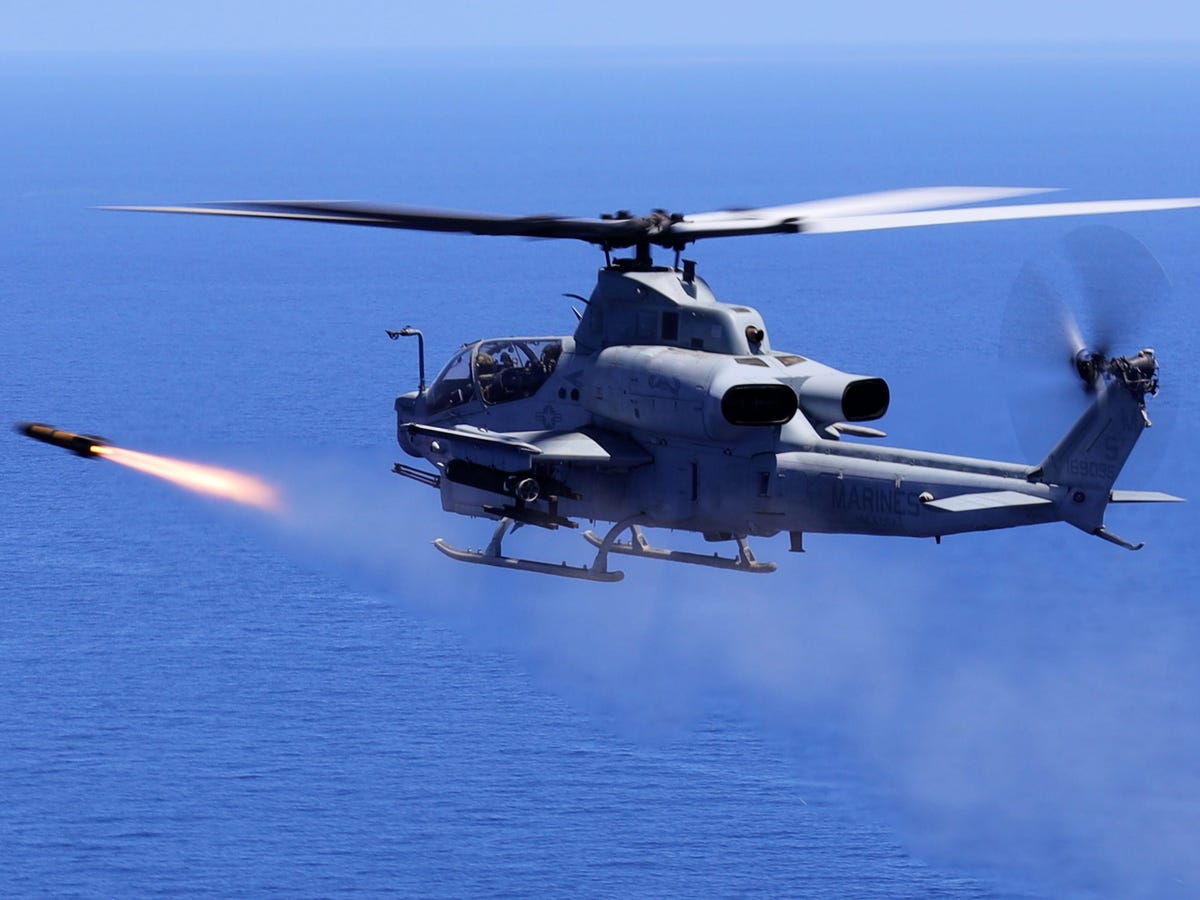
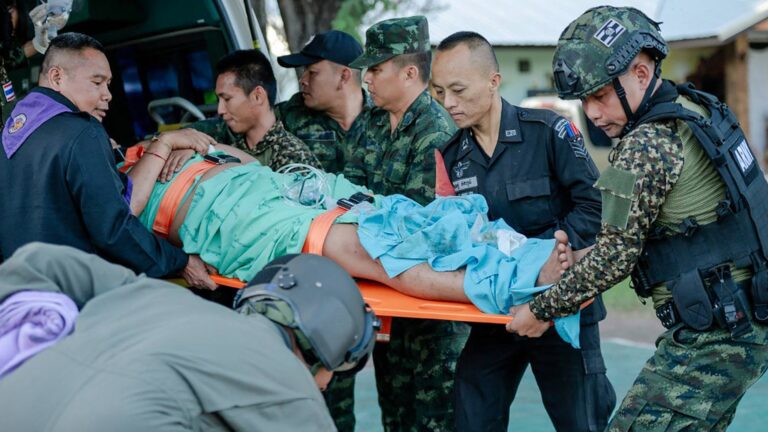
Reports from both sides painted a grim picture. The Thai army said its forces struck back after coming under Cambodian fire in Ubon Ratchathani Province, including launching air operations along the disputed frontier. Cambodia’s defense ministry countered that Thai forces were the ones to attack first, this time in Cambodia’s Preah Vihear province. One Thai soldier and four Cambodian civilians were confirmed dead, with roughly a dozen others wounded.
Among those caught in the middle are children whose schools sit perilously close to the border. Nearly 650 Thai schools across five provinces have been shut, with education officials citing ongoing gunfire and artillery exchanges. In Cambodia, videos showed panicked parents pulling their children out of classrooms, scenes eerily similar to July’s violence that disrupted examinations and forced students into online learning—an option not equally accessible to all.
“How many times must these kids endure this?” Cambodian journalist Mech Dara wrote on X, posting images of children rushing from school and a boy quietly eating his lunch in an underground bunker. Thai teacher Siksaka Pongsuwan echoed the despair, saying students near the border are “losing opportunities and precious time” compared to their peers in safer regions.
Read Also: Part 4: Inside the Strain — Sativa vs Indica In Everyday Health
The renewed clashes follow months of tension marked by a Cambodian rocket barrage in July, retaliatory Thai airstrikes, and a ceasefire brokered by Malaysian Prime Minister Anwar Ibrahim. In October, the two countries signed another agreement in the presence of U.S. President Donald Trump—hailed at the time as a diplomatic milestone. But within weeks, Thailand suspended the deal after two soldiers were injured by a landmine near the frontier.
For more than a century, Thailand and Cambodia have contested large stretches of their 800-kilometre border. On Monday, as families once again fled with what they could carry, the dispute felt far from settled.