India imposed emergency fare caps on Saturday after IndiGo, the country’s largest airline, cancelled 385 flights in a single day, leaving hundreds of passengers stranded outside major airports and sparking the worst operational crisis in the carrier’s 20-year history.
The government’s intervention came on the fifth straight day of disruptions caused by a severe pilot shortage at IndiGo, which failed to prepare adequately for stricter duty-time limits that took effect on Nov. 1. Thousands of cancellations since Tuesday have crippled air travel during the busy December season.
The Civil Aviation Ministry said the fare caps were necessary to maintain “pricing discipline” as ticket prices on competing airlines surged on key domestic routes. Officials added that regulators would continue monitoring fares using real-time data and coordination with carriers.
Under the temporary order, a one-way ticket on routes under 500 kilometers cannot exceed 7,500 rupees ($83). Flights between 1,000 and 1,500 km — such as New Delhi–Mumbai — are capped at 15,000 rupees ($167).
That limit is far below the 20,419-rupee ($227) fare published by Air India for a Delhi–Mumbai ticket on Saturday, highlighting the scale of the price surge following IndiGo’s cancellations.
Delhi airport said on X that operations were “steadily resuming,” though disruptions continued in Mumbai, Bengaluru, Hyderabad, and other major hubs.
IndiGo — which controls more than 60% of India’s domestic market — acknowledged that it failed to plan adequately for the new safety rules, which include reduced night-flying hours and longer mandatory rest periods. Although the regulations came into force on Nov. 1, the airline’s roster crisis intensified only this week as demand spiked.
Read Also: Putin India Visit Set For December Amid Oil Pressure
On Saturday alone, the airline cancelled 124 flights in Bengaluru, 109 in Mumbai, 86 in New Delhi, and 66 in Hyderabad, according to airport officials.
The widespread disruptions have disrupted travel for weddings and year-end events across the country.
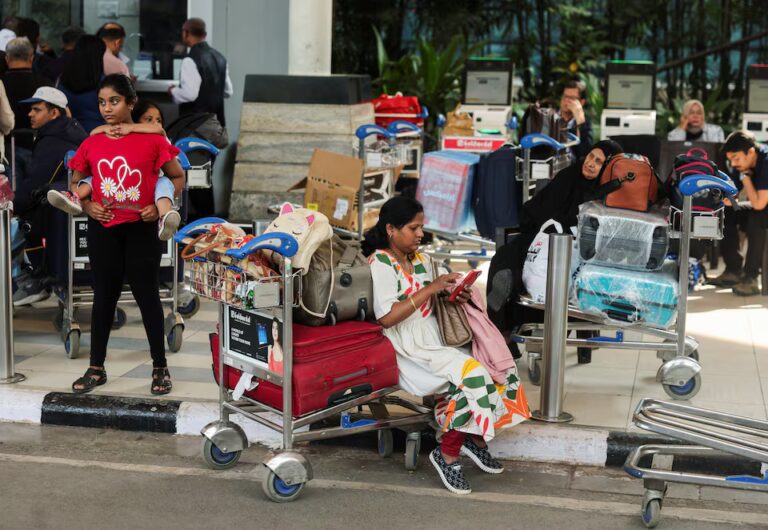
Outside Bengaluru and Mumbai airports, Reuters reporters saw passengers waiting in large crowds, many unaware that their flights had been cancelled.
Satish Konde, who was booked on a connecting flight from Mumbai to Nagpur, said he had already checked in before being told his flight was grounded. “I am waiting for my luggage to be returned,” he said.
The Aviation Ministry has temporarily exempted IndiGo from two major rule changes — a limit of two night landings per week (down from six) and a 10-hour night-flying cap — until Feb. 10. The government also paused a rule preventing personal leave from counting toward the weekly 48-hour rest period for pilots.
Pilot unions sharply criticized the exemptions, arguing that safety standards must not be relaxed due to one airline’s staffing problems.
C.S. Randhawa, head of the Federation of Indian Pilots, told Reuters that the government must ensure “safety is not compromised” as airlines adjust to the new duty-time norms.
The Airline Pilots Association of India called the relief for IndiGo a “selective dispensation,” writing in a letter that the rules “exist solely to safeguard human life.”
Other major carriers — including Air India and Akasa Air — have not cancelled flights due to the new rest requirements.
With December travel demand rising, pressure is mounting on IndiGo to stabilize schedules, recover misplaced luggage, and rebuild passenger trust. The government is expected to review fare caps and regulatory exemptions again next week a the crisis continues to unfold.