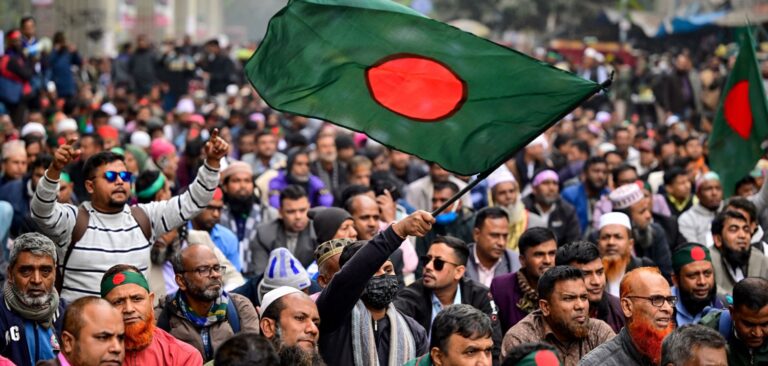
The Bangladesh student party election struggle intensified this month as the National Citizen Party tried to convert last year’s mass protest momentum into electoral gains ahead of the February vote. The group, led by several key figures from the uprising that removed longtime leader Sheikh Hasina, is finding it difficult to build national reach, raise funds, and keep early supporters engaged.
Despite drawing huge crowds when it launched earlier this year, the party now faces entrenched competitors with long standing political machines and broad networks. Opinion surveys suggest that support for the new movement has stalled, leaving it far behind more established parties.
A December survey by the International Republican Institute placed the National Citizen Party at just six percent support nationwide. The BNP, led by former prime minister Khaleda Zia, topped the poll with thirty percent, while Jamaat e Islami ranked second with twenty six percent.
The numbers are a sharp setback for a movement that once inspired excitement among young voters seeking an alternative to the decades long contest between the Awami League and the BNP.
“We are aware that our organisation is weak because we have not had enough time to build it,” said Nahid Islam, the party’s twenty seven year old leader, who played a prominent role in the protests and later served briefly in the caretaker administration under Nobel laureate Muhammad Yunus. He spoke from the party’s Dhaka office, where artwork portraying mass demonstrations covers an entire wall.
Read Also: Bangladesh On Edge As Tribunal Convicts Ex-PM Hasina
Islam said the party still intends to contest all three hundred parliamentary seats.
Some who rallied behind the students during last year’s unrest say they are now unsure whether the movement can deliver the political reset it promised.
“When they first launched, I saw hope in them, like everyone,” said Prapti Taposhi, a twenty five year old activist who helped lead the revolt. She said she withdrew her support after feeling the group avoided clear positions on women’s rights and minority protections. “They say they are centrist, but their actions do not match that. They hesitate to take positions on important issues, and when they do, it comes too late.”
Another sign of the party’s struggles came in September, when it failed to win any seats in the Dhaka University student elections. The campus had been the heart of the anti Hasina uprising, yet most students returned to their original party affiliations once the protests ended, according to analysts.
Hasina’s Awami League, which is barred from contesting the election, has warned of unrest if the restriction remains in place. The warning has raised fears of further instability in a country that hosts one of the world’s largest garment industries.
The next government will face heavy pressure to maintain stability in the sector, which employs millions and drives much of Bangladesh’s export economy.
The National Citizen Party has begun exploring coalitions with the BNP and Jamaat e Islami, according to senior party members who spoke to Reuters. One NCP official said privately that the party risked winning “not even one seat” if it refused to join forces.
Political analyst Altaf Parvez said any alliance could erode the group’s appeal as a fresh alternative to the long standing parties that have dominated the nation’s political life. “If they ally, the public will no longer see them as a distinct force,” he said.