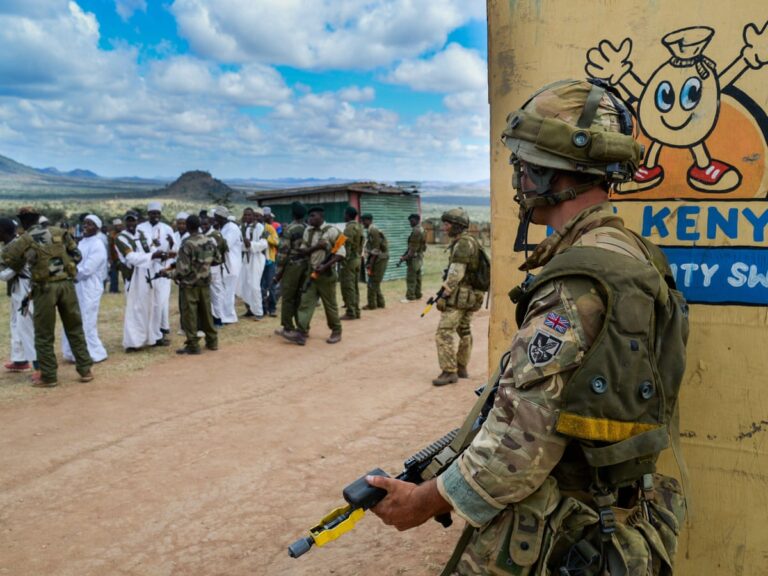
Kenyan lawmakers have accused the British Army Training Unit Kenya of failing to meet environmental, legal, and accountability standards during its long-running operations in the country, citing a series of incidents involving civilian harm and unexploded ordnance. The findings were part of a parliamentary inquiry that urged major changes to the defence cooperation agreement between Kenya and the United Kingdom.
The panel said the concerns were serious enough to demand structural reforms in how the two countries manage the presence of British forces in Kenya, where thousands of UK soldiers conduct regular field exercises each year.
According to the committee, residents living near training grounds reported respiratory problems, pregnancy losses, and deaths of livestock linked to fumes and abandoned waste from military exercises. Lawmakers also said the unit had not conducted the environmental and social impact assessments required under Kenyan law.
Some MPs raised questions about the possible use of white phosphorus, describing it as “notorious for the severity of the injuries it causes.”
The inquiry documented several cases involving unexploded ordnance. In one, a ranger died after taking home material collected from a training range. In another, a child reportedly lost both arms and an eye after encountering an explosive item.
The British Army Training Unit Kenya, known as Batuk, rejected claims of non-compliance. The unit said independent environmental audits had shown strong adherence to Kenyan regulations, according to its submission to the inquiry.
However, the committee said Batuk had “persistently” declined to appear before the panel and instead relied on claims of diplomatic immunity. The UK Ministry of Defence said it had addressed the issues raised and “outlined the actions taken to address the concerns raised,” while the British High Commission said it was prepared to review “new allegations” mentioned in the report. “We deeply regret the challenges which have arisen in relation to our defence presence in Kenya,” the High Commission said in its statement.
Read Also: Tunisia Opposition Arrests Widen As Ayachi Hammami Detained
The committee’s report concluded that the current defence cooperation agreement between Kenya and the UK has “structural flaws” that undermine civilian oversight and judicial processes.
Lawmakers highlighted that the agreement does not explicitly list murder as an offense outside official duty, a gap they said creates “a significant obstacle to justice.” They added that the existing mechanism for monitoring Batuk’s activities is not effective enough to guarantee accountability.
The report recommended revisions that would introduce a visiting forces code of conduct, rules addressing gender-based violence, formal environmental obligations, and an oversight body to monitor compliance.
It also urged Kenya’s defence ministry to negotiate measures with the UK government to ensure Batuk personnel can be held responsible for child support cases involving Kenyan citizens, an issue that has surfaced repeatedly over the past decade.