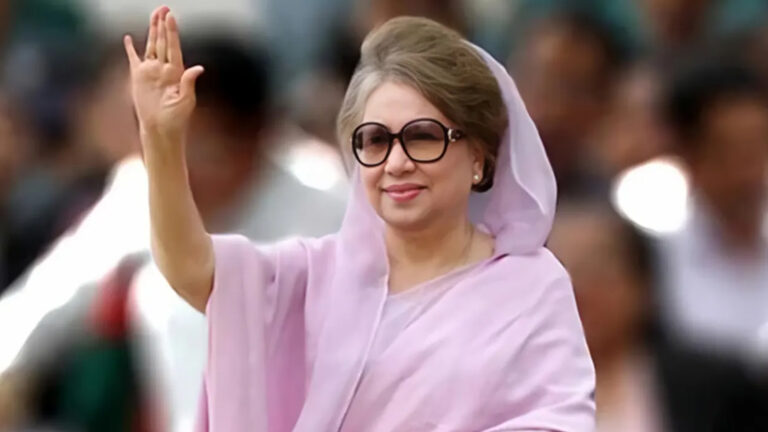
Former Bangladeshi Prime Minister Khaleda Zia has been hospitalised in a condition described as “very critical,” prompting nationwide concern and continuous calls for prayers from her family, supporters, and political allies. The 80-year-old opposition leader, who was admitted to Evercare Hospital in Dhaka on November 23 with symptoms of a lung infection, remains in the intensive care unit.
Her personal physician, Dr A Z M Zahid Hossein, said she has been “responding to treatment,” though he cautioned that her condition has not improved significantly over the past three days. Speaking to local media, Hossein urged the public to continue praying for her, underscoring the delicate balance of her health. Zia is battling multiple chronic illnesses, including serious heart, liver, and kidney complications, diabetes, arthritis, and long-standing lung issues. She has a permanent pacemaker and previously underwent stenting for cardiac blockages.
The Bangladesh National Party (BNP), which Zia leads, has grown increasingly anxious. Its secretary-general, Mirza Fakhrul Islam Alamgir, earlier described her condition as “very critical,” adding pressure to long-standing demands for her to receive advanced medical treatment abroad. BNP vice chairman Ahmed Azam Khan revealed that an air ambulance is on standby to fly her overseas once her condition stabilises sufficiently for travel.
Her eldest son, Tarique Rahman—who has lived in London since 2008—posted an emotional plea on social media, thanking supporters for their prayers and urging them to continue interceding for her recovery. The support has spilled onto the streets as well: many loyalists gathered outside the hospital, including 45-year-old driver Liton Molla, who described Zia as his “dear leader” and prayed she would recover in time to contest the upcoming 2026 elections.
Read Also: Saka Celebrates Joy As He Proposes After Five Years Together
Zia, who served three terms as prime minister, was imprisoned for corruption in 2018 under the previous administration of Sheikh Hasina, which also restricted her travel for medical care. She was released last year following Hasina’s removal. Despite her fragile health, she had pledged to return to active politics and lead her party into what many expect to be a pivotal election.
Bangladesh’s interim leader, Muhammad Yunus, called her a vital symbol during the country’s transition back to democracy, emphasising that her recovery carries national significance.