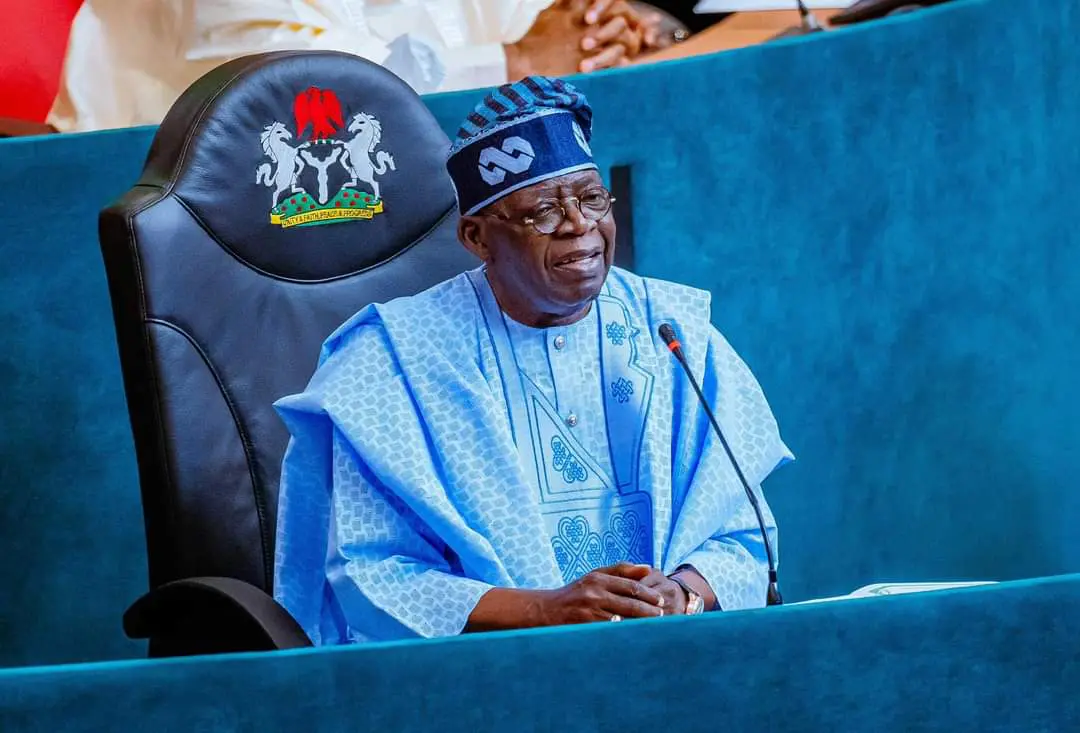
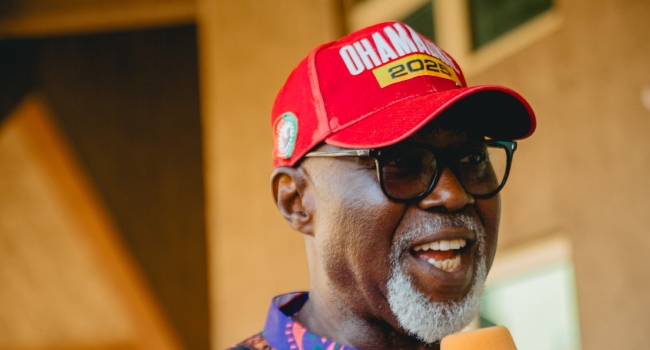
In a candid interview on Sunday Politics, George Moghalu, the Labour Party (LP) candidate in the recent Anambra State governorship election, revealed why he believes he lost votes in his own polling unit — he said he simply could not compete financially.
Moghalu admitted: “Yes, because I couldn’t afford how much that was being paid. I couldn’t pay, and I refused to pay, I refused to get involved.” He added: “They have too much money to buy votes, and what do you expect my people to do? They fell because a lot of them are poor.”
The candidate directly accused the ruling All Progressives Grand Alliance (APGA) of orchestrating the vote-buying campaign. He claimed that party agents—some of whom were reportedly arrested—were seen wearing APGA tags while purchasing ballots. “There’s even a commissioner who was also caught on camera buying votes in my particular constituency,” Moghalu said.
He went on to question the legitimacy of the overall election, stating the result “did not reflect the will of the people” and insisting he would have won under truly free and fair conditions.
According to the Independent National Electoral Commission (INEC), current governor Chukwuma Soludo of APGA was re-elected in a landslide, securing 422,664 votes and winning in all 21 local government areas. His nearest challenger, Nicholas Ukachukwu of the All Progressives Congress (APC), garnered just 99,445 votes. Moghalu of the Labour Party received 10,576 votes, placing him fourth in the race.
Read Also: 100,000 Philippines Evacuated As Typhoon Fung-wong Nears
Moghalu’s remarks shed light on entrenched concerns about vote-buying in Nigerian elections, particularly how financial inequities can undercut democratic choice. His focus on his own polling unit draws attention to the micro-level dynamics of electoral integrity: when one candidate can’t match the financial incentives offered by rivals, voters in impoverished areas may be swayed, undermining the principle of free choice.
As the post-election discourse continues, Moghalu has lamented what he calls a “sham” election and implied he may take further steps — though he has not yet confirmed whether he will pursue legal action.