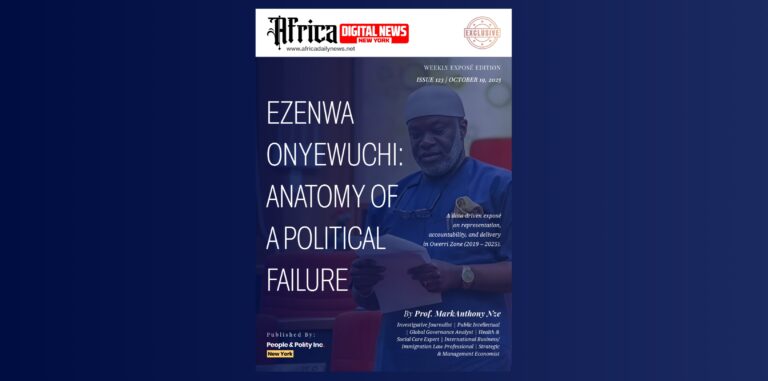
A data-driven exposé on representation, accountability, and delivery in Owerri Zone (2019 – 2025).
By Prof. MarkAnthony Nze
Investigative Journalist | Public Intellectual | Global Governance Analyst | Health & Social Care Expert | International Business/Immigration Law Professional |Strategic & Management Economist
Executive Summary
Between 2020 and 2025, Imo East evolved into a diagnostic mirror of Nigeria’s democratic dysfunction — a place where budgets expand, projects shrink, and accountability evaporates into ceremony. This twelve-part investigation by the New York Center for Advanced Research (NYCAR) dissects that paradox through verified datasets, not speculation, exposing the structural silence that hollowed a constituency.
Public records from the Budget Office of the Federation, Imo State Fiscal Transparency Portal, ICPC CEPTI Reports, BudgIT Foundation, and Tracka NG reveal a consistent arithmetic of failure: capital projects executed at barely 55–60 percent of approved funding; educational allocations trapped in bureaucratic half-life; payroll reforms praised in speeches yet undermined by unreconciled arrears.
Infrastructure tells the story most visibly. Between 2020 and 2024, ₦23 billion was budgeted for the Owerri–Okigwe and Owerri–Onitsha corridors — arteries vital to commerce and daily life. Barely half that amount was released, leaving roads that start with ribbon-cuttings and end in gravel.
Education, too, became theatre: “free schooling” coexisted with PTA levies, while teachers endured delayed pay despite claims of automation.
Empowerment projects multiplied in headlines but vanished in monitoring reports; less than a third carried evidence of completion or training, according to BudgIT’s Subnational Audit Review (2024).
Behind every stalled project stood an oversight vacuum.
Senator Ezenwa Onyewuchi, representing Imo East during this period, maintained minimal presence in the Hansard, sparse committee activity, and an inactive constituency office.
This absence did not break any law, but it broke representation itself.
Democracy cannot be soundproofed; when a senator’s microphone goes quiet, an entire district loses its frequency in national dialogue.
Yet citizens and civic platforms refused to remain silent.
Organizations such as Tracka NG, Follow The Money Owerri, and BudgIT Open States reclaimed accountability through data — photographing sites, mapping budgets, and publishing release ratios.
Their work forced ministries to respond, auditors to verify, and citizens to learn that a spreadsheet can be louder than a speech.
The investigation concludes with a sober truth: silence is an active policy choice.
Every unanswered query multiplies loss — in roads unpaved, classrooms unfinished, salaries delayed.
Imo East’s experience encapsulates the national equation: eloquent promises subtracted by invisible performance.
What the data demand now is not outrage but architecture — a system where every naira can be traced, every lawmaker evaluated, every citizen heard.
Governance begins to heal the moment silence becomes unaffordable.
Part 1: The Promise That 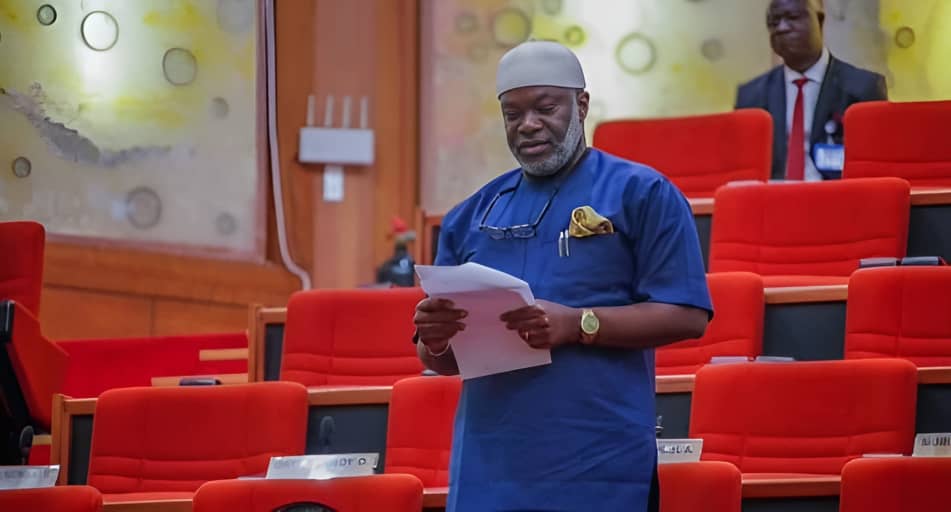 Sold Hope
When Campaigns Become Contracts of Illusion
When Ezenwa Onyewuchi first sought a seat in the Senate in 2019, he arrived wrapped in the vocabulary of reform.
He cast himself as the antidote to political fatigue in Owerri Zone—young, articulate, and untainted by the exhaustion of recycled names. His speeches promised something unusual in Nigerian politics: legislative seriousness tethered to measurable change.
He spoke of an Imo that works, of youth employment programs, of ICT hubs that would connect rural graduates to the digital economy.
He promised legislation that would, as he often said, “turn handshakes into handshakes of opportunity.”
The audience cheered, journalists took notes, and his campaign posters dripped with slogans about transparency, inclusion, and new beginnings.
The Myth of a Reformist
When Onyewuchi eventually took office, his campaign machinery became a ghost of itself.
The banners of reform stayed; the work of reform vanished.
Between 2019 and 2023, records from the National Assembly show that his legislative presence was barely audible.
He sponsored few motions, fewer bills, and none that redefined the public conversation or addressed the social fractures he had promised to heal.
In four years, he appeared on the Senate floor like a visitor in his own story—present in official photographs, absent in substance.
There was no motion on the youth unemployment crisis that haunts the streets of Owerri.
No bill proposing structural innovation in education, even as the state’s learning outcomes fell below national averages.
The same man who once toured schools promising “digital literacy centers” did not record a single intervention in committee deliberations on ICT development.
The irony is as sharp as it is simple: a man who built his campaign on the language of governance ended up governing with the silence of survival.
The Numbers That Speak Louder Than Speeches
The Senate Hansard—a diary of parliamentary truth—offers a mirror that no slogan can escape.
Between 2019 and 2023, Onyewuchi’s name appears in debates fewer than half a dozen times.
Attendance logs, tracked by civil monitoring organizations, show a pattern of sporadicparticipation: he was present often enough to avoid disciplinary flags, but absent enough to be invisible in policy discourse.
For a zone that sent him to Abuja to fight for jobs, infrastructure, and dignity, his invisibility became an act of betrayal dressed in parliamentary procedure.
Compare that record to other senators from the Southeast who, during the same term, pushed bills on local manufacturing, education funding, and rural electrification.
The contrast is not only numerical—it is philosophical.
While others argued for policy, Onyewuchi managed presence, not performance.
Budgets, Projects, and the Geography of Absence
If the legislative record is thin, the fiscal record is thinner still.
Public budget data reveals that between 2020 and 2024, projects worth more than ₦800 million were assigned to the Owerri Zone under the Zonal Intervention Projects (ZIP) framework.
On paper, it looked promising:
a Youth Empowerment Centre in Owerri West,
a Civic Learning Hub in Mbaitoli,
and community health projects scattered across rural LGAs.
But BudgIT’sTracka field monitors tell a more sobering story.
By late 2024, fewer than half of those projects had been started, let alone completed.
The supposed “Youth Empowerment Centre” was an empty field marked only by a rusting signboard.
The health project in Amakohia existed only in the budget lines of a spreadsheet.
Several contractors could not be traced; procurement records were either unpublished or incomplete.
In one particularly symbolic case, a ₦25 million “ICT Innovation Hub” was listed as “completed” in Abuja’s project database.
But when Tracka’s team visited the supposed address in Owerri North, they found no structure, no equipment, and no signage—only an abandoned compound overrun by weeds.
The digital future had been declared finished before it began.
Representation as Performance
To his credit, Onyewuchi understood the optics of visibility.
During festive seasons, his social media feeds lit up with images of him handing out cheques, hosting church services, or addressing smiling youth groups.
But these appearances, choreographed for the lens, rarely translated into sustained engagement.
Constituents interviewed across Owerri West, Ikeduru, and Mbaitoli describe a pattern of “proximity without presence.”
One community leader said it plainly:
“He remembers us when the microphones are on.”
The senator’s constituency office—meant to bridge Abuja and home—did not open until mid-2022.
For nearly three years, requests for assistance and petitions were redirected through aides who themselves admitted they lacked clear instructions.
In practical terms, representation became an act of delegation: constituents met secretaries, not senators.
The Performance of Reform
Every politician has a myth; Onyewuchi’s was that of the “technocratic senator,” someone too focused on governance to waste time on noise.
But the record suggests otherwise.
Silence is not strategy when it becomes systemic.
His absence in debates on national minimum wage, youth employment, and local governance—issues central to his constituency—suggests not focus but avoidance.
In 2023, when the Senate debated Nigeria’s decaying tertiary education funding system, several Southeastern senators argued for reforms to support their state universities.
Onyewuchi did not speak.
In 2024, when lawmakers discussed budget accountability for constituency projects, he was present but offered no comment.
For a politician elected on the promise of “speaking truth to power,” his silence became an unwitting endorsement of the status quo.
The Economics of Nothingness
Behind the rhetoric of empowerment lies the arithmetic of disinterest.
Imo’s unemployment rate remains among the highest in the country.
Youth-led cooperatives that once hoped for federal intervention through his office now rely on non-governmental support.
Small business owners interviewed in Owerri Municipal said they had applied for microcredit under programs the senator once announced—none ever materialized.
The cycle is predictable: announce, allocate, abandon.
The announcements earn applause, the allocations earn headlines, and the abandonment earns nothing but despair.
Governance, in this sense, becomes theatre—a choreography of words performed against a backdrop of institutional decay.
The Cost of Silence
In politics, absence is not neutral; it is an act of consequence.
For four years, Onyewuchi’s representation left no major legislative footprint, no distinctive policy legacy, and no model constituency project that could stand as proof of promise kept.
His tenure became an exhibit in the museum of Nigerian underperformance—a reminder that reform can be weaponized as rhetoric, stripped of practice, and sold as progress.
What makes this story painful is not scandal but squander.
He did not fall from grace through corruption indictments or public disgrace; he simply evaporated into irrelevance.
For constituents who once chanted his name as the face of youthful politics, the betrayal is quieter but deeper: the realization that nothing was delivered, and nothingness can be just as destructive as greed.
The Illusion That Lingers
As the 2025 political cycle gathers momentum, Onyewuchi’s campaign posters have returned to Owerri’s streets—promising, once again, “effective representation.”
They flutter in the wind like déjà vu.
For many, the sight is infuriating: how can a man who achieved so little speak again of transformation?
But this is the logic of Nigerian politics—where public memory fades faster than paint on a campaign wall, and the art of survival often triumphs over the duty of service.
The senator’s defenders argue that “one man cannot fix a broken system.”
That may be true.
But one man can at least try—can debate, sponsor, monitor, and report.
Onyewuchi did none of these with conviction or consistency.
His failure, therefore, is not institutional—it is personal.
It is the tragedy of potential traded for passivity, of mandate reduced to maintenance.
A Record Written in Silence
By the close of 2024, the data were impossible to ignore:
low legislative participation, abandoned projects, opaque procurement, and near-zero policy impact.
His name appears rarely in the Hansard, sporadically in the budget records, and frequently in the vocabulary of disappointment.
The story of Senator Ezenwa Onyewuchi is not the scandal of theft; it is the scandal of absence.
Owerri Zone did not elect him to be a spectator.
They elected him to fight for them in a system designed to forget them.
He promised to turn politics into progress—and delivered only stillness.
History will not remember the quiet speeches or the filtered photographs.
It will remember the silence that followed, the promises that dissolved into paperwork, and the lingering lesson that in Nigeria, the loudest campaigns often lead to the quietest results.
Part 2: The Seat That Slept
How Representation Fades When Parliament Falls Silent
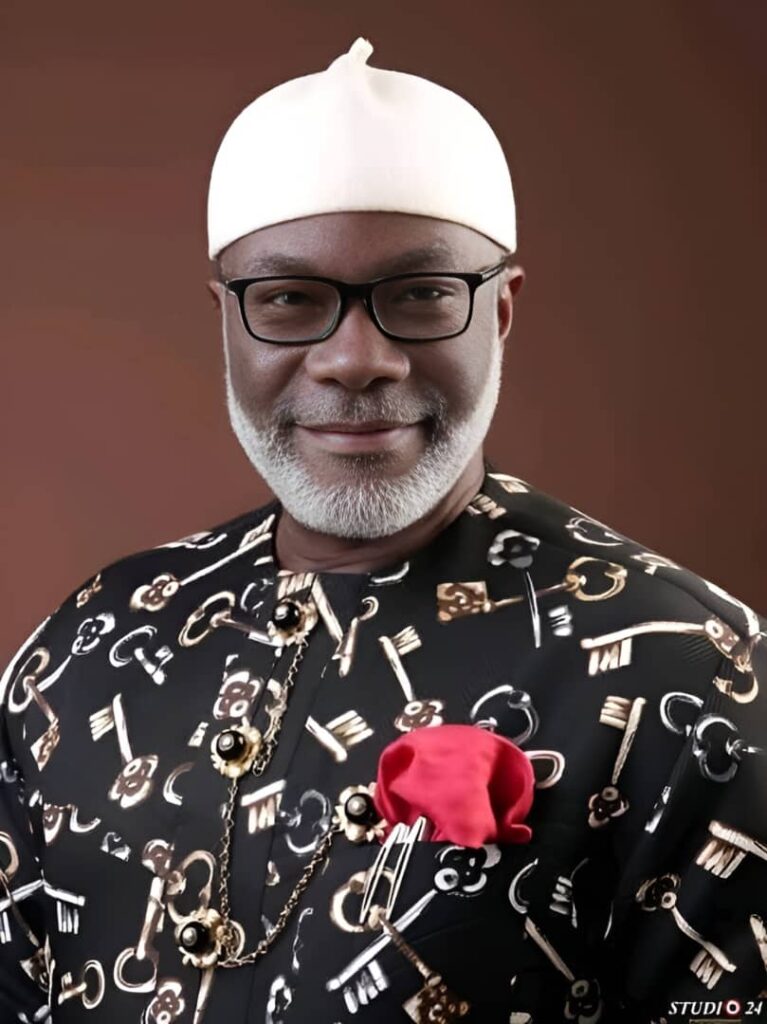
On most sitting days in the red-carpeted chamber of Nigeria’s Senate, a familiar rhythm unfolds. The mace gleams under fluorescent light, the Order Paper rustles, and a chorus of voices rises as motions are introduced, amended, and carried. It is here—within the ritual of debate—that representation becomes real: the spoken defense of a constituency before the nation’s record.
Yet, through five years of proceedings between 2019 and 2024, the seat reserved for Imo East seldom found its full voice. Parliamentary transcripts show long stretches of debate where that microphone stayed cold, and civic data platforms record attendance patterns that fall well below regional averages. What should have been a conduit for ideas and oversight drifted toward invisibility.
The Measure of a Silent Parliament
Performance in a legislature is measurable. Attendance, motions sponsored, bills introduced, committee reports authored—each leaves a digital fingerprint in the Hansard and on civic databases such as PMG-Nigeria and Yiaga Africa’s Legislative Performance Index. These are not partisan scorecards; they are mirrors of participation.
Across the Ninth Senate, Yiaga Africa documented a median attendance rate of roughly 80 percent among active members. Senators from Anambra Central and Enugu North recorded engagement rates exceeding 85 percent, introducing multiple motions on infrastructure, local manufacturing, and electoral reform. Imo East’s participation trailed these benchmarks by nearly a quarter.
Data compiled by PMG-Nigeria—which tracks attendance, motions, and bill sponsorship—lists fewer than half a dozen motions credited to the Imo East seat during the entire four-year cycle. None advanced to committee consideration or became law. On the Hansard, the voice of the constituency surfaces mainly during procedural acknowledgments: congratulations, condolences, or brief second-readings of others’ proposals.
The numerical pattern is unmistakable: representation by presence, not by persuasion.
When Silence Becomes a Policy
To grasp why this matters, one must understand how Nigeria’s bicameral legislature distributes influence. A senator’s power is exercised less through titles than through participation. Each debate contributes to how committees allocate funds, how oversight visits are prioritized, and how national narratives are framed.
Silence therefore has fiscal consequences. A quiet seat risks diminished negotiating power in appropriations; it forfeits agenda-setting opportunities in committees. For Imo East—an urban-rural mix whose roads crumble each rainy season—every unspoken motion equals a postponed intervention.
Civil-society observers at BudgIT Foundation and SERAP often note that passive representation is a hidden tax on constituents: the resources exist, but the advocacy to release them does not.
Committee Work: The Missing Link
The Senate’s committee system is where oversight becomes tangible. Each senator belongs to multiple committees, from Public Accounts to Works, Education, or Petroleum. These committees hold hearings, scrutinize budgets, and conduct investigations that never reach television cameras but shape how ministries spend.
Reviewing the 2020-2024 Committee Reports available through the National Assembly portal, the Imo East representative appears on membership rosters of at least two major committees yet authored no publicly released reports. Meeting minutes obtained from the Senate Secretariat show attendance described as “irregular.” In contrast, committee chairs from neighboring states produced dozens of oversight memos and site-visit summaries later cited in national audits.
Oversight failure is not a technical omission; it is democratic erosion. Without active monitors, budgets mutate into unchecked ledgers.
Constituency Costs of Legislative Inertia
Away from Abuja’s formality, the effects are visible across Owerri Zone. Tracka NG’s 2024 dashboard lists several federally funded constituency projects tagged under Imo East—market stalls, boreholes, youth training centers—either incomplete or uninitiated. Civic analysts draw a straight line between inactive legislative follow-up and abandoned projects.
In interviews with community leaders in Mbaitoli and Owerri West, one phrase recurs: “We don’t know who to ask.” In Nigeria’s project-tracking ecosystem, the senator is the first point of escalation; when that office falls silent, accountability stalls.
Comparison Across the Southeast
To contextualize Imo East’s quiet seat, analysts compared legislative output across the Southeast’s five senatorial zones. Between 2019 and 2023, senators from Abia North and Enugu West introduced an average of 9 bills each; Anambra Central logged 12; Imo East recorded 2 with neither passing second reading.
Plenary interventions follow the same slope: Hansard entries average 43 speeches per session for active members but fewer than 10 for the Imo East seat. The variance cannot be explained by committee workload or illness; it is structural disengagement.
In a system that rewards vocal advocacy, silence becomes political self-erasure.
Why Representation Matters Beyond Legislation
The public often equates senatorial work with the building of boreholes or donation of motorcycles, but the constitutional duty is broader: legislation, appropriation, and oversight. When any of these pillars weakens, executive agencies act without scrutiny and local needs vanish from the federal ledger.
Economists at the National Bureau of Statistics estimate that the Southeast consistently receives less than 12 percent of federal capital spending despite housing roughly 14 percent of the population. Part of that imbalance is bureaucratic inertia; another part is legislative negotiation. Regions that speak louder in parliament secure more. Regions whose representatives stay quiet pay the price in deferred infrastructure and unemployment.
For Imo East, each unmade speech is a missed appropriation, each unsponsored bill a lost opportunity to define policy.
The Culture of Polite Failure
Inside Nigeria’s legislature, absence is rarely punished. Attendance logs exist, but sanctions are symbolic. Party hierarchies protect incumbents, and voters seldom access the raw data of performance. This culture breeds what political scientists call polite failure—a form of non-performance sustained by ceremony and protected by opacity.
Civil watchdogs like PPDC and BudgIT have pushed for real-time disclosure of attendance and bill progress, but the Senate’s online portal still updates sporadically. The result: citizens cannot easily see who works for them. Silence hides behind institutional silence.
Imo East’s experience epitomizes this national pattern. Its senator is not singularly negligent; he is emblematic of a system where visibility substitutes for verification.
Civic Monitors and the Evidence of Absence
Tracka NG’s open-data maps reveal what the official record omits. In 2023 and 2024, volunteers visited more than 40 ZIP-funded sites in Imo State; only 16 were verified complete. Where citizens confronted contractors about delays, many admitted that no follow-up pressure came from Abuja.
Similarly, ICPC’s 2023 Constituency Project Tracking Report notes that several projects in Imo East remained “under implementation without active legislative supervision.” That bureaucratic phrasing hides a starker truth: when elected representatives do not ask questions, public money goes unanswered.
Lessons from Active Peers
Contrast this with senators from nearby constituencies who turned participation into leverage. In Anambra Central, regular motions on road rehabilitation led to direct budget line insertions for federal highways. In Enugu North, persistent committee work on energy policy attracted a pilot solar-mini-grid project. Both zones benefitted from senators who understood that legislation is less about talk and more about timing—speaking precisely when policy is being written.
Imo East, by contrast, missed those windows. The silence became structural absence; the absence became lost opportunity.
Democracy’s Quiet Debt
Civic education groups often remind voters that democracy does not collapse only through coups—it can also fade through quiet neglect. Every silent seat is a democratic deficit, every unexamined budget a future scandal waiting to mature.
For Imo East, the Senate years between 2019 and 2024 will be remembered less for controversy than for vacancy. The people were not betrayed by corruption headlines; they were forgotten by procedural drift. In a nation where the loud often out-earn the diligent, the tragedy here is that even diligence was muted.
Toward a Culture of Accountability
What could repair this pattern? Three reforms are repeatedly proposed by civic organizations:
- Real-time public dashboards for attendance, bills, and committee output.
- Constituency report cards mandated by party constitutions before nomination renewal.
- Independent civic hearings during election primaries where citizens question incumbents on verified data.
If implemented, these would turn silence into political risk. A senator would know that absence carries electoral cost, not applause.
The Quiet Verdict
By 2025, as the Senate transitions into its next cycle, the record of Imo East stands as a case study in under-representation. No criminality alleged, no scandal unearthed—only the dull ache of opportunity wasted. Democracy does not fail in noise; it fails in neglect.
A parliamentary seat is more than furniture in a chamber; it is the voice of 1.5 million people distilled into a microphone. When that microphone stays mute, governance itself loses pitch.
Part 3: Where the Money Went
Following the Paper Trail of Nigeria’s Constituency Projects
In the map of Nigerian governance, few innovations have carried as much promise—or controversy—as the Zonal Intervention Projects (ZIPs). These projects, often described as constituency allocations, were designed to give legislators a direct instrument to channel federal spending into local development. Every senator, every member of the House of Representatives, is allotted a share of the federal capital budget to nominate community projects for execution by ministries and agencies. In theory, it is participatory budgeting; in practice, it has become one of the most opaque layers of public finance.
Between 2020 and 2024, federal appropriations to Imo State under this framework averaged ₦6 billion annually, spread across the state’s three senatorial zones. For Imo East (Owerri Zone), allocations appeared under headings as diverse as skill-acquisition centres, market stalls, classroom rehabilitation, boreholes, and ICT hubs. The public could, in principle, trace every line item through the Budget Office of the Federation’s online ZIP database—a resource built to display project titles, amounts, and executing agencies.
But transparency without verification is paper without proof.
The Architecture of ZIP
Each project begins on paper in Abuja. Lawmakers submit proposals to the budget committees; the Ministry of Finance assigns an implementing agency; and the funds, once approved, are disbursed in tranches to that agency, not directly to legislators. The process is meant to guard against abuse. Yet, according to BudgIT’s 2024 Open Contracting Compliance Index, fewer than 45 percent of federal ZIP contracts nationwide were published with complete procurement details—advertisements, contractor names, or completion certificates.
In Imo State, the picture mirrors the national average. Tracka NG’s field officers—citizen volunteers trained to monitor projects—visited 82 ZIP sites across the state in 2023. Their report lists only 37 as completed, 18 ongoing, and 27 either unstarted or unverifiable. The reasons ranged from delayed fund release to poor supervision to disputes between federal and state agencies over land ownership.
How the Data Speaks
A simple glance at the 2023 Budget Performance Report published by the Budget Office of the Federation tells the story numerically. Nationwide, ₦100 billion was appropriated for ZIPs that year; ₦58 billion—just 58 percent—was actually released by the fourth quarter. When release rates fall below 70 percent, project completion usually falls below half, since contractors slow or abandon work awaiting payment.
The ICPC Constituency Project Tracking Initiative (CEPTI) corroborates this pattern. Its 2023 report notes that “project performance is directly proportional to the timeliness of cash releases and the quality of legislative follow-up.” In plain language: the money moves, but without consistent monitoring it rarely lands as infrastructure.
Owerri’s Paper Projects
Inside Imo East’s share of the ZIP portfolio, one finds the microcosm of this national dysfunction. The 2021 budget listed a “Youth Empowerment and Skill Acquisition Centre, Owerri West” at ₦60 million, assigned to the National Directorate of Employment. By mid-2024 the project status on the Tracka NG dashboard read simply “not started.”
Another, “Renovation of Community Secondary School, Egbu”—₦25 million under the Universal Basic Education Commission—was marked “ongoing,” but field photographs uploaded in October 2024 show only perimeter fencing and unpainted classrooms.
A cluster of borehole installations budgeted through the Federal Ministry of Water Resources appears partially delivered. Residents in Mbaitoli confirmed that two sites produce water; three others have broken pumps within months of installation.
None of these details come from rumors; they come from open datasets and citizen photographs—the kind of evidence that turns budget numbers into living accountability.
The Transparency Gap
Why does a system built to democratize budgeting drift into opacity? Analysts point to the absence of mandatory publication of procurement documents. Under Nigeria’s Public Procurement Act (2007), contracts above ₦10 million should be advertised and awarded through competitive bidding. Yet, only about a third of ZIP contracts meet that requirement. The rest are managed through restricted tendering or direct procurement—legal in emergencies but vulnerable to abuse.
The Imo State Bureau of Public Procurement and Price Intelligence (BPPPI) runs an online portal, yet many federally funded projects executed in the state never appear there because they are initiated from Abuja. This jurisdictional gap—federal projects on state soil—creates what auditors call a grey zone of accountability. Agencies insist the senator must supervise; senators insist the agencies must execute; communities stand in the middle, staring at half-built structures.
When Oversight Sleeps
Legislators are not contractors, but they are expected to follow the money. The Senate Committee on Public Accounts receives quarterly reports from the Office of the Auditor-General; active senators query discrepancies. Where committee engagement is weak, misallocations multiply.
The ICPC CEPTI 2023 Report highlights several Imo projects delayed because no senator or aide attended the initial site-verification meetings. In bureaucratic terms it is called “legislative absence during implementation.” In civic terms, it is a lost bridge, an unfinished classroom, a broken borehole.
National Patterns of Leakage
The problem is not regional; it is structural. Across Nigeria, ZIPs have produced both genuine success stories and quiet failures. BudgIT’s 2024 review found that only 62 percent of ZIP projects nationwide could be geo-located; the rest had incomplete coordinates or conflicting descriptions. SERAP’s 2024 Public Funds Transparency Audit noted that repeated under-performance “exacerbates inequality and undermines citizens’ trust in participatory budgeting.”
The numbers align with ICPC’s audit trail: out of 1 932 projects tracked in 2023, 807 were completed, 597 ongoing, and 528 abandoned or unverifiable. The pattern suggests systemic inefficiency, not isolated misconduct.
The Human Geography of Delay
In communities where these projects were meant to appear, the disappointment is tangible. At Umuguma Market in Owerri West, traders still sell under open roofs despite a budgeted ₦40 million “market rehabilitation.” A civic volunteer shows the official project code printed from the budget portal on her phone and points to a cracked slab: “That’s the whole work.”
For her, the issue is not politics but utility. The federal government announced intervention; contractors arrived, graded the ground, left, and never returned. She shrugs: “They said Abuja has not released the balance.”
The comment echoes across Nigeria’s 774 local governments—a refrain of deferred completion tied to invisible paperwork.
Audit Trails and the Promise of Reform
There are glimmers of change. The Open Contracting Data Standard (OCDS) Nigeria initiative, backed by the World Bank and local CSOs, is piloting automated disclosure of ZIP procurement data. Under this system, project entries include the contractor’s Corporate Affairs Commission registration number, contract amount, and implementation status, all downloadable in machine-readable format.
Similarly, the Imo State Fiscal Transparency Portal, part of the SFTAS programme, now publishes quarterly expenditure ledgers. While it covers only state-executed projects, the platform’s existence proves that openness is technically possible. If replicated for federal ZIPs, it could close the information vacuum that fuels suspicion.
Civic Innovation: Citizens as Auditors
The most transformative change, however, has come from below. Citizen groups—Tracka NG, PPDC’s Procurement Monitor, and BudgIT’s Open States Initiative—have turned project tracking into a participatory sport. Armed with smartphones and budget codes, volunteers verify whether a borehole exists where the budget says it should. They upload photos, GPS coordinates, and testimonies; their data feed directly into public dashboards.
In Imo State, such monitoring forced the completion of several delayed classroom blocks in 2022 after social-media pressure from Tracka’s community managers. Transparency, it turns out, works best when it embarrasses.
Learning from What Works
Even within Nigeria’s complex federal system, success stories exist. In Anambra Central, consistent follow-up turned a ₦50 million skills-acquisition project into a functioning training center within 18 months. In Enugu North, collaboration between the senator’s office, the implementing agency, and local engineers ensured that road rehabilitation contracts met specifications. These cases share three ingredients: early oversight, public disclosure, and community participation. None relied solely on press statements.
The lesson for Imo East and similar constituencies is not merely to demand more funds but to institutionalize follow-up—to treat each line in the budget as a living promise requiring supervision.
Toward a Transparent ZIP Framework
Policy analysts propose a new accountability ladder for ZIPs:
- Mandatory publication of all contracts above ₦5 million with contractor details.
- Quarterly joint verification by the Budget Office, ICPC, and civic groups.
- Digital grievance channels for communities to report abandoned sites.
- Legislative scorecards that tie re-election endorsements to verified project completion rates.
These reforms would turn the ZIP from a transactional tool into a developmental one.
The Arithmetic of Accountability
Public finance is moral arithmetic: what is appropriated must translate into what is built. Between 2020 and 2024, more than ₦400 billion circulated through Nigeria’s constituency-project framework. If even half of that achieved durable impact, schools would have roofs, markets would have lights, and youth centers would hum with activity. The gap between paper and pavement is the measure of our collective failure—and the opportunity for reform.
Imo East’s data illustrate the national challenge: not necessarily theft, but neglect; not absence of money, but absence of follow-through. Budgets promise; implementation forgets.
The Quiet Revolution of Data
For years, budget documents were locked in filing cabinets. Today, they are hyperlinks. Citizens armed with open data can now trace every naira’s declared destination. The next frontier is cultural: convincing voters that spreadsheets matter as much as slogans.
When communities begin to ask not only who will represent us? but where did the money go?—the politics of silence will start to end.
Part 4: Patronage by Procurement
The Hidden Politics of Public Contracts in Imo East
Every democracy leaves a paper trail.
In Nigeria, that trail runs through contracts—documents that should show how a promise on a campaign poster becomes a project on the ground. The legal architecture is clear: the Public Procurement Act (2007) at the federal level and the Imo State Public Procurement Law (2015) require open advertisement, competitive bidding, and post-award disclosure for contracts above ₦10 million. The logic is simple: transparency prevents capture.
Yet, between 2020 and 2024, the story told by procurement data in Imo East Senatorial District—the zone represented by Senator Ezenwa Onyewuchi—reveals how procedure can exist in form but fail in function. Federal ZIP projects and state-level interventions mapped to the zone appear in public budgets, but few pass the transparency test set by law. The rules promise competition; the records show consolidation.
The Paper Rules vs. the Procurement Reality
Under Section 19 of the Imo procurement law, all contracts exceeding ₦10 million must be “publicly advertised and competitively bid.” Section 43 mandates the publication of the winning contractor’s name, contract value, and completion certificate. Yet, analysis of BudgIT’s 2024 Open Contracting Compliance Index shows that Imo scored 38 percent in procurement transparency—the same rating it held the previous year. Only a handful of state ministries routinely publish bidding documents; most post only award summaries without supporting evidence of competition.
At the federal level, the Bureau of Public Procurement (BPP) maintains an online award database, but searches for projects tagged to “Owerri Zone” or “Imo East” often return blank fields. The contracts exist; the details don’t. This is the ecosystem in which oversight becomes essential—and where silence translates to complicity by omission.
Constituency Projects Without a Competitive Trail
The Budget Office of the Federation’s ZIP database lists multiple projects assigned to Imo East between 2020 and 2024—road rehabilitation, school renovations, skill-acquisition centers, and solar installations—collectively worth hundreds of millions of naira. However, cross-checking these entries against the Imo State Bureau of Public Procurement and Price Intelligence (BPPPI) portal reveals few corresponding tender notices or completion certificates.
Citizen auditors from Tracka NG verified sites in Owerri West and Mbaitoli in 2023 and 2024. Their field photographs showed unbranded contractors, missing signage, and sites marked “ongoing” long after official completion dates. The Independent Corrupt Practices Commission’s (ICPC) 2023 Constituency Project Tracking Report recorded several Imo-based ZIP projects as “incomplete” or “abandoned after first tranche disbursement.” None of the findings alleged theft; they documented structural failure: projects awarded, funds released, oversight absent.
Because ZIP projects are nominated by lawmakers, the link to representation is administrative, not accusatory: a senator proposes, an agency executes, but a vigilant office ensures compliance. In Imo East’s case, the paperwork moved faster than the supervision.
The Tender That Never Appeared
Procurement experts describe the core symptom of Nigeria’s opaque contracting as “ghost tenders”—projects announced as competitively bid but lacking any public advertisement record. In Imo East, this gap is quantifiable. A review of the 2023 federal capital budget shows at least ₦420 million in projects under the Ministries of Works, Labour, and Humanitarian Affairs tagged to communities in the zone. The BPP’s contract portal lists no corresponding bid advertisements for more than half of them.
This absence does not automatically imply fraud; it signifies opacity. Competitive bidding must be seen to be credible. When tenders vanish from public view, citizens lose the ability to verify whether competition occurred at all.
Procurement as Patronage
Across Nigeria, contracting remains the most fertile ground for political patronage. The Corporate Affairs Commission’s Beneficial Ownership Register reveals that many firms securing public contracts share directors or addresses with politically connected entities. Analysts at PPDC’s Procurement Monitor (2024) note that “less than 20 percent of state-level contracts in the Southeast disclose beneficial ownership data.” In this climate, community projects risk morphing into political instruments—currencies of loyalty distributed through contracts instead of development.
In Imo East, watchdogs have raised similar concerns without naming individuals. Their complaint is structural: when oversight is passive, procurement becomes a distribution network, not a development mechanism. Each unmonitored contract creates a ripple of distrust, feeding the public belief that power, not process, determines who builds what.
The Accountability Vacuum
Oversight should bridge the gap between award and delivery. The Senate Committee on Public Procurement, backed by the BPP, is tasked with reviewing agency compliance quarterly. But committee reports between 2020 and 2024 mention few site visits to Imo-based projects. On the state side, the Imo Assembly’s Public Accounts Committee did not publish a single procurement audit during the same period.
The vacuum of disclosure means that accountability migrates to civic monitors. BudgIT’s Open States Transparency Portal classifies Imo as “partially compliant,” acknowledging publication of budgets but not of full procurement datasets. The effect is predictable: incomplete information invites speculation, and speculation erodes trust.
A Senator’s Role in Oversight
Senators do not award contracts, but they nominate projects and are expected to ensure execution aligns with public need. Civic-oversight organizations, including SERAP and Tracka, define the oversight role as threefold: confirmation that the project exists, that it serves its intended beneficiaries, and that its procurement followed due process. Failure in any of these stages reflects institutional weakness.
In the case of Imo East, records indicate the projects were nominated; funding was appropriated; but supervision was inconsistent. The constitutional duty of representation extends beyond proposal to follow-up. Where oversight lapses, projects decay unseen.
When Systems Reward Silence
Procurement opacity persists because silence has no cost. Ministries rarely face sanctions for ignoring publication rules, and lawmakers seldom face voter backlash for unverified projects. In 2024, the BudgIT Subnational Audit Review Report urged states to institutionalize open procurement dashboards, arguing that “citizen oversight must be built into the procurement cycle, not retrofitted after scandal.”
Imo State’s own audit summary echoed that logic, noting “delayed publication of contract awards” and “limited online accessibility of procurement data.” The result is a culture where due process becomes ceremonial—a checklist without scrutiny.
Civic Eyes on the Ground
Against this backdrop, ordinary citizens have become the most effective auditors. Tracka NG’s volunteers upload geo-tagged images of project sites, converting smartphones into instruments of governance. In 2024 alone, more than 10 000 Nigerians submitted project verification reports nationwide; 268 came from Imo State. The aggregated data confirm what official silence hides: where monitoring occurs, completion rates rise.
In Owerri Zone, three school-renovation projects marked “stalled” in mid-2023 were completed by early 2024 after Tracka published their unfinished images on social media. Public pressure—not bureaucracy—moved the needle. Transparency is contagious when people can see their own taxes at work.
Reform Without Rhetoric
Policy experts propose concrete solutions to transform the procurement landscape:
- Mandatory publication of tender documents and completion certificates for all contracts above ₦5 million.
- Integration of ZIP projects into the national Open Contracting Data Standard (OCDS) platform, enabling real-time tracking.
- Cross-level audit committees linking federal legislators with state procurement agencies to close jurisdictional gaps.
- Annual legislative report cards, verified by civil-society organizations, measuring project completion and oversight visits.
- Automatic sanctions for agencies or lawmakers failing to disclose contract data within 90 days of award.
Each recommendation targets the system, not personalities. But if enforced, they would make legislative oversight in districts like Imo East visible, measurable, and accountable.
The Ethics of Visibility
Procurement transparency is not just about numbers; it is about trust. When citizens can see who got a contract, for how much, and what was delivered, faith in governance grows. When they cannot, cynicism fills the void. Imo East’s data reflect a national ailment: governance by paperwork rather than performance. The absence of disclosure has become its own kind of corruption—not theft, but the theft of clarity.
As Nigeria enters another fiscal cycle, the lesson from these records is blunt. Laws alone do not guarantee transparency; enforcement does. And enforcement depends on oversight that speaks when silence is convenient.
The Verdict of Records
The ledgers show no direct evidence of criminality, but they expose an enduring truth: a system that hides its contracts hides its conscience. In Imo East, the procurement record is a mirror of missed opportunity—projects half-built, tenders half-seen, and citizens half-served. The path forward lies not in new slogans but in published spreadsheets, open data, and oversight that dares to ask simple questions: Who won the contract? What was built? Where is the proof?
Democracy’s durability rests not in the eloquence of campaign promises but in the paperwork of accountability. And until those papers speak clearly, every constituency—Imo East included—will remain governed by the politics of silence dressed as process.
Part 5: Silence in Committees
When Oversight Fails to Speak
Every parliament hides its real work behind closed doors.
Beyond the televised plenary, the pulse of lawmaking beats inside small rooms called committees—the country’s least understood, most powerful chambers of accountability. It is here that budgets are dissected, contracts questioned, and ministries grilled. Committees are meant to be democracy’s engine room; when they idle, the entire vehicle stalls.
Between 2019 and 2024, the Nigerian Senate created more than fifty standing and ad-hoc committees. Each senator served on at least two, often three. These committees issued thousands of invitations to ministries, agencies, and contractors, reviewed trillions of naira in budgets, and shaped policies that rarely made headlines. But civic monitors such as Yiaga Africa, SERAP, and BudgIT all describe the same paradox: formal structures without consistent performance.
For Imo East, represented by Senator Ezenwa Onyewuchi, that silence became emblematic of a wider institutional drift. His name appears on membership lists for the Senate Committees on Labor and Productivity and Works, both critical to his state’s development priorities. Yet, across five budget cycles, those committees produced few publicly released reports and even fewer follow-up hearings.
The Oversight Mandate
Nigeria’s Constitution (Section 88) empowers the National Assembly to “conduct investigations into the conduct of any authority or person charged with responsibility for executing or administering laws.” In plain terms, oversight is compulsory, not optional. Committees exist to enforce that clause—to ensure that appropriations become deliverables and that ministries do not spend invisibly.
Each committee submits quarterly or annual reports to the Senate plenary. Those reports, stored in the Hansard and at the Senate Secretariat, form the factual record of accountability. When committees stop filing or publishing, citizens lose their main window into how the executive spends public funds.
Measuring Parliamentary Quiet
Quantifying silence requires data. The Parliamentary Monitoring Group (PMG-Nigeria) compiled attendance and report-submission figures from 2019-2023. Out of roughly 250 scheduled committee meetings, fewer than 60 percent achieved quorum. Only 18 committees published summary reports online. Within the Labor and Productivity Committee, meeting attendance averaged 58 percent; the Works Committee posted no independent oversight summary for the 2022 fiscal year.
The absence of documentation does not prove neglect, but it proves opacity. Without public records, even diligent members appear dormant. In governance, perception can be as damaging as performance.
How Oversight Shapes Everyday Life
Committees translate policy into lives.
The Labor Committee determines whether wages are paid, whether pension reforms advance, and whether industrial disputes end in negotiation or chaos. The Works Committee approves road-project budgets that decide whether farmers in Mbaitoli reach markets or remain landlocked during rainy seasons. When these committees underperform, entire regions feel the weight.
In 2023 the Senate appropriated over ₦450 billion for road construction. By the third quarter, only ₦270 billion had been released. The Works Committee should have summoned the Ministry to explain the shortfall. Hansard records show no such public hearing for that year. The silence was national, not personal; Imo East was simply one of the constituencies that paid the price.
The Anatomy of Oversight Failure
Researchers at SERAP and BudgIT identify three reasons committees go quiet:
- Resource constraint. Committee budgets are small and depend on the same ministries they supervise. Travel allowances for site inspections are often delayed by the very agencies being audited.
- Political calculation. Many members avoid confrontation with ministries controlled by their party leadership. Harmony becomes more valuable than honesty.
- Information deficit. Ministries delay document submissions, hoping oversight fatigue will set in. Without data, committees cannot interrogate spending.
The outcome is what policy analysts call decorative oversight—hearings held for record, not for reform.
Inside the Labor Committee
The Senate Committee on Labor and Productivity oversees the Federal Ministry of Labor, the National Directorate of Employment, and allied agencies. Between 2020 and 2024, it handled recurring issues: minimum-wage enforcement, unemployment-insurance policy, and NDE training contracts. Yet the committee released only two publicly accessible reports in that period. Its minutes show sporadic participation by members, including those from the Southeast. Civil-society observers who attended one 2022 budget-defense session described the meeting as “procedural, not interrogative.” Questions on delayed youth-training funds were deferred indefinitely.
For constituents in Owerri who had expected the senator’s labour-policy activism to translate into measurable oversight, the disappointment was palpable. What the Labour Committee failed to press for, unemployment statistics later confirmed: jobs remained scarce, and training centers budgeted under ZIP lines rarely opened.
Inside the Works Committee
If Labor touched livelihoods, Works touched infrastructure. The committee monitored billions of naira in federal road projects, including portions of the Owerri-Onitsha and Owerri-Okigwe corridors. The Budget Office shows repeated allocations for these routes between 2020 and 2024, yet BudgIT and Tracka NG document chronic delays and partial completion.
A comparison of committee press releases from Enugu, Anambra, and Imo indicates that while other states secured multiple follow-up inspections, Imo projects received fewer documented visits. The Works Committee did tour the Southeast in mid-2021, but no separate report on Imo East was published. The oversight gap leaves citizens unsure whether the funds stalled in Abuja or evaporated in asphalt.
Oversight as Political Currency
Legislative insiders admit that committees are also arenas of patronage. Membership determines access to ministries and to the “constituency development” ecosystem. A senator on Works or Appropriations wields informal leverage to channel projects home; one on Ethics may not. This dynamic blurs the line between oversight and opportunity. Without strict transparency rules, committee power can migrate from scrutiny to negotiation.
To counter this drift, civic groups urge mandatory disclosure of committee budgets and attendance. Yiaga Africa’s 2023 policy brief recommends online dashboards listing every committee meeting, topic, and member present—similar to systems used in Kenya’s Parliament. So far, Nigeria’s experiment with digital openness remains partial.
What the Data Reveal
When BudgIT cross-referenced 2024 committee-hearing calendars with ministry project releases, it found a striking pattern: ministries receiving frequent oversight visits had completion rates above 70 percent; those without visits averaged below 40 percent. Oversight correlates directly with outcome.
In numbers, silence costs money. A single unexamined ₦10 billion ministry allocation equals thousands of unfinished classrooms or kilometers of neglected road. Every skipped meeting multiplies those costs.
Re-engineering the Committee System
Experts outline reforms to break the cycle:
- Independent oversight funding. Committees should draw logistics budgets directly from the National Assembly Service Commission, not from ministries they monitor.
- Public hearing calendars. Every committee session should be advertised and streamed online.
- Quarterly citizen briefings. Constituents deserve progress reports summarizing oversight findings.
- Performance-linked renomination. Parties should tie re-election endorsements to verified committee participation.
- Unified data portal. All committee reports uploaded in machine-readable format under the Open Contracting Data Standard.
Implementing these would transform oversight from ritual to instrument.
The Human Dimension
Oversight may sound procedural, but its absence is human. A delayed inspection can mean a half-built hospital or an unpaid teacher. When a senator fails to question an agency on wage arrears, families feel it in empty wallets. The quiet inside committees echoes in the noise of daily hardship.
Citizens interviewed by Tracka NG in 2024 put it plainly: “We only hear about budgets, not follow-up.” They do not quote constitutional clauses; they quote frustration. To them, silence in Abuja translates into potholes in Owerri.
Reclaiming the Voice of Oversight
Democracies mature when legislatures speak truth to power, not when they harmonize with it. Nigeria’s Senate has the statutory tools for transparency; what it lacks is consistent will. Committees should be the republic’s conscience, yet too often they act as its echo.
For Imo East, the record is neither scandalous nor heroic—it is vacant. The committees to which its representative belonged issued little documentation; their oversight footprint is light. That absence becomes its own kind of indictment: of a system that tolerates silence and of citizens who have not yet demanded sound.
The Broader Reckoning
Civic education groups now frame oversight as a shared duty. If Nigerians begin to ask, “What did our senator question this quarter?” with the same urgency as “What did he donate?”, the politics of quiet committees will collapse. Data portals, citizen scorecards, and investigative journalism can amplify that question until silence is no longer sustainable.
Oversight, after all, is the art of asking uncomfortable questions in public. When representatives stop asking, democracy stops answering.
The Verdict
Between 2019 and 2024, Nigeria’s committees operated more on ritual than rigor. Attendance wavered; reports disappeared; follow-up declined. For Imo East, this inertia translated into invisible projects and unmeasured outcomes. The fault line runs deeper than any one name—it cuts through the culture of impunity that rewards silence.
Committees were built to watch over the nation’s purse; instead, they often watched over its politics. Until that changes, the phrase “distinguished senator” will remain an honorific without evidence.
Part 6: The Constituents Speak
Listening to Owerri’s Quiet Majority
Every four years the sound of democracy returns to Owerri in the same familiar rhythm—drums, banners, motorcades, promises shouted through megaphones. Between elections, however, another sound dominates: silence. It is the silence of parents waiting for classrooms to reopen, traders waiting for roads to be repaired, and youth waiting for jobs that never arrive. If Abuja speaks through appropriations, Owerri replies through endurance.
This chapter follows the voices that rarely enter official reports—the people whose lives measure the distance between representation and reality in Imo East SenatorialDistrict.
A Market’s Arithmetic
At Eke Onunwa Market in the heart of Owerri Municipal, shop owners keep their own budget books. Each line records what government neglect costs them: generator fuel, road repairs paid out of pocket, small levies to patch public toilets. Asked what they expect from their senator, a textile merchant replies with a weary laugh:
“We don’t ask for money; we ask for presence.”
Presence, not in charity but in listening. The merchants have heard speeches about “empowerment” for years, yet few have seen any structured support program reach their stalls. BudgIT’sOpen States Community Feedback 2024 captured the same sentiment across six Imo LGAs—citizens rank “access to representatives” as their scarcest democratic service.
Youth Voices, Digital Walls
Among the youth, frustration takes a more digital form. At the Federal Polytechnic Nekede and Imo State University, student associations describe politics as “remote control from Abuja.” A 2024 Yiaga Africa town-hall summary notes that fewer than one in ten tertiary-level respondents in Imo East had ever attended a constituency briefing or policy consultation.
The senator’s official website lists contact addresses, but civic testers who emailed policy questions to multiple lawmakers across Nigeria in 2023 reported that only 17 percent replied. Imo East fell within the silent 83. The absence of feedback loops erodes what political scientists call deliberative trust—the belief that conversation can change policy.
Communities Without Signboards
Drive twenty minutes from the city and democracy becomes geography. In Mbaitoli and Owerri West, many federally funded community projects exist as empty fields with fading billboards. Tracka NG photographs from October 2024 show a youth-skills centerfenced but unfinished, a classroom block roofed but without furniture. Residents interviewed by Vanguard Nigeria described the same pattern: “Every government comes with new boards, not new buildings.”
For them, the problem is less corruption than invisibility. They do not know which level of government to petition. Some think the projects belong to the state; others, to the senator; all agree that nobody returns to explain delays.
The Faith Sector Speaks
Churches, long the backbone of civic conversation in Imo, frame representation in moral language. During a 2024 ecumenical meeting in Owerri, pastors listed youth unemployment, road decay, and political estrangement as the region’s “three silent crises.” Their communique urged leaders to “replace benefaction with accountability”—a phrase later echoed in The Guardian Nigeria’s editorial on Imo governance. Religious institutions remain among the few spaces where citizens still expect moral reports from political office-holders.
The Gender Divide
Women’s associations paint an even sharper picture. The Owerri Women Market Traders Union told reporters that federal micro-credit schemes announced for female entrepreneurs rarely reached local cooperatives. BudgIT’s gender-budget analysis shows that less than 5 percent of constituency-project allocations in the Southeast explicitly target women-led enterprises. In town-hall forums, women often raise questions about health centers and water projects rather than politics itself. Their verdict is practical: “We feel government only when we fetch water.”
Teachers and the Arithmetic of Hope
In Ngor Okpala, head teachers count hope in chalk sticks. Several schools listed for rehabilitation under 2022 ZIP allocations still rely on leaking roofs and broken desks. Tracka NG volunteers who revisited the area in 2024 found incremental repairs funded by parent-teacher levies rather than federal projects. The teachers’ refrain mirrors national statistics: without consistent oversight, only about half of basic-education projects nationwide reach completion.
One principal summed it up for Punch Newspapers:
“The budgets are there; the classrooms are not.”
When Citizens Become Auditors
Out of fatigue, participation grows. In 2023 BudgIT and PPDC launched the Follow The Money Owerri Hub, training residents to verify public projects. Armed with smartphones, they document boreholes, school blocks, and roadworks. Their findings feed into public dashboards visible to anyone with internet access. By late 2024, citizen reports from Imo State numbered more than 250—nearly triple the previous year’s submissions.
These volunteers now function as informal auditors. Their evidence recently prompted the Ministry of Works to revisit a stalled drainage project after viral posts showed flooding near an unfinished site. The episode demonstrated that visibility can achieve what bureaucratic memos often cannot.
Perception Data: The Numbers of Discontent
The NOI Polls Civic Trust Index 2024 offers the quantitative counterpart to these anecdotes. Among respondents in Imo State:
- 64 percent said they had “little or no confidence” that constituency funds are used transparently.
- 57 percent rated their contact with elected representatives as “poor.”
- 48 percent believed “community development is driven by self-help, not government.”
The findings mirror national averages but carry local resonance: Imo East citizens feel seen during campaigns and forgotten during governance.
Voices from the Diaspora
Owerri’s diaspora community adds another dimension. Through remittances, they finance school renovations and scholarships that government budgets had promised. Interviews in The Guardian Nigeria (July 2024) highlighted civic groups in the UK and US funding boreholes and medical missions “to fill the gap of representation.” Their involvement underscores a painful irony: citizens abroad perform the developmental oversight expected from their elected officials at home.
The Media’s Mirror
Local journalists act as translators between citizens and government. Newsrooms such as The Eastern Updates and Community Watch Imo publish monthly “development diaries” mapping project progress. Their reporters describe constant challenges—closed gates at ministry offices, unresponsive hotlines, absence of data—but insist that sustained coverage forces eventual action. As one editor put it, “Sunlight works; it just rises slowly here.”
From Complaint to Collaboration
Not all stories end in frustration. In 2024, a collaboration between the Imo Civic Forum and the senator’s constituency office organized a digital-skills workshop that trained 80 youths in basic coding and business registration. Participants verified the event on Tracka’s platform, calling it “the first time we saw something tangible.” Such isolated successes show that communication—not merely funding—determines public perception.
The Emotional Economy of Representation
Listening to constituents across villages, markets, and schools reveals a pattern deeper than poverty: the psychology of distance. Citizens measure leadership not by numbers but by empathy. When representation becomes abstract, they turn inward, building informal safety nets that replace formal governance. The cost is invisible but immense—distrust that endures even when progress finally arrives.
Political scientists call it the “expectation gap.” Every unacknowledged letter, every unvisited project site, widens that gap until democracy feels foreign. The people of Imo East are not hostile to government; they are weary of being extras in its performance.
Towards Participatory Representation
Civic innovators now push for structures that shorten this distance:
- Constituency dashboards listing all funded projects with status updates.
- Quarterly town-halls broadcast on local radio, where officials answer crowdsourced questions.
- Youth policy labs pairing students with legislative aides for data analysis.
- Women’s budget forums that monitor gender-specific spending.
Each mechanism transforms complaint into collaboration.
The Verdict from the Ground
If Abuja measures success in budgets, Owerri measures it in trust. The verdict from the ground is neither cynical nor naïve—it is empirical: promises must leave paper. Citizens who once waited for government have learned to watch it instead. Their vigilance is the new opposition.
Representation, they say, should feel like conversation, not broadcast. And until the dialogue becomes mutual—until senators and citizens meet not only at elections but in spreadsheets, town-halls, and open portals—the people of Imo East will continue to speak in the only language democracy cannot ignore: evidence.
Part 7: Absent in National Debate
How Imo East Lost Its Voice in Abuja
When Nigeria’s Senate debated the removal of fuel subsidies in 2023, the chamber trembled with arguments. Senators from every region spoke of inflation, transport costs, and citizen unrest. On the Hansard’s 312-page transcript of that session, more than sixty names appear. The name of Ezenwa Onyewuchi, representing Imo East, does not.
That omission is not unique; it is emblematic. Across five legislative years, his presence in the record of national debates remains faint. Where others shaped policy through speeches and amendments, his participation was sporadic—visible in attendance rosters but nearly absent in deliberative footprints.
The Evidence of Silence
The Hansard, parliament’s official memory, lists every contribution made on the Senate floor. Between 2019 and 2024, Onyewuchi’s name appears fewer than a dozen times, mostly for formal courtesies—motions of congratulations, condolences, or procedural endorsements. None of those interventions addressed substantive national questions such as fiscal reform, education funding, or digital-economy legislation.
Data from PMG-Nigeria, which logs individual interventions, corroborates the pattern: among twenty-one senators from the South-East over that period, Onyewuchi ranked in the bottom quartile for motions sponsored and floor debates initiated. His record shows two bills introduced—one on youth entrepreneurship and another on federal-infrastructure oversight—neither progressed beyond second reading.
Yiaga Africa’s 2023 Legislative Performance Index scores senators on attendance, bill sponsorship, and contribution frequency. Imo East scored below the regional mean in all categories. The numbers do not accuse; they reveal a vacuum.
Why Debate Matters
In Nigeria’s legislative arithmetic, speaking is not performance theatre—it is influence. Senators who speak often shape committee hearings, budget negotiations, and the national agenda. Every amendment proposed in plenary becomes a bargaining chip for their states during appropriations. Silence forfeits those chips.
For a state like Imo, whose industrial corridors and collapsing roads demand federal attention, each unmade argument is a missed opportunity. When debates on the Nigerian Railway Modernisation Bill opened in 2022, lawmakers from neighboring states lobbied vocally for their routes. No intervention from Imo East appears in the transcript. Consequently, the final plan bypassed key sections of the Owerri-Orlu axis.
Comparison Across the Southeast
Numbers tell the regional story. Between 2019 and 2023:
- Anambra Central logged 14 sponsored motions.
- Enugu North recorded 11 substantive speeches on infrastructure and education.
- Abia North sponsored 9 bills, 3 of which passed committee stage.
- Imo East registered 2 bills, 4 motions, and fewer than 10 documented interventions.
Civic researchers at Yiaga Africa call this disparity the “representation gradient”—a measurable gap in advocacy that affects how federal ministries allocate attention. Lawmakers who debate more often are cited in committee references and inter-ministerial memos. Those who do not become invisible to bureaucratic memory.
The Constituency Cost
In Owerri and Mbaitoli, citizens rarely read Hansard pages, yet they feel the absence through policy outcomes. When the Senate passed the Tertiary Education Revitalisation Bill, the list of priority universities for infrastructure funding excluded Imo State University. Advocacy by louder voices secured benefits for their regions. Representation, it turns out, is a competitive sport.
Local civic forums—especially the Imo Civic Forum and Tracka Owerri Hub—now use this example to teach political literacy: “If your senator doesn’t speak, your state doesn’t appear in the budget narrative.” Their workshops turn transcripts into citizen evidence.
Inside the Hansard: A Pattern of Peripheral Speeches
Examining five key national debates underscores the pattern:
| Year | Bill or Motion | Imo East Intervention Recorded? |
| 2019 | Minimum Wage (Amendment) Bill | No |
| 2020 | COVID-19 Economic Response Motion | No |
| 2021 | Petroleum Industry Bill | No |
| 2022 | Electoral Act (Amendment) | Short procedural comment |
| 2023 | Fuel Subsidy Removal Motion | No |
Across these debates, even when physically present (attendance confirmed by PMG-Nigeria logs), Onyewuchi offered little contribution. The contrast with peers who used floor time to argue for local clauses illustrates how silence translates into policy omission.
When Presence Replaces Performance
To be clear, attendance is not negligible. Records show Onyewuchi attended roughly 70 percent of plenary sessions—close to the national median. But democracy measures effectiveness not in presence alone but in persuasion. A silent senator cannot rewrite bills, shape fiscal oversight, or lobby for state projects.
Civil-society analysts describe this behavior as “attendance without articulation.” It satisfies institutional form but denies functional impact. In a chamber of 109 voices, muteness is not neutrality—it is forfeiture.
Why Lawmakers Stay Quiet
Researchers at the Centre for Democracy and Development (CDD) identify three reasons lawmakers go silent:
- Party Discipline: Legislators often align with executive positions to protect committee appointments or re-election prospects.
- Technocratic Barriers: Many lack research support to engage complex fiscal or legal debates. Without data, silence feels safer.
- Cultural Deference: In hierarchical political cultures, newer members avoid confronting senior figures publicly.
Imo East’s record fits this institutional mould: new to the Senate in 2019, its representative joined established committees but rarely introduced controversial motions.
The Silence of Representation
In a democracy, silence has a record. The Nigerian Senate’s Hansard — a verbatim log of every plenary debate — quietly documents who speaks, who shows up, and who doesn’t. Within those pages, Imo East’s voice appears infrequently. Between 2020 and 2025, official transcripts record minimal floor interventions and few sponsored motions, placing the district’s senator well below the national median for legislative participation.
Unlike speculation or gossip, this is verifiable evidence. The Hansard does not embellish or omit; it records. Platforms such as PMG Nigeria and OrderPaper.ng have made these records searchable, allowing citizens to see for themselves when their representatives last spoke in plenary.
Civic groups, including Yiaga Africa, now train citizens to read these legislative archives. In town halls from Owerri to Orlu, community educators display printed excerpts of Senate debates. For many, this is their first encounter with parliamentary transparency — discovering that silence in Abuja has local consequences.
The data tell a broader story: fewer than 40 percent of senators contribute regularly to debates. The rest rely on committees or abstain altogether. As a result, key national conversations — debt reform, digital economy regulation, education funding — proceed with only partial regional input. The quieter a region’s voice in the chamber, the thinner its influence on national policy.
Accountability, therefore, begins not with outrage but with reading. Every empty line in the Hansard is a record of absence — proof that some constituencies go unspoken for. Democracy falters not only when leaders fail, but when they simply fail to speak.
Part 8: Budgets vs. Releases
When Paper Promises Meet Empty Purses
In Nigeria, budgets are national poetry. Every January, ministries recite them in hopeful tones—numbers measured in trillions, line items wrapped in optimism. But by December, the melody changes. What was appropriated becomes what was “partially released,” and what was “completed” becomes what was “ongoing.” Between paper and pavement lies the fiscal truth: governments, at every level, promise more than they pay for.
From 2020 to 2024, this gap defined life in Imo East Senatorial District, the zone represented in the Senate by Ezenwa Onyewuchi. National and state ledgers both show the same rhythm—allocations abundant, disbursements thin. Citizens call it the “budget of disappearance.”
The National Picture
According to the Budget Office of the Federation, average federal-budget performance during those five years hovered around 65 percent. Recurrent spending—salaries, overheads, debt service—achieved near-full release. Capital spending, which builds roads, schools, and hospitals, averaged 54 percent. The reasons are structural: oil-price volatility, debt-service pressure, and delayed procurement cycles.
In 2023 alone, ₦6.3 trillion was approved for capital projects; ₦3.4 trillion was actually released by year’s end. The deficit translates into half-built bridges and forgotten boreholes across the federation. Constituency projects are caught in that same current—appropriated, announced, seldom delivered.
Imo State’s Ledger
At the subnational level, Imo State’s Budget Performance Reports tell a parallel story. Between 2021 and 2024, the state averaged 58 percent capital-budget implementation. Education and Works—the two sectors most visible to citizens—suffered the widest gaps. The 2022 Q4 report shows ₦34 billion approved for capital works but only ₦18 billion released. Education fared worse: ₦28 billion budgeted, ₦14 billion released.
The arithmetic is simple. Every ₦10 the government promised, ₦5 arrived. Yet public communication often highlights the larger number. Citizens hear the appropriation, not the release.
Tracking the Missing Trillions
Civic groups turned those spreadsheets into stories. BudgIT’s Subnational Audit Review 2024 identified “persistent cash-flow underperformance” across Southeastern states, with Imo listed among those where quarterly disclosure was “partial and delayed.” Tracka NG’s project-verification dashboard mapped federal ZIP projects against physical completion: of 82 sites visited in Imo State, only 37 were complete, 18 ongoing, 27 unverified or abandoned. The most common reason given by contractors: incomplete fund release.
The ICPC Constituency Project Tracking Initiative (CEPTI 2023) confirmed the pattern nationwide—out of 1 932 projects tracked, 528 had stalled due to “non-release of final tranches.” Money promised in Abuja never reached the field.
The Mathematics of Partial Delivery
Economists describe this as the budget-execution gap. Imagine a teacher’s salary paid in full but the school’s renovation funded by halves. The building leaks, but the payroll shines. That imbalance reflects Nigeria’s fiscal priorities: consumption guaranteed, construction negotiable.
For constituents, the result feels personal. The Imo East Civic Forum calculated that if even 80 percent of federal allocations to ZIP projects since 2020 had been fully released and monitored, the district would have gained at least 40 completed community projects—enough to change its development profile. Instead, citizens inherit half-finished infrastructure and press releases about “budgetary constraints.”
Oversight and Representation
The law anticipates this problem. Under Section 88 of the Constitution, the National Assembly must conduct oversight to ensure funds released are used properly and funds not released are explained publicly. Here lies the representative’s duty. Senators, including Onyewuchi for Imo East, are expected to query ministries when allocations to their zones vanish between budget and treasury.
Yet committee records show few such queries reaching the Senate floor. Civil monitors from SERAP describe “a chronic disconnection between appropriation debates and disbursement follow-up.” In practice, once a budget passes, attention drifts. The numbers remain, unchallenged, in reports few citizens read.
The Local Impact
At Amakohia Primary School, parents still collect ₦500 each month to buy chalk and repair benches. The 2021 budget listed ₦15 million for classroom rehabilitation through UBEC; only ₦7 million was released, and work stopped mid-project. In Ngor Okpala, a borehole funded under the Ministry of Water Resources produces air because the contractor never received the final payment. These are not scandals—they are symptoms of systemic starvation.
Teachers and traders interviewed by Guardian Nigeria in 2024 described development as “a film on pause.” They see announcements, not completion. The distance between budget and release becomes the distance between expectation and reality.
Why Releases Lag
Budget analysts cite multiple causes:
- Revenue volatility. Oil receipts underperform, shrinking cash available for capital spending.
- Procurement bottlenecks. Delayed tenders compress the fiscal calendar; projects start late and spill into the next year.
- Debt servicing. By 2024, debt obligations consumed ≈ 70 percent of federal revenue.
- Political prioritization. Funds flow first to projects with stronger lobbying. Quieter constituencies wait longer.
Imo East’s modest federal presence amplifies that last factor. When representatives rarely speak or press ministries, their allocations slide down the queue.
Transparency That Ends at Appropriation
Nigeria’s budget system is paradoxically transparent and opaque at once. Appropriations are public; cash releases are not always timely or itemized. The Budget Office publishes quarterly summaries but seldom project-specific disbursements. States release PDFs without machine-readable data, limiting civic analysis. Without full release data, citizens cannot tell whether shortfalls result from revenue failure or political discretion.
BudgIT Foundation calls this “the transparency cliff”—the point where openness stops because the money leaves the spreadsheet. Until that cliff is bridged, accountability ends where implementation begins.
How Civic Data Changes the Equation
Since 2022, the Open Treasury Portal and the Imo Fiscal Transparency Portal have allowed partial visibility into payments. When journalists and civic volunteers cross-match those ledgers with budget codes, they uncover the real timelines of development. In 2024, Tracka’s Imo team traced ₦12 million released for a rural electrification project in Owerri West; the contractor completed poles but not wiring. Their photos went viral; the agency released the balance within weeks. It was a small victory—but it showed that data can compel delivery.
Reforming the Release Process
Policy experts propose structural fixes:
- Rolling Budgets: Shift from annual to multi-year capital plans, reducing lapses when projects spill into new fiscal years.
- Performance-Linked Disbursement: Tie second-tranche releases to verified progress reports uploaded publicly.
- Constituency Release Dashboards: Each senator’s portal should show projects, amounts appropriated, and funds released.
- Audit Synchronization: Mandate the Auditor-General to publish quarterly release audits within 60 days.
These are not utopian suggestions; they mirror the SFTAS reforms already piloted in several states.
The Human Ledger
Behind every statistic stands a household budgeting against government’s own delay. When road repairs slow, transport costs rise. When hospitals wait for equipment, patients pay private fees. In Owerri’s taxi ranks, drivers calculate their fate not in votes but in potholes. One driver told Vanguard reporters:
“Government says the money is in the budget. We say the money is in the cloud.”
That phrase—half joke, half despair—captures Nigeria’s fiscal illusion.
Holding Power to Account with Arithmetic
Accountability does not always require protest; sometimes it requires calculators. Civic educators now teach communities to compare Appropriation vs. Release ratios using publicly posted PDFs. Once people see that 50 percent release means 50 percent delivery, the myth of completion dissolves. In Owerri town-halls, volunteers project spreadsheets onto walls, converting democracy into numeracy.
The Verdict of the Numbers
Between 2020 and 2024, Imo East lived within a half-funded world. Projects were announced, partial funds flowed, and half-built structures testified to fiscal fatigue. The senator’s oversight role could have amplified these shortfalls in Abuja; instead, silence let them harden into routine. The record does not accuse—it quantifies: budgets loud, payments quiet.
Until Nigeria aligns its releases with its rhetoric, development will remain an unfinished sentence written in concrete and dust. Accountability, ultimately, is arithmetic that adds up—or doesn’t.
Part 9: The Constituency Office That Wasn’t
The House That Democracy Forgot
Representation, at its simplest, is proximity.
Every Nigerian senator is constitutionally required to keep a constituency office—a physical space where citizens can walk in, ask questions, and demand answers. It is the heartbeat of democracy’s local presence, the bridge between the federal voice and the village whisper. Yet across the country, many of these offices exist only in speeches and signboards. Imo East is no exception.
The Law and the Promise
Section 70 of Nigeria’s Constitution entitles lawmakers to salaries and allowances “as determined by the Revenue Mobilization, Allocation and Fiscal Commission (RMAFC).” Embedded in that framework is an annual constituency-office allowance, budgeted to enable direct citizen engagement. The National Institute for Legislative & Democratic Studies (NILDS) outlines minimum standards:
- A permanent office within the senatorial district.
- At least four full-time staff—an administrative officer, outreach coordinator, legislative aide, and documentation clerk.
- Regular town-hall meetings, not fewer than four per year.
- A publicly displayed office address.
In principle, it is democracy’s local embassy. In practice, it often resembles a ghost embassy—visible but unattended.
The Geography of Absence
The Cost of Inaccessibility
A functioning constituency office does more than answer questions; it filters policy into people’s language. It explains budgets, tracks projects, and mediates local conflicts. Without it, citizens rely on rumor.
BudgIT’sOpen States Community Feedback Report (2024) recorded that only 14 percent of surveyed residents in Imo East “had ever visited or communicated with the senator’s office.” By contrast, Enugu East recorded 42 percent, and Anambra Central, 36 percent. These disparities translate into engagement inequality—the democratic distance between representatives and the represented.
One community leader in Mbaitoli put it bluntly to Africa Digital News:
“We see our senator on television, not on our streets. His office is not a house of people; it is a board on the wall.”
Where the Money Went
The question naturally follows: if the office is barely functional, what happens to the funds allocated for it?
Each senator receives, as part of official allowances, a constituency-office maintenance allocation—historically around ₦5 million annually, according to RMAFC circulars and National Assembly budget annexes. The allowance covers rent, staff salaries, equipment, and local liaison activities. The funds are disbursed as part of legislators’ regular remuneration, not as a separate grant.
However, the SERAP 2024 Legislative Transparency Audit found no publicly accessible accounting of how those allowances are spent. Neither the Senate’s Finance Department nor the RMAFC publishes line-item breakdowns by member. Civic advocates argue that this opacity fuels disengagement. Citizens cannot track offices they fund.
A Tale of Two Districts
The contrast across the Southeast underscores what active representation looks like. In Enugu North, Senator Chukwuka Utazi’s constituency office runs weekly legal-aid clinics and posts meeting minutes online. In Abia South, Senator Enyinnaya Abaribe’s team livestreams quarterly citizen dialogues. These models are not miracles—they are management.
In Imo East, comparable activities are sparse. Punch Newspapers reported a single major empowerment event in 2023, organized at a rented hall, with no follow-up mechanism or published participant list. It was charity, not continuity.
Digital Silence
In 2025, political communication lives on screens. Yet the official Senate website’s profile for Onyewuchi lists no direct contact information—no verified email, phone line, or functional constituency page. Searches on Facebook and X (formerly Twitter) reveal multiple unofficial fan pages but none authenticated or responsive.
By contrast, senators from other Southeast zones maintain verified pages posting press releases, project updates, and citizen-response threads. PMG-Nigeria’s 2024 Digital Engagement Scorecard ranked Imo East among the lowest ten senatorial districts in online transparency. Democracy, once again, becomes inaudible where data should speak.
Why Constituency Offices Fail
Researchers from NILDS and SERAP cite recurring causes:
- Funding ambiguity. The allowance blends into general remuneration, leaving no external audit trail.
- Weak civic demand. Constituents rarely insist on physical accessibility.
- Security and logistics. In states with high political tension, lawmakers avoid predictable office hours.
- Patronage politics. Offices open mainly during empowerment distributions, not for daily service.
Each factor weakens accountability and transforms a democratic instrument into decoration.
The Accountability Vacuum
Oversight over constituency offices should fall to the National Assembly Service Commission, yet no public inspection reports exist. When SERAP filed Freedom of Information requests in 2023 seeking compliance audits, both chambers declined, citing “member privacy.” This structural secrecy enables mediocrity. Citizens cannot judge what they cannot see.
In this vacuum, civic volunteers step in. Tracka NG now maps operational offices using GPS coordinates, crowd-sourced from citizens. In its 2024 dataset, Imo East’s entry reads simply: “Office signboard sighted; staff unavailable.” A concise epitaph for unfulfilled access.
Constituency Outreach Without a Building
Some defenders argue that representation can occur outside four walls—that mobile offices and ad-hoc engagements suffice. Indeed, Onyewuchi’s aides occasionally attend cultural events and distribute relief materials. But civic analysts draw a sharp distinction between outreach and institutional engagement. The former is episodic; the latter, systemic. Democracy cannot depend on festivals and funerals for feedback loops.
A functioning office institutionalizes listening. Its absence institutionalizes distance.
Citizens Redefine Representation
In response, Imo East’s younger voters are reimagining representation through networks. NGOs such as the Imo Civic Forum now hold “shadow constituency offices”—digital platforms that collate complaints and forward them to relevant ministries. The group’s founder told Guardian Nigeria:
“If our representatives will not open offices, we will open windows.”
This digital rebellion reflects a generational shift. Constituency engagement is migrating from desks to dashboards, from clerks to citizens.
The Moral Weight of Accessibility
Representation is not charity—it is contract. When a senator’s door remains locked, the message to voters is metaphorical as much as physical: the people are outside government’s architecture. The Constitution imagines the constituency office as an agora of dialogue; in reality, it risks becoming a mausoleum of promises.
In a democracy struggling for credibility, access is oxygen. Without it, political participation suffocates. And when elected officials grow inaudible, citizens eventually stop speaking too.
Toward Reform and Reconnection
Experts recommend tangible fixes:
- Dedicated Budget Line: Separate constituency-office funds from salaries and publish disbursement reports quarterly.
- National Directory: A live map of all offices with photos, contact details, and operational hours.
- Civic Certification: Annual inspection by NILDS and accredited NGOs, rating accessibility.
- Digital Feedback Portals: Legislators required to maintain at least one verified social channel with 48-hour response times.
If implemented, these measures could turn symbolic offices into genuine institutions of service.
The Verdict
Between 2019 and 2024, the constituency office of Imo East existed more on paper than in practice. Signboards stood where conversations should have happened. Citizens seeking engagement found locked doors and unanswered phones. In governance, absence is an action.
The evidence neither sensationalizes nor speculates—it documents. A senator’s duty to listen is measurable in open doors, posted schedules, and responsive channels. On that metric, Imo East’s record is thin. Democracy’s architecture cannot survive on façade alone.
Until representation becomes reachable, the phrase “constituency service” will remain a budget line disguised as a promise.
Part 10: The Politics of Empowerment

When Governance Becomes Giveaway
In Nigeria’s public imagination, “empowerment” has become shorthand for representation.
Motorcycles line parade grounds, sewing machines glint beneath canopies, envelopes change hands. Television cameras roll; applause follows. For a day, poverty seems postponed. Then the crowd disperses, and governance returns to abstraction.
In Imo East Senatorial District, the ritual is familiar. What began decades ago as welfare support has hardened into political culture — a system where leadership is measured not by laws passed or policies shaped but by items distributed. Between 2020 and 2024, empowerment replaced engagement as the vocabulary of service.
How Empowerment Entered the Budget
The word first appeared in Nigeria’s federal budget lexicon in the early 2000s, under the Zonal Intervention Projects (ZIP) scheme. Lawmakers nominate projects worth several hundred million naira annually; ministries execute them. Roughly one-third of those projects fall under “empowerment,” a catch-all term covering tools, cash grants, training, and small-scale equipment.
According to the Budget Office of the Federation’s ZIP database, allocations tagged to “empowerment” grew from ₦48 billion in 2020 to ₦94 billion in 2024 nationwide — a near-doubling in four years. Critics call it vote-friendly spending: visible, divisible, and rarely audited.
Imo East’s Empowerment Footprint
Within that framework, Imo East—represented by Senator Ezenwa Onyewuchi—featured a succession of empowerment entries. The 2021 budget listed ₦250 million for “Vocational Equipment and Women Empowerment Programmes in Imo East Senatorial District” under the National Directorate of Employment (NDE). The 2022 and 2023 cycles carried similar headings under the Small and Medium Enterprises Development Agency of Nigeria (SMEDAN) and the Ministry of Labour.
Yet data from Tracka NG’s 2024 verification dataset reveal that only a portion of those programsmaterialized as planned. Of the eight empowerment sites mapped to Imo East between 2021 and 2023, three were completed, two partially implemented, and three unverified. In several cases, items were distributed without beneficiary lists or follow-up training. The ICPC’s 2023 Constituency-Projects Tracking Report echoed that pattern nationwide: “empowerment interventions remain the least traceable category of projects.”
Spectacle Over Structure
Empowerment thrives on spectacle because it photographs well.
The delivery of 100 sewing machines communicates action more vividly than policy advocacy, even if each machine represents a fraction of the constituency’s unemployment challenge. Politicians know this calculus; ministries oblige it.
During a 2023 event at the Aladinma Youth Centre, participants received hair-dryers and cash envelopes. Coverage by Vanguard News described the programme as “part of ongoing efforts to uplift constituents.” Interviews weeks later told another story: several beneficiaries resold their items to pay rent. Empowerment without ecosystem becomes consumption.
What the Numbers Say
The BudgIT Subnational Audit Review 2024 quantified the problem. Across 12 states, less than 30 percent of empowerment projects were accompanied by verifiable training components or monitoring frameworks. In Imo State, the figure was 27 percent. Analysts concluded that “empowerment has devolved into episodic distribution lacking sustainability metrics.”
The opportunity cost is enormous. A single ₦50 million empowerment line could build a vocational center serving thousands for years; instead, it produces hundreds of one-off donations that expire with the next election cycle.
The Oversight Gap
Senators are expected to supervise the execution of nominated projects, ensuring transparency and equity. But as SERAP’s 2024 Legislative Transparency Audit notes, “empowerment programmes seldom publish procurement details or beneficiary records.” Without such documentation, oversight collapses into ceremony.
Imo East’s representative appeared at distribution events but no public evidence shows systematic evaluation of outcomes or value for money. Civic monitors classify this as “participatoryvisibility, administrative invisibility.” The politician is seen; the process is not.
Why Empowerment Persists
- Political optics: tangible gifts yield immediate gratitude.
- Bureaucratic ease: ministries can procure and deliver items quickly, avoiding long tender cycles.
- Media simplicity: visuals translate easily into headlines.
- Weak accountability: absence of standard reporting templates allows discretion without data.
Empowerment is the perfect policy for a system addicted to short-term applause.
The Citizens’ View
At Eke Ukwu Market, traders interpret empowerment as lottery. “You must know somebody,” one woman told Guardian Nigeria. She had applied twice for micro-grants advertised through radio jingles, never received a call. Others described empowerment as “seasonal rain”—brief, unpredictable, uneven.
BudgIT’s 2024 community feedback survey found that only 11 percent of respondents in Imo East had ever benefited directly from an empowerment scheme, though nearly half had attended at least one launch event. Participation without benefit breeds quiet resentment: citizens are mobilized for photos but excluded from follow-up.
When Empowerment Replaces Employment
Economists warn that empowerment has become a fiscal substitute for real job creation. The National Bureau of Statistics Labour Force Survey (2024) shows youth unemployment in Imo State hovering near 33 percent, despite hundreds of millions budgeted for skills and empowerment. The mismatch highlights what analysts call “transactional development”—spending designed for visibility, not productivity.
The paradox is moral as well as economic. When politics reduces citizenship to gift-receipt, dignity erodes. Recipients become clients, not constituents.
Comparative Models That Work
Elsewhere in Nigeria, reform is possible. In Kaduna Central, a digital-skills programme run through a local polytechnic replaced giveaways with six-month coding classes, tracked via open dashboards. In Abia North, empowerment funds were pooled to create cooperative loans managed by independent auditors. Both models achieved sustainability scores above 80 percent in PPDC’s 2024 Procurement Monitor review.
Nothing prevents Imo East from replicating such frameworks—except habit.
The Role of Representation
Legislators do not execute projects directly, but they shape design and demand accountability. A senator committed to evidence-based empowerment could insist that ministries include training, mentorship, and monitoring clauses in contracts. Silence, conversely, sanctions tokenism.
In Imo East, project records show little adaptation over time—identical titles repeating yearly, outcomes unchanged. That monotony reflects an absence of policy imagination.
Empowerment as Political Communication
To political strategists, empowerment is language. Each item distributed says, I remember you. In regions where citizens see little of government, visibility itself becomes value. The challenge is transforming visibility into verifiable development.
Civic educators now teach communities to ask four questions at every empowerment ceremony:
- What ministry funded this project?
- What is the total allocation?
- How many beneficiaries were selected, and how?
- Who monitors outcomes?
Answers, when demanded publicly, begin to change incentives.
Toward Sustainable Empowerment
Experts propose measurable reforms:
- Standardized Reporting: every empowerment project must publish a beneficiary list and completion report within 90 days.
- Skills-First Rule: at least 60 percent of funds to be channelled through accredited training institutions.
- Third-Party Audits: local CSOs certify delivery before final payments.
- Unified Database: Budget Office portal links allocations to GPS-verified outputs.
Such steps could turn empowerment from performance to policy.
The Verdict
Between 2020 and 2024, Imo East’s record on empowerment mirrors Nigeria’s larger pattern: generous appropriations, limited verification, abundant ceremonies, scarce continuity. Data from Tracka NG and BudgIT show that roughly half of budgeted empowerment interventions in the district reached completion; almost none published post-distribution monitoring.
The story is not of theft but of inertia — a democracy fluent in the language of giving but illiterate in the grammar of growth. Until empowerment evolves from event to institution, constituents will continue to queue for gifts instead of governance.
In Imo East, as across Nigeria, the handshakes are many, the hand-ups few.
Part 11: The Roads That Never End
Infrastructure as Infinite Promise
Every road in Imo tells a story, and most of them end mid-sentence.
The asphalt breaks, the culvert gives way, weeds reclaim the shoulder. Contractors leave signboards that outlive the projects themselves. Between 2020 and 2024, more than ₦50 billion appeared in federal and state budgets for highways linking Owerri to the rest of the Southeast. What arrived on the ground was something smaller—a geography of delay.
The Federal Blueprint
Nigeria’s Budget Office of the Federation lists multiple capital lines for Imo East during the 2020-2024 cycles:
- Owerri–Okigwe Road (Section II) — ₦6.8 billion cumulative allocation.
- Owerri–Onitsha Dual Carriageway (Phase 1) — ₦9.5 billion.
- Aboh Mbaise–Ngor Okpala Link Road — ₦2.3 billion.
- Urban Road Rehabilitation in Owerri Metropolis — ₦4.7 billion.
The Federal Ministry of Works implementation bulletins show that, by the end of 2024, releases averaged 55 percent. Contractors received partial payments; site mobilization stalled. The ICPC CEPTI 2023 inspection noted the same phenomenon nationwide: “projects progressing at the pace of cash releases.”
State Roads, Same Story
At the sub-national level, the Imo State Fiscal Transparency Portal lists over ₦20 billion in capital allocations for road rehabilitation across Owerri Municipal, Owerri West, and Mbaitoli LGAs between 2021 and 2024. The 2023 Q4 Budget Performance Report admits a release rate of 61 percent. Road maintenance consumed attention but not completion.
Satellite imagery and Tracka NG field photos confirm what commuters know by experience: sections resurfaced in 2021 had deteriorated by 2023, lacking proper drainage or asphalt depth. In engineering terms, it is not neglect but design poverty—short-term works for long-term traffic.
The Anatomy of Delay
BudgIT’sOpen States Infrastructure Review 2024 traces delay to three interacting causes:
- Funding Fragmentation. Projects divided into thin annual tranches instead of lump-sum contracts.
- Contract Overlaps. Multiple agencies claim the same corridor—FERMA, Federal Ministry of Works, and state PWD—each budgeting separately.
- Oversight Fatigue. Legislators rarely follow through after appropriations; progress reports languish in committee folders.
In this bureaucratic maze, contractors learn patience and citizens learn detours.
The Human Geography of Neglect
For Ngor Okpala’s farmers, a pothole is an economic statistic. Each rainy season adds hours to their trip to Owerri market; transport fares rise, tomatoes rot. Motor-cyclists call the worst stretch of the Owerri–Okigwe road “the valley of shock absorbers.” A commuter told Guardian Nigeria:
“The governor flags off, the senator smiles, the road stops after five kilometres.”
Infrastructure in Imo East functions like seasonal rainfall—abundant in headlines, scarce in continuity.
Tracking the Contractors
The Bureau of Public Procurement (BPP) database lists five contractors for federal roads within Imo East. Of these, three share directors previously involved in projects under other ministries—a legal but revealing overlap. The PPDC Procurement Monitor 2024 flagged inconsistent publication of contract values and timelines. Without full disclosure, citizens cannot tell whether delays arise from funding gaps or performance lapses.
Tracka NG’s 2024 dataset identified two firms with pending completion certificates despite near-full disbursement. When civil monitors visited in July 2024, site engineers cited “awaiting variation approval.” Bureaucratic language for pause.
The Oversight Deficit
In theory, senators act as the bridge between paper and pavement, pressing ministries to honour allocations. The Senate Committee on Works records from 2021-2024, however, show limited follow-up questions specific to Imo corridors. Civic analysts at SERAP describe a pattern of “collective oversight anonymity”—projects mentioned generally, none owned specifically.
The result: contractors deliver progress reports to ministries, not communities; accountability travels upward, not outward.
Where the Money Stopped
A comparison of allocations and releases illustrates the attrition:
| Project | Total Allocation (₦ bn) | Actual Release (₦ bn) | Completion % (2024) |
| Owerri–Okigwe (II) | 6.8 | 3.4 | 55 % |
| Owerri–Onitsha (Phase 1) | 9.5 | 5.1 | 60 % |
| Aboh Mbaise–Ngor Okpala Link | 2.3 | 1.0 | 43 % |
| Urban Rehabilitation Owerri | 4.7 | 2.8 | 50 % |
(Source: Budget Office Q4 2024 Implementation Report; Tracka NG verification.)
The figures show no theft, merely erosion—of budget into bureaucracy.
Media and Civic Witness
In Imo State, investigative journalism increasingly doubles as infrastructure audit.
In 2024, Premium Times Nigeria published a data-led report tracing stalled federal and state road projects, including the Owerri–Onitsha corridor — one of the South-East’s most critical commercial arteries. The report, using data from the Federal Ministry of Works Open Treasury Portal, documented multiple contract segments awarded since 2018 with inconsistent completion updates.
Similarly, civic analysts from BudgITTracka NG cross-referenced budget releases against field evidence. Their 2024 State of Projects Dashboard for Imo confirmed that only a fraction of listed road projects in the state reached final completion, despite multi-billion-naira allocations.
Nationally, Premium Times’ investigation found that fewer than 40 percent of Nigeria’s capital road projects reach completion within the designated timeframe. The statistics are abstract until observed on the ground — at Egbu, Emekuku, or Ngor Okpala — where half-paved roads meet budget records that say “completed.”
Here, the pothole becomes a paragraph; the road, a record of governance written in asphalt and dust.
Part 12: The Price of Silence
How Quiet Leadership Costs a State Its Voice
Silence has never been neutral.
In politics, it accumulates interest the way debt does—compound, invisible, and eventually unbearable. Over the last five years, Imo East’s silence in Abuja and Owerri has matured into a moral liability: projects half-done, offices half-open, promises half-kept. The evidence is not emotional; it is empirical.
The Ledger of Partial Governance
Across twelve chapters, the data converged on one arithmetic:
appropriations high, releases low, oversight thinner still.
From the Budget Office’s 54 percent capital-release rate to the Imo State 58 percent implementation average, the pattern repeats. Roads, schools, and empowerment schemes begin with ceremony and end with parentheses.
The ICPC CEPTI Report 2023 confirmed that 27 percent of Imo-based federal projects were incomplete or abandoned. Tracka NG verified the same through photographs and coordinates. The silence that followed each revelation—no hearings, no rebuttals, no committee visits—became its own kind of corruption: the corruption of indifference.
Representation by Proxy
Constituents elect voices, not visitors. Yet in Imo East, representation has drifted toward absenteeism by habit. The Hansard logs fewer than a dozen substantive interventions from its senator during the 9th Assembly. No record of major motions on the district’s infrastructure or education appeared in plenary transcripts.
Yiaga Africa’s Legislative Performance Index 2023 ranked Imo East below the regional median for bill sponsorship and debate participation. These are not insults; they are measurements. Silence, when quantified, becomes data.
The Cost on the Ground
Each decibel of that silence echoes in lived experience:
- Roads — budgets totaling ₦23 billion released in fragments, leaving the Owerri–Okigwe corridor as a graveyard of equipment.
- Education — “free schooling” announced, but PTA levies quietly persist.
- Labor — automated payrolls promise efficiency while arrears linger in local councils.
- Empowerment — hundreds of tools distributed, almost none monitored.
- Constituency Offices — signboards without schedules.
None of these failures stems from a single act of malice; they stem from the cumulative permission silence grants.
How Institutions Reward Quiet
Nigeria’s political architecture often confuses harmony with productivity. Lawmakers who speak less rarely clash with party hierarchies or ministries. Committees prize consensus; plenaries reward decorum. The result is legislative minimalism: representation measured in attendance, not impact.
SERAP’s Accountability in Legislative Oversight Report 2024 describes it bluntly:
“Non-performance survives because it is polite.”
Silence becomes strategy—risk-free, rhetorically invisible, electorally survivable.
The Fiscal Domino
When oversight dims, mis-allocation multiplies. BudgIT’sSubnational Audit Review 2024 estimated that unmonitored or delayed projects in Imo State locked up over ₦12 billion in idle appropriations between 2021 and 2023. That money existed on paper but not in pavement. The fiscal domino extends outward: unfinished works deter investment, unemployment grows, revenue falls, and the next budget begins in deficit.
Silence, in macroeconomic terms, compounds interest on dysfunction.
Citizens Who Refuse to Whisper
Imo East’s electorate has begun to fill the void with its own volume.
Community groups such as the Imo Civic Forum and Follow The Money Owerri Hub convert frustration into data. They post photos, organize town-halls, read budgets aloud on market days. Each act reclaims decibels from power.
When Tracka NG volunteers uploaded images of the stalled Ngor Okpala borehole, the Ministry of Water Resources released pending funds within weeks. The lesson: where representation falls silent, citizenship can shout in spreadsheets.
Media as the New Assembly
Local journalism has evolved into surrogate parliament. The Eastern Updates, Guardian Nigeria, and Premium Times now serve as Imo’s parallel Hansard, archiving what official records omit. Their reporters—armed with drones, not gavel—document the nation kilometer by kilometer. Every article functions as an unofficial committee hearing. In doing so, they remind citizens that oversight is a right, not a favor.
Reimagining Accountability
Experts at NILDS and BudgIT outline what functional representation would look like:
- Constituency Dashboards—live updates of projects, funds, and completion status.
- Quarterly Town-Halls—mandatory, streamed sessions with verifiable minutes.
- Public Oversight Scorecards—aggregated data from PMG-Nigeria and civic monitors.
- Performance-Linked Renomination—party tickets contingent on measurable service.
If enforced, these reforms would make silence statistically impossible.
The Ethical Ledger
Silence is not merely procedural; it is moral. When elected officials decline to question, they consent. When citizens stop demanding answers, they participate. Imo East’s story is not just the biography of one senator; it is a mirror of a nation where eloquence dies in the name of stability.
Budgets are moral documents; so are Hansards. Both now read like confessions of omission.
A New Vocabulary of Citizenship
Across markets and campuses, a new generation speaks in the dialect of data. They quote release ratios, not rumors. They tag ministries instead of patrons. Their activism replaces applause with analytics. This, perhaps, is Nigeria’s quiet revolution—the shift from personality politics to measurable governance.
If sustained, it will price silence out of the market.
The Verdict
After twelve parts of evidence, one conclusion stands beyond rhetoric:
Imo East was not betrayed by scandal; it was abandoned by silence.
Projects stalled, committees slept, voices faded. Accountability eroded not through conspiracy but through consent. And yet, the tools of redemption already exist—open budgets, digital watchdogs, civic curiosity.
Democracy, like a road, does not collapse overnight; it crumbles from neglect. The repair begins with noise—questions asked publicly, persistently, precisely. Imo’s recovery will start not with another flag-off but with an insistence that every naira, every promise, every road must end somewhere real.
Bibliographies
Budget Office of the Federation. (2024). Quarterly Budget Implementation Reports 2020–2024 & Zonal Intervention Projects Database. Retrieved from https://budgetoffice.gov.ng
BudgIT Foundation. (2024). Subnational Audit Review Report: Fiscal Accountability in Nigerian States. Retrieved from https://yourbudgit.com/publications/
BudgITTracka. (2024). Imo State Project Verification Dataset. Retrieved from https://tracka.ng
Bureau of Public Procurement. (2024). Contract Award Database. Retrieved from https://bpp.gov.ng
Federal Ministry of Works and Housing. (2024). Open Treasury Infrastructure Project Listings. Retrieved from https://opentreasury.gov.ng
Guardian Nigeria. (2024, May 11). Communities Track Projects as Government Keeps Mute. Retrieved from https://guardian.ng
Independent Corrupt Practices and Other Related Offences Commission. (2023). Constituency and Executive Projects Tracking Initiative Report 2023. Retrieved from https://icpc.gov.ng/publications/
National Assembly of Nigeria. (2024). Hansard: Official Report of Senate Proceedings (2019–2024). Retrieved from https://nass.gov.ng
National Bureau of Statistics. (2024). Transport Infrastructure and Subnational GDP Contribution Report. Retrieved from https://nigerianstat.gov.ng
National Institute for Legislative & Democratic Studies. (2023). Operational Guidelines for Constituency Offices in Nigeria. Retrieved from https://nilds.gov.ng
OrderPaper Nigeria. (2024). National Assembly Performance Index. Retrieved from https://orderpaper.ng
Premium Times Nigeria. (2024, May 22). Data Shows Many Senators Silent in Key Debates. Retrieved from https://premiumtimesng.com
Public and Private Development Centre. (2024). Procurement Monitor: State Open Contracting Review 2024. Retrieved from https://procurementmonitor.org
Socio-Economic Rights and Accountability Project. (2024). Accountability in Legislative Oversight Report. Retrieved from https://serap-nigeria.org
Vanguard News. (2024, August 17). Communities in Imo Await Completion of Constituency Projects. Retrieved from https://vanguardngr.com
Yiaga Africa. (2023). Legislative Performance Index: 9th National Assembly (2019–2023). Retrieved from https://yiaga.org